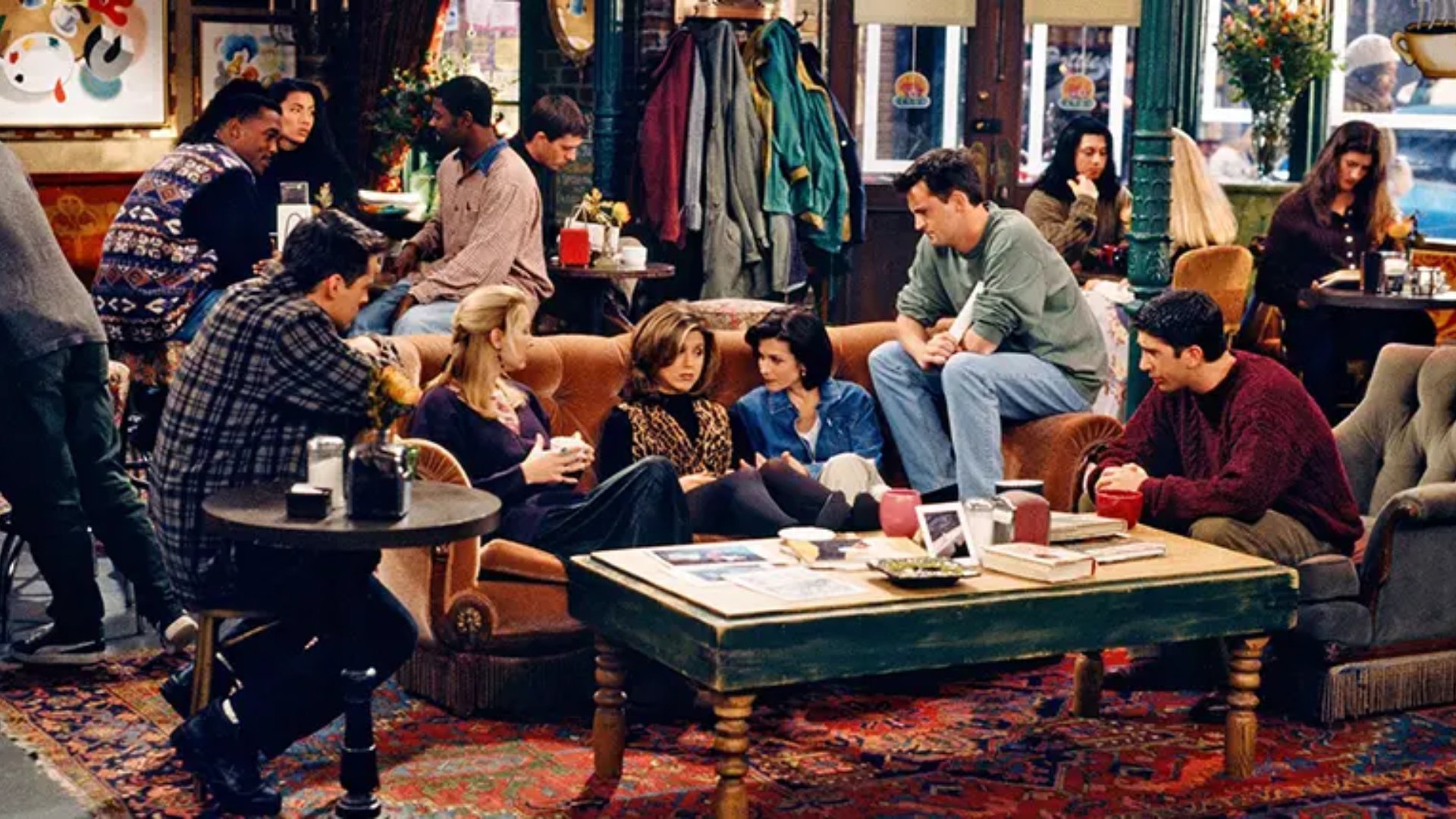
Perhaps you have a favorite café or a place with strong sentimental value that you still frequent despite all the trendy new spots. This place holds all your memories and feels like a haven of peace. For you, it's "the place to be." You go there so often that it could have a plaque bearing your name. And having a favorite spot isn't a sign of a lack of inspiration; it's actually quite enriching.
Staying in one's comfort zone
Whether it's a date or a get-together with friends, you always choose the same meeting place. It's a spot you love more than any other, a place that feels familiar. You've explored it from end to end, but you're never tired of it. On the contrary, you practically live there. You know all its secrets and you run into regulars, whom you greet like old friends. Proof that you've spent a lot of time there. Here, you feel at home, safe and secure.
It might be a secluded café, untouched by tourists eager for unpronounceable drinks, or a park with countless hidden gardens. It could also be a bar left untouched by time, owned by people as old as the furniture. Or perhaps a neighborhood library frequented by intellectuals, or a secluded pond. Whatever its nature, you're loyal to this place like the members of "Friends" to the iconic Central Perk, or the characters from "How I Met Your Mother" to MacLaren's Pub.
In a society that constantly pushes us to take risks, this place is almost a refuge, a haven. It must be said that the brain is a "routine-oriented" organ, one that hates changes of plan and the unknown. "Thinking requires effort! Routine helps the brain conserve energy and minimize risks," explains Professor Gerhard Roth, a brain researcher and philosopher. So naturally, when you think about going out, a studious pastime, after-work drinks, or a relaxing activity, you don't search on Google Maps or in trendy magazines. You go for the simplest option and suggest your sanctuary.
A place that inspires serenity
There are places that feel like a tender hug, offering us an almost maternal comfort. Often, they hold a powerful emotional history. It might be a park where we strolled with our parents, a café where we sipped lemonade with childhood friends, or a tree we leaned against with our crushes, still bearing the initials of that innocent romance. These places are generally life-sized treasure troves of memories, treasure chests filled with symbols, images, and scents.
In other words, returning to a familiar place triggers a mini-dose of dopamine , the pleasure molecule, and reduces stress . This mechanism explains why, even when faced with tempting new options, you always end up choosing your favorite spot. And in a world where everything changes quickly, this favorite place becomes an anchor. It helps regulate emotions and strengthens resilience.
Psychologists talk about a "secure base effect": when daily life seems chaotic, a familiar place acts as a fixed point, stabilizing our mood and reactions. And no, cuddly toys don't always have legs and a fluffy nose. Sometimes they're more abstract and resemble an old-fashioned brasserie, a suspended pier, or a bench embraced by trees.
A subtle way to build relationships
Unless your favorite spot is in the middle of nowhere, deep in the bush, or in the heart of a remote forest, you often run into the same faces. These kind souls, to whom you initially offered a timid "hello," strike up conversations with you every time you pass. They chime in on the news on TV, share their opinions on the new bakery that just opened on the corner, and grumble about the never-ending construction downtown. These are polite exchanges, not profound conversations. Yet, these dialogues, driven by trivialities, are beneficial to your well-being.
"These small interactions can really improve our mood and contribute to our social health by strengthening our sense of belonging, allowing for regular and consistent exchanges, and even offering us the opportunity to forge friendships and develop deeper relationships," explains Kasley Killam , who holds a master's degree in public health and is a social scientist trained at Harvard under Self .
Having a favorite place is not a sign of laziness or rigidity. It is a human reflex, supported by neurology and psychology, that helps us manage our emotions, stimulate our creativity, and maintain social connections.