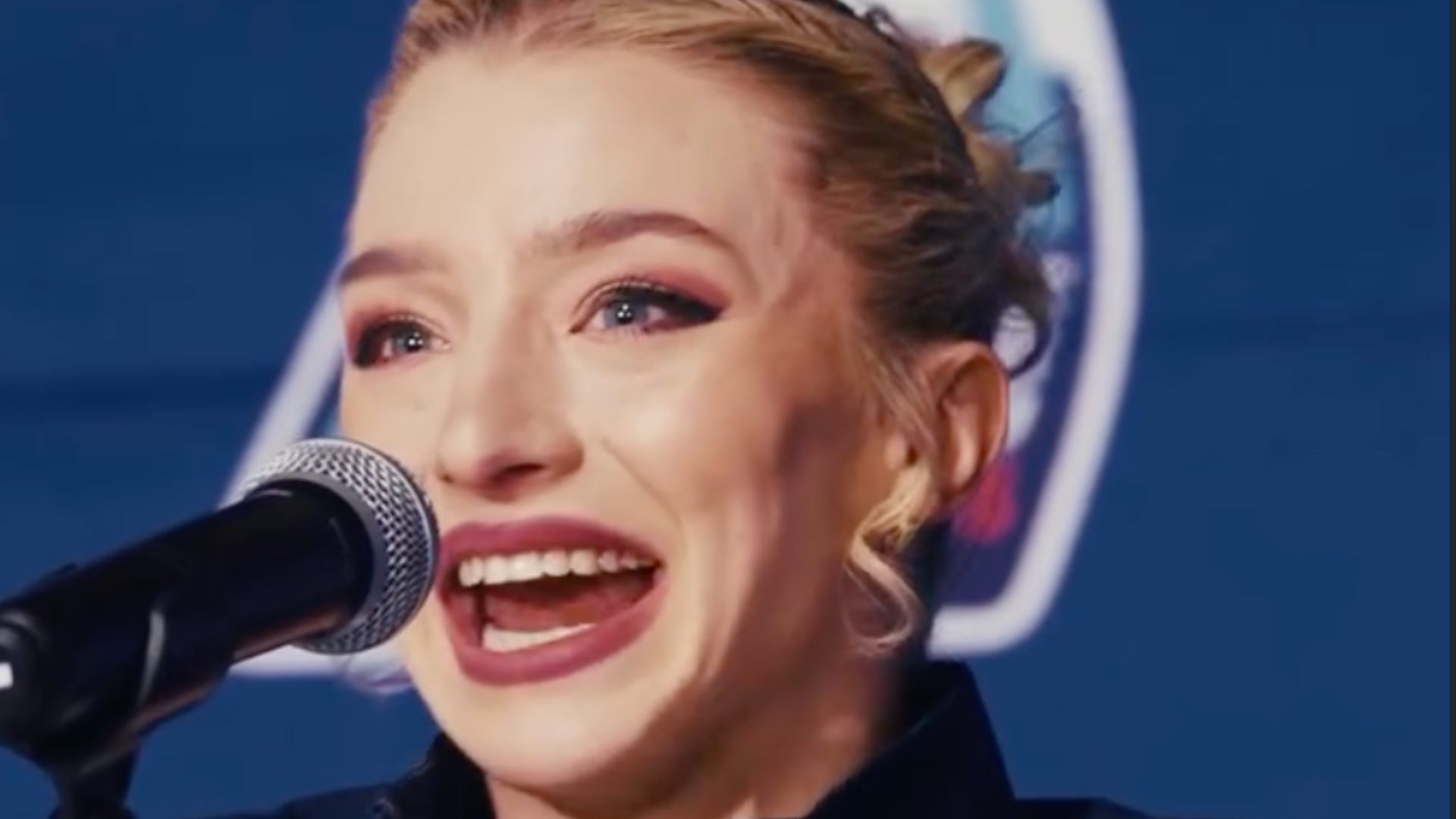
As the Milan-Cortina 2026 Winter Games came to a close on February 22, 2026, Amber Glenn's remarks made a particularly strong impression. In the mixed zone after her free skate, the American skater addressed a topic still rarely discussed in elite sports: the difficulty of competing while menstruating, thus breaking a persistent taboo in figure skating.
"It's tough and nobody talks about it."
Amber Glenn, competing in the Milan-Cortina 2026 Winter Olympics, finished fifth in the free skate. Beyond the result, it was her personal account that resonated. Speaking to France Télévisions, she confided: "I'm on my period right now, so it's really very difficult, especially when you have to wear these kinds of clothes and perform in front of the whole world."
She added: “It’s hard and nobody talks about it. It’s really difficult and scary, and you’re devastated. It’s something that isn’t discussed much regarding female athletes, even though it should be a topic of conversation.” A rare statement in a sporting world where performance often remains disconnected from the biological realities of women.
❄️ #MilanoCortina2026 | 🗣️ Amber Glenn's spontaneity after her free program: "I have my period right now, it's really difficult, especially when you have to wear these kinds of clothes and you have to perform."
➡️ The Olympics live: https://t.co/fWyqfxoDw3 pic.twitter.com/0nNfZbKOpU
— francetvsport (@francetvsport) February 19, 2026
Very real effects on the body
Menstruation can cause various symptoms: cramps, fatigue, headaches, digestive issues, and mood swings. For some female athletes, these symptoms can affect concentration, endurance, or recovery. The day before her appearance, Amber Glenn shared a message on her social media reminding everyone that the menstrual cycle can "affect energy levels, concentration, mood, and physical comfort depending on the phase."
Sports medicine specialists emphasize that the impact varies from one athlete to another. Some experience no noticeable changes, while others need to adjust their training. For several years, the International Olympic Committee has been encouraging greater consideration of menstrual health in the monitoring of elite female athletes, particularly through research on adapting training loads to the hormonal cycle.
A persistent taboo in elite sport
The American figure skater wasn't the only one to raise the issue during these Winter Games. Italian biathlete Dorothea Wierer also admitted to suffering during an event due to her period, emphasizing that "for us women, it's like that once a month."
Despite these accounts, the issue remains largely undiscussed publicly. For a long time, menstrual cycles were not factored into athletic training plans. Today, some teams monitor hormonal data to adjust their preparation and recovery strategies.
Towards an evolution of practices?
Amber Glenn's statement is part of a broader movement to normalize discussions about women's and menstruating health in sports. A growing body of research is examining the link between menstrual cycles and performance, although the findings remain nuanced and individualized.
By openly discussing her period during the Olympic Games, Amber Glenn brought to light a reality often overlooked. Her testimony serves as a reminder that women's athletic performance is not determined by anything outside the body, but rather by what it entails—and that acknowledging these factors is a step toward a more comprehensive approach to athletes' health.