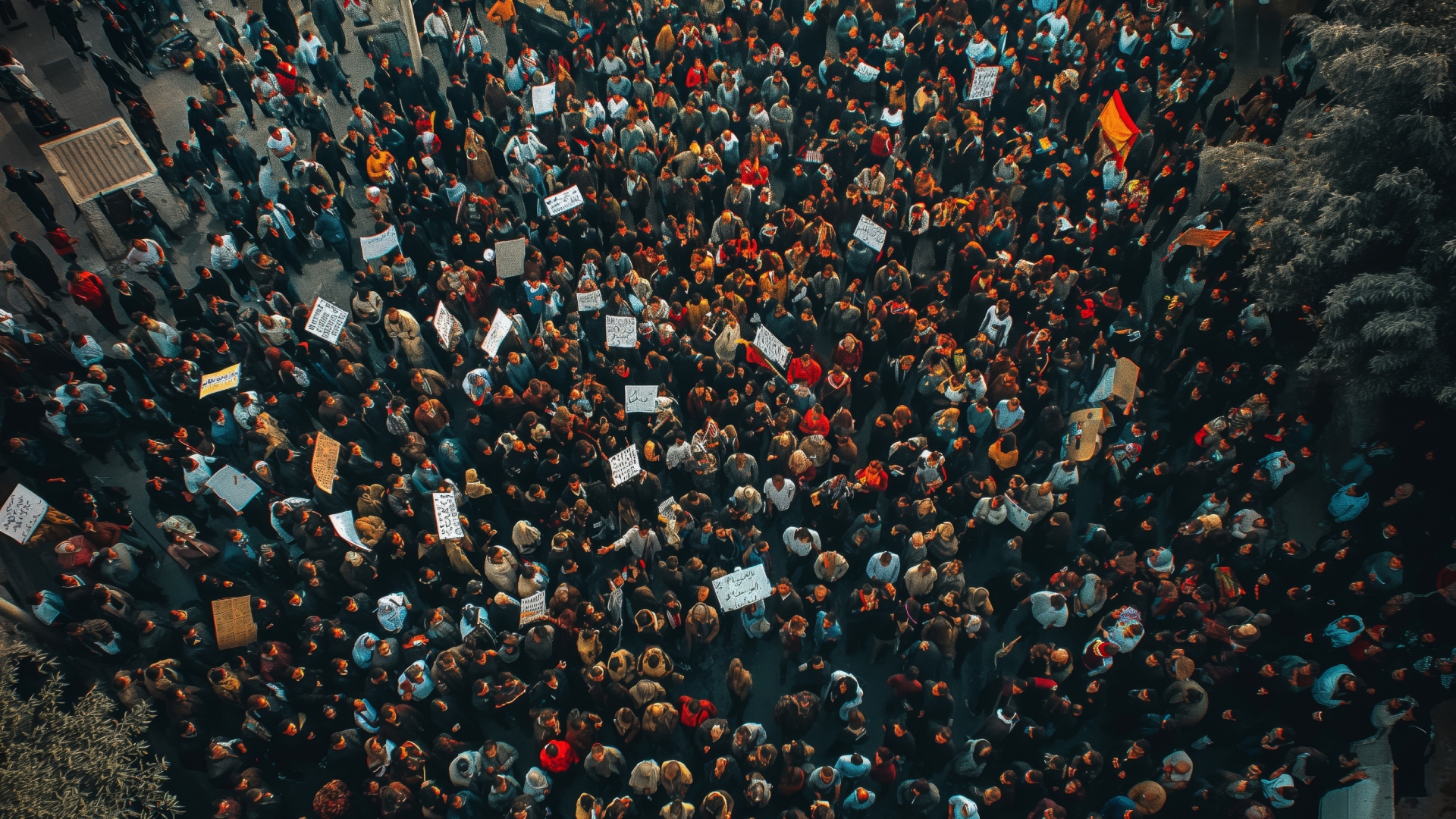
The protests that have been shaking Iran since late 2025 are no longer limited to purchasing power: they express a broad challenge to the regime, combining economic crisis, demands for political freedoms, and a growing rejection of the Islamic Republic. Beginning as mobilizations against the high cost of living, the anger quickly transformed into a movement demanding fundamental rights and systemic change, and where slogans openly hostile to the government now resonate.
From the high cost of living to political protest
Initially, many of the gatherings arose in bazaars and shopping districts, fueled by inflation, the devaluation of the rial (Iran's currency), and difficulties in meeting basic needs. Shop closures and strikes were joined by students, workers, and residents of medium-sized and suburban cities, extending the protests far beyond Tehran. In several cities, the slogans evolved rapidly: beyond criticism of the economic crisis, protesters began targeting the Supreme Leader and the Islamic Republic itself, a sign that political trust has been severely eroded.
The freedoms demanded by the protesters
The demands now go beyond mere issues of wages or prices: protesters are calling for freedom of expression, the freedom to demonstrate peacefully, an end to systematic repression and censorship, and an independent judiciary. Numerous videos and testimonies contain calls to "put an end to the Islamic Republic" and to establish a system where citizens can truly choose their leaders. The protests also target discrimination and inequality: several marginalized regions, as well as ethnic minorities, denounce the lack of equal rights and the specific repression they say they face.
Repression, surveillance and a break with society
In response to this movement, the authorities reinforced the presence of security forces, used tear gas, live ammunition in some cases, and made hundreds of arrests, according to human rights organizations. Judicial authorities reiterated that any participation in “illegal gatherings” and any calls to demonstrate would be “severely punished,” illustrating the priority given to security over civil liberties. Meanwhile, restrictions on internet access and increased surveillance of social media demonstrate that controlling information is a central concern for the regime. Despite this, images of marches, anti-government slogans, and funerals transformed into rallies continue to circulate, a sign of a profound disconnect between the leadership and society.
A multifaceted movement, somewhere between republic and monarchy
The protests are not homogenous: some demonstrators are calling for a secular or pluralist democratic republic, while others are going so far as to demand the return of the monarchy, particularly around the figure of Reza Pahlavi, son of the last shah. Slogans in favor of his return have been heard in several cities, alongside slogans hostile to the supreme leader and the entire ruling elite. This debate on the political future shows that the movement is not simply rejecting the current situation; it is also initiating a battle of ideas on the type of regime that could succeed the Islamic Republic.
Manouchehr Bakhtiari, a face of the protest
In this context, as RFI explains, figures from previous protest movements have become symbols, including Manouchehr Bakhtiari, father of Pouya Bakhtiari, a young engineer who disappeared during the 2019 protests. Convicted, he denounces the repression and pressure on his family, and calls for Iranian unity to achieve regime change, even publicly supporting the return of the monarchy. His story illustrates the human cost of political engagement in Iran and embodies, for some, the continuity between past uprisings and current mobilizations for justice, dignity, and freedoms.
Media and expert analyses converge on one point: while the economic crisis was the trigger, the heart of the problem is now a crisis of legitimacy for the regime. Between the deaths during the demonstrations, the mass arrests, and the growing gap between the population's expectations and the government's responses, the movement highlights a demand for profound political transformation, going beyond mere questions of purchasing power.