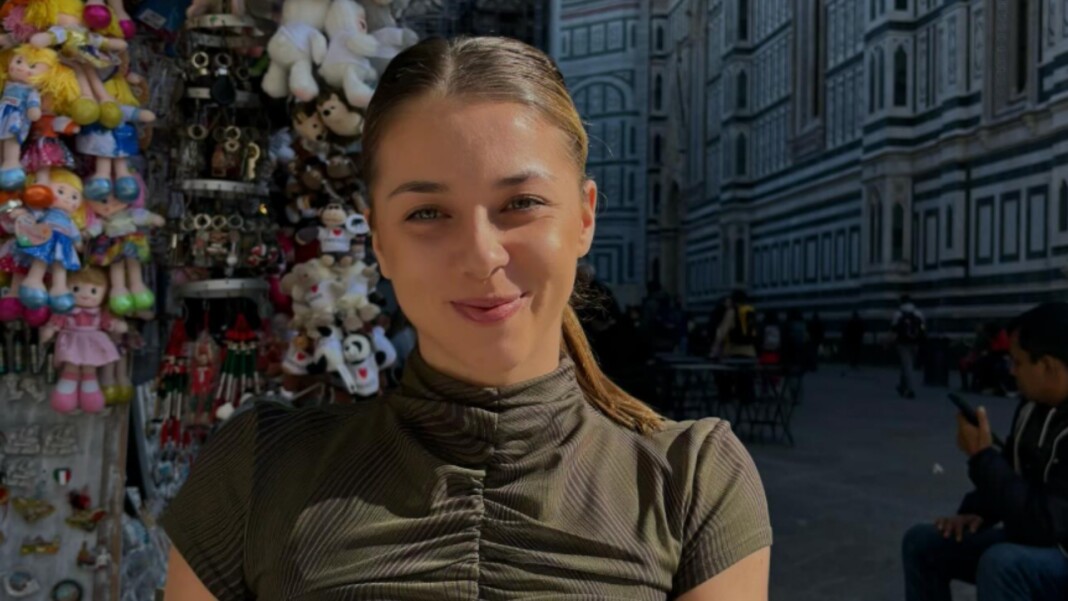
Tennis fans will long remember the 2026 French Open. Among the expected top players, it was a 24-year-old Polish player who had the most moving run of the tournament: Maja Chwalińska. She made a spectacular leap in the WTA rankings, jumping from 114th to 21st in the world.
A historic final for the world number 114
Maja Chwalińska became the second qualifier in the Open Era to reach the semifinals of a Grand Slam tournament at Roland-Garros – before going on to the final. This feat is all the more remarkable given that she finished 2023 outside the world's top 300, ranked 349th.
During the Paris tournament, she successively defeated four players ranked in the world's top 50, including the Russian Diana Shnaider in the semi-finals. This surge in form galvanized the French public – and especially the numerous Polish supporters who came, waving red and white flags and chanting her name in the stands of Court Philippe-Chatrier.


On June 6, 2026, in the final, it was the young Russian Mirra Andreeva, 19 years old and ranked 8th in the world, who prevailed in two sets (6-3, 6-2). "I did my best, I'm sorry. I'll never forget these three weeks, that's for sure," a visibly moved Maja Chwalińska said on the court after the match. At the end of the tournament, she made a spectacular leap in the WTA rankings, jumping from 114th to 21st in the world—a jump of nearly 100 places.
View this post on Instagram
A depression that had kept her away from the courts in 2021
What makes this story truly exceptional is the journey she's taken. In 2021, Maja Chwalińska publicly announced that she had been suffering from severe depression for over eighteen months—and made the difficult decision to temporarily leave the professional circuit. Such a statement is rare in a world of sports still largely marked by the taboo surrounding mental health issues.
A few months later, she gave a particularly striking account of her experience. "At first, I forced myself. I thought I had to stay strong, tough, and keep training. But at one point, I couldn't even get out of bed anymore. I was simply lifeless, to be honest. I realized I had to take a break - otherwise, I wouldn't be able to live anymore."
The return, the patience, the reconstruction
For several months, the player completely stepped away from the courts to focus on her mental health. "I honestly didn't know if I was going to come back or not. After a few months, I decided to return," she explained recently. A patient comeback, marked by several titles on the secondary circuit (Prague, Montpellier, Porto, Montreux, Oeiras), before this sudden explosion in Paris.
A voice that matters for mental health in sport
Beyond her sporting achievements, Maja Chwalińska's journey has now taken on a symbolic dimension. Like Japanese tennis player Naomi Osaka, American artistic gymnast Simone Biles, or more recently, French international basketball player Victor Wembanyama , she embodies this new generation of athletes who refuse to hide their personal struggles and who remind us that performance cannot be achieved at the expense of mental health. Her testimony, both lucid and defiant, will undoubtedly be a landmark in the history of women's sports narratives.


Maja Chwalińska may not have won the 2026 French Open, but she has had one of the most inspiring runs in women's tennis this decade. And she reminded us, with rare insight, that there is no success without the right, sometimes, to stop everything in order to rebuild.