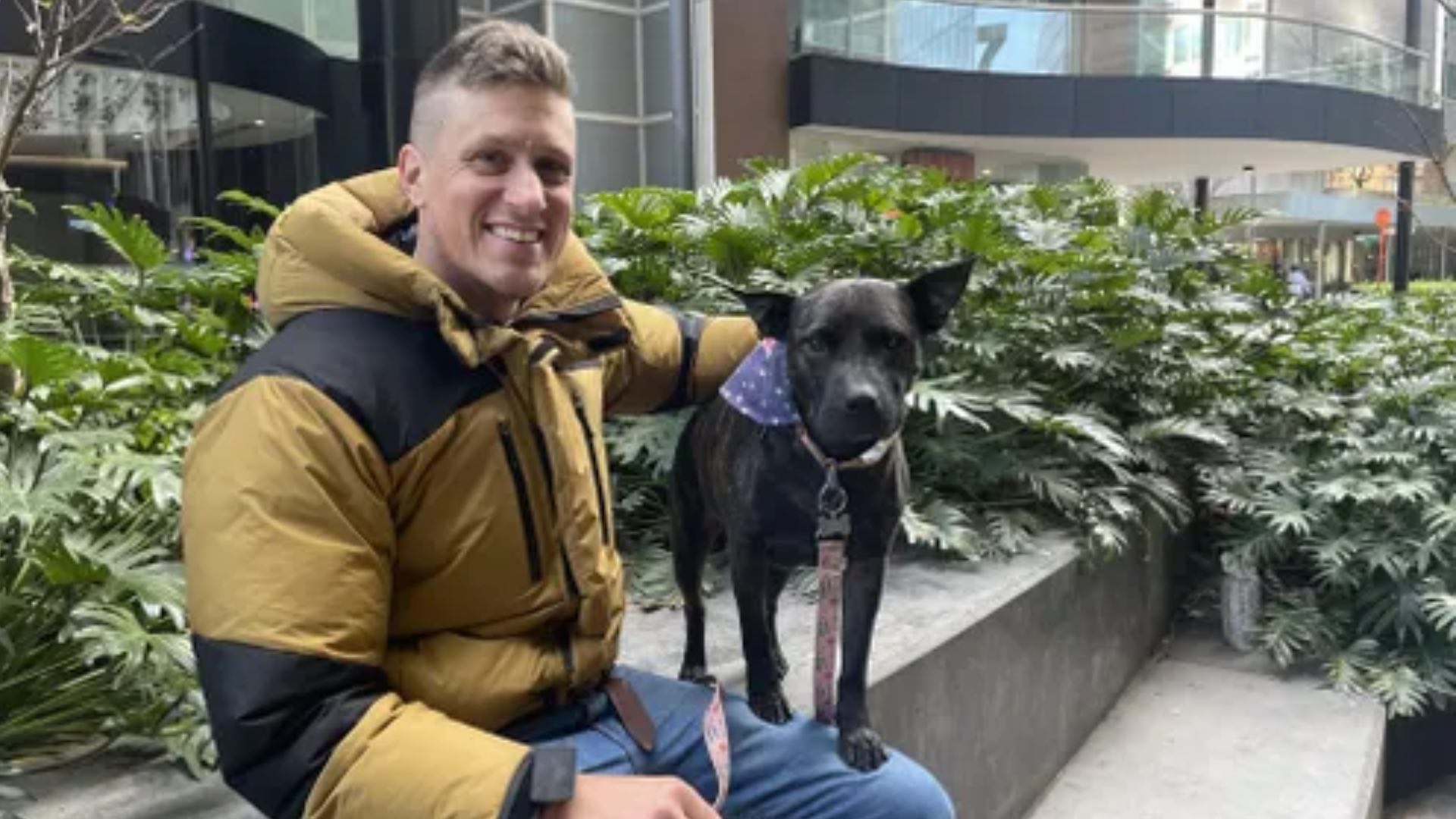
Faced with his dog's cancer, Australian entrepreneur Paul Conyngham decided to try an unusual approach. He claims to have used artificial intelligence and genetic analysis to design a personalized experimental vaccine to treat his pet's illness. His initiative, carried out with the support of researchers and under scientific supervision, has recently garnered attention from the scientific community and reignited discussions about the potential of AI in personalized medicine.
A desperate attempt to save his dog
The story begins when Rosie, a dog adopted by Paul Conyngham, is diagnosed with an aggressive form of cancer. Despite several veterinary treatments , including surgery and chemotherapy, the disease continues to progress.
According to reports in several international media outlets, "available treatment options only slowed the progression of the disease." Faced with this situation, entrepreneur Paul Conyngham, a specialist in artificial intelligence and data analysis, decided to explore other avenues. His goal: to better understand the genetic origin of the tumor in order to try to develop a targeted treatment.
Australian tech entrepreneur Paul Conyngham explains how he used ChatGPT/AlphaFold (spent $3,000 with no biology background) to create a custom MRNA vaccine to treat his dog's cancer tumors. Unreal. https://t.co/Fue75JkdXo pic.twitter.com/WaO3JayYR1
— Trung Phan (@TrungTPhan) March 14, 2026
With the help of artificial intelligence and ChatGPT
To carry out his project, Paul Conyngham relies on several artificial intelligence tools, including ChatGPT and AlphaFold, a program capable of analyzing protein structure. The first step involves comparing the dog's healthy DNA with that of the tumor to identify the mutations responsible for the cancer. This genetic analysis then makes it possible to identify the altered proteins that could be targeted by a treatment.
Using this data, entrepreneur Paul Conyngham leverages AI to analyze mutations and develop a therapeutic strategy. He uses ChatGPT to structure the project's stages and explore various scientific approaches. Despite lacking a background in biology, he then collaborates with researchers to transform this information into a vaccine prototype.
An experimental vaccine based on mRNA technology
The treatment developed is based on messenger RNA (mRNA) technology, already used in some recent vaccines and studied in numerous cancer trials. Using the genetic data obtained, researchers involved in the project were able to synthesize a personalized vaccine designed to stimulate the dog's immune system so that it recognizes and attacks cancer cells.
The vaccine was then administered according to a protocol overseen by veterinary researchers with ethical approvals for this type of experimental treatment. According to the scientists involved, this is one of the first attempts at a personalized cancer vaccine designed specifically for a dog.
Encouraging results, but still experimental.
The initial results observed in Rosie are considered "encouraging" by the researchers involved in the project. Some tumors reportedly "shrank in size after the treatment was administered."
However, experts emphasize that "this type of approach remains experimental." The vaccine should not be considered a cure for cancer, but rather a promising avenue of research that could improve the quality of life for some animals. Researchers also point out that personalized therapies based on messenger RNA are currently the subject of numerous studies in both veterinary and human medicine.
An illustration of the potential of AI in personalized medicine
Beyond Rosie's personal story, this initiative highlights the rapid evolution of medical technologies. The use of artificial intelligence tools to analyze genetic data and design personalized treatments is generating increasing interest in biomedical research. Some scientists believe that "this type of approach could, in the long term, contribute to the development of more personalized cancer therapies, in both animals and humans."
In summary, for now, the experiment conducted with Rosie remains an isolated case. Nevertheless, it illustrates how AI and genomics could eventually transform the way complex diseases are studied and treated.