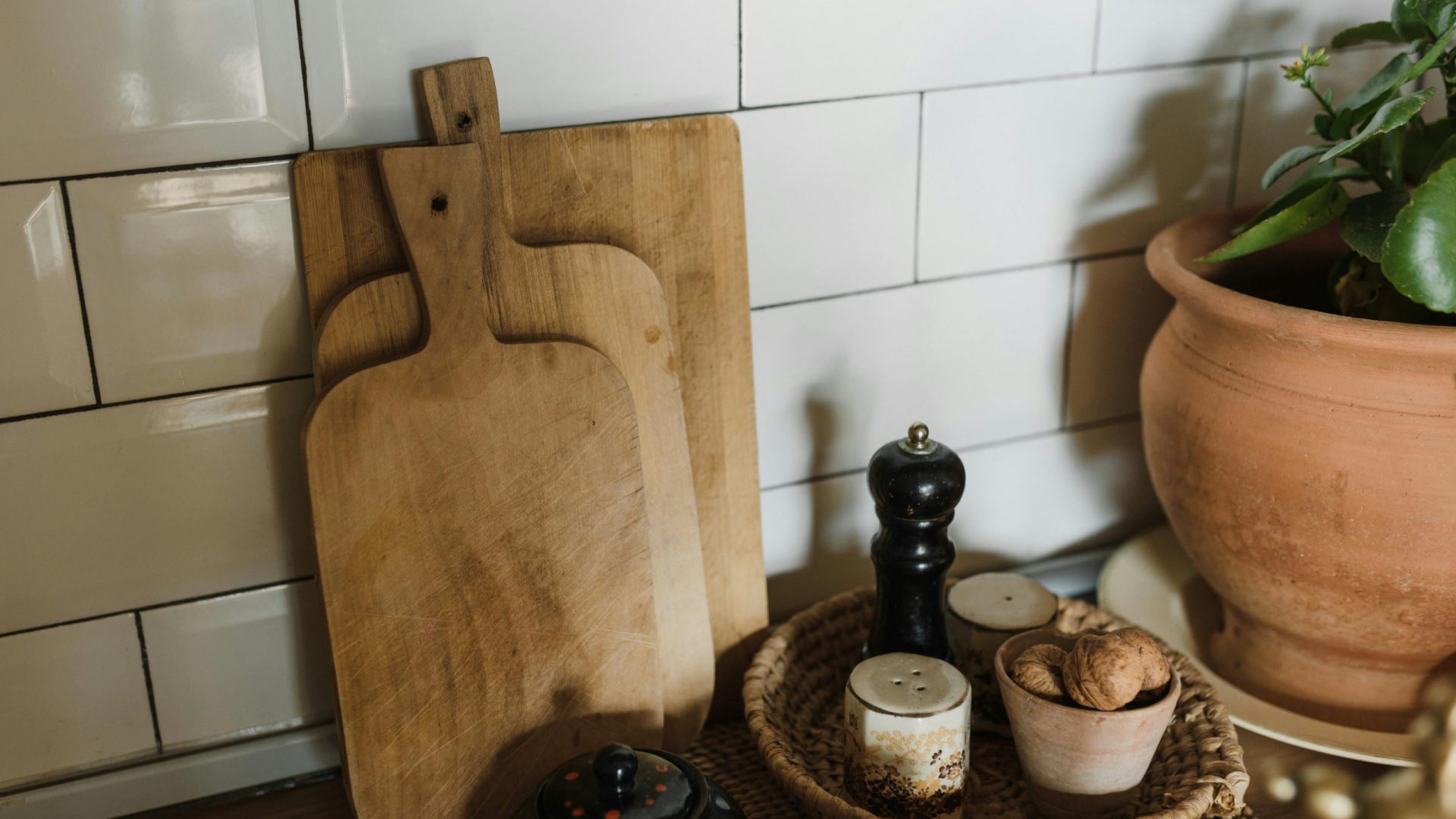
You use it almost every day without thinking: the cutting board is a kitchen essential. Yet, its material could play a role in the presence of bacteria. Wood or plastic, the choice is more nuanced than it seems.
Wood vs. plastic: an unexpected duel
Contrary to popular belief, not all cutting boards are created equal when it comes to bacteria. Scientific research has highlighted an interesting difference between wood and plastic.
Wooden boards have a natural structure composed of fibers capable of absorbing moisture. As a result, some studies show that they can eliminate up to 99% of bacteria in just a few minutes. By penetrating the wood, microorganisms are deprived of water and nutrients, which limits their survival.
Conversely, plastic cutting boards have a smooth surface… at least initially. Over time and with repeated knife use, micro-scratches appear. These tiny cracks then become perfect havens for bacteria, which can be difficult to reach during cleaning.
This really promotes bacteria
The material of your cutting board isn't everything. The presence of bacteria also depends on how you cook and clean your utensils. Certain foods, such as raw meat, fish, or unwashed vegetables, can leave microorganisms on the surface. If the board is damaged, cracked, or poorly cleaned, these bacteria can more easily take hold.
Research on food hygiene shows that well-maintained wooden cutting boards can remain safe to use. Plastic cutting boards, on the other hand, are often preferred in professional kitchens, particularly because they can withstand high-temperature washing in dishwashers. In other words, it's not just what you use, but how you use it.
Good habits to adopt on a daily basis
Good news: you don't need to revolutionize your kitchen to limit the risks. A few simple habits can make all the difference.
- First, it is recommended to use separate cutting boards for raw and cooked foods. This helps prevent cross-contamination.
- Next, thorough cleaning after each use is essential. Hot water, soap, and a good rinse are sufficient in most cases.
- Drying is just as important. A damp board can encourage the growth of bacteria, especially if it is stored while still wet.
- Finally, remember to check the condition of your boards. If they have many nicks or cracks, it may be time to replace them.
Some health recommendations also advise regularly disinfecting surfaces, especially after handling raw meat.
Wood or plastic: which to choose?
Ultimately, the choice between wood and plastic depends primarily on your habits and comfort level in the kitchen. In both cases, there's no need to strive for perfection or feel guilty about every little oversight. A kitchen that's lived in, used, and adapted to your pace is a kitchen that reflects your personality. The key lies elsewhere: adopting simple techniques, taking care of your utensils, and cooking in an environment that makes you feel comfortable.
In short, the material of your cutting board can influence the presence of bacteria, but your cleaning routine remains the key factor. With a few well-established habits, you can cook with peace of mind and fully enjoy your time in the kitchen.