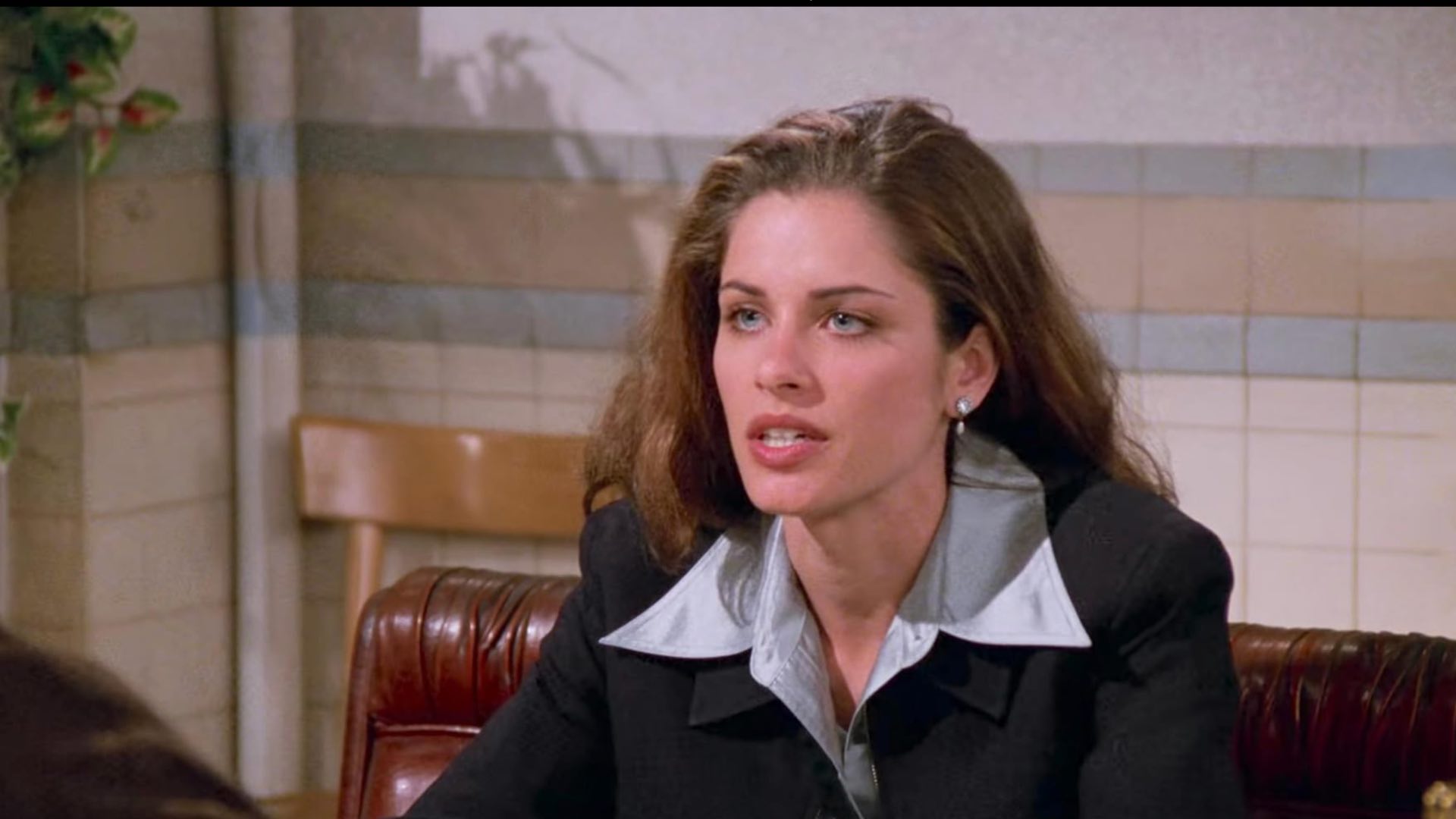
American actress Amanda Peet puts words to a reality shared by many women: at menopause, they are made "less desirable" and "less visible" in stories, at work, and even on screen. In the series "Your Friends & Neighbors," she embodies this experience by playing Mel Cooper, a therapist going through perimenopause.
A "cathartic" role in the series "True Neighbors, False Friends"
In the series, Amanda Peet plays Mel, a fifty-year-old woman who isn't reduced to a mere "sentimental accessory" or relegated to the role of "useful mother." The scenes of perimenopause are addressed frankly, encompassing hot flashes, mood swings, sleep disturbances, and persistent desires. The actress explains in several interviews that playing this character was "cathartic" for her: she herself is experiencing menopause and believes it's important that this stage not be treated as an end or a disgrace.
The menopause scenes in "Your Friends & Neighbors" are funny, unfiltered, and sometimes very realistic, which explains why they resonate with a female audience often overlooked in midlife narratives. By choosing to address hot flashes, irritability, and transitioning family relationships, the series gives this stage of life its rightful place. Amanda Peet thus becomes a voice for an often-silent age, one that no longer wants to be sidelined.
"Women are sidelined at menopause"
In an interview with People magazine , Amanda Peet discussed the place of older women in entertainment and society. She stated that, for a long time, women past a certain age were rendered "invisible, asexual, sidelined," as if, after menopause, the rest of their lives were reduced to waiting in the wings. For her, it is therefore essential that characters like Mel in "Your Friends & Neighbors" show that age does not equate to oblivion: a woman can be tired, experience hormonal fluctuations, and still remain active.
A fight against "age-related dysmorphia"
Amanda Peet also speaks of "age-related dysmorphia": the idea that one remains mentally stuck in one's thirties, often 27, and struggles to accept that the body has actually passed the age of fifty, with menopause, wrinkles, graying hair, and questions of identity. She highlights this discrepancy between the real body and the internal image, which fuels the feeling of being "out of sync" with what society expects of a so-called "mature" woman.
A message of visibility and dignity
Through her acting and her public statements, Amanda Peet advocates for greater visibility of menopausal women, both in film and in everyday life. She emphasizes that acting on screen is not enough: it is also essential to allow these women to remain at the heart of stories, projects, and decision-making processes, without relegating them to a secondary role "after" their "youth."
Her testimony echoes that of other actresses like Demi Moore or Halle Berry, who all denounce the way women are pushed out as soon as they exceed a certain image of desirability.
By giving a voice to women like Amanda Peet, and by portraying characters grounded in the reality of menopause, the series "Your Friends & Neighbors" helps to shift perceptions. Far from being an end, this period is seen as a transformation, with its challenges but also its richness and complexity. By breaking the silence and stereotypes, Amanda Peet reminds us that women over 50 should neither disappear nor conform to imposed invisibility.