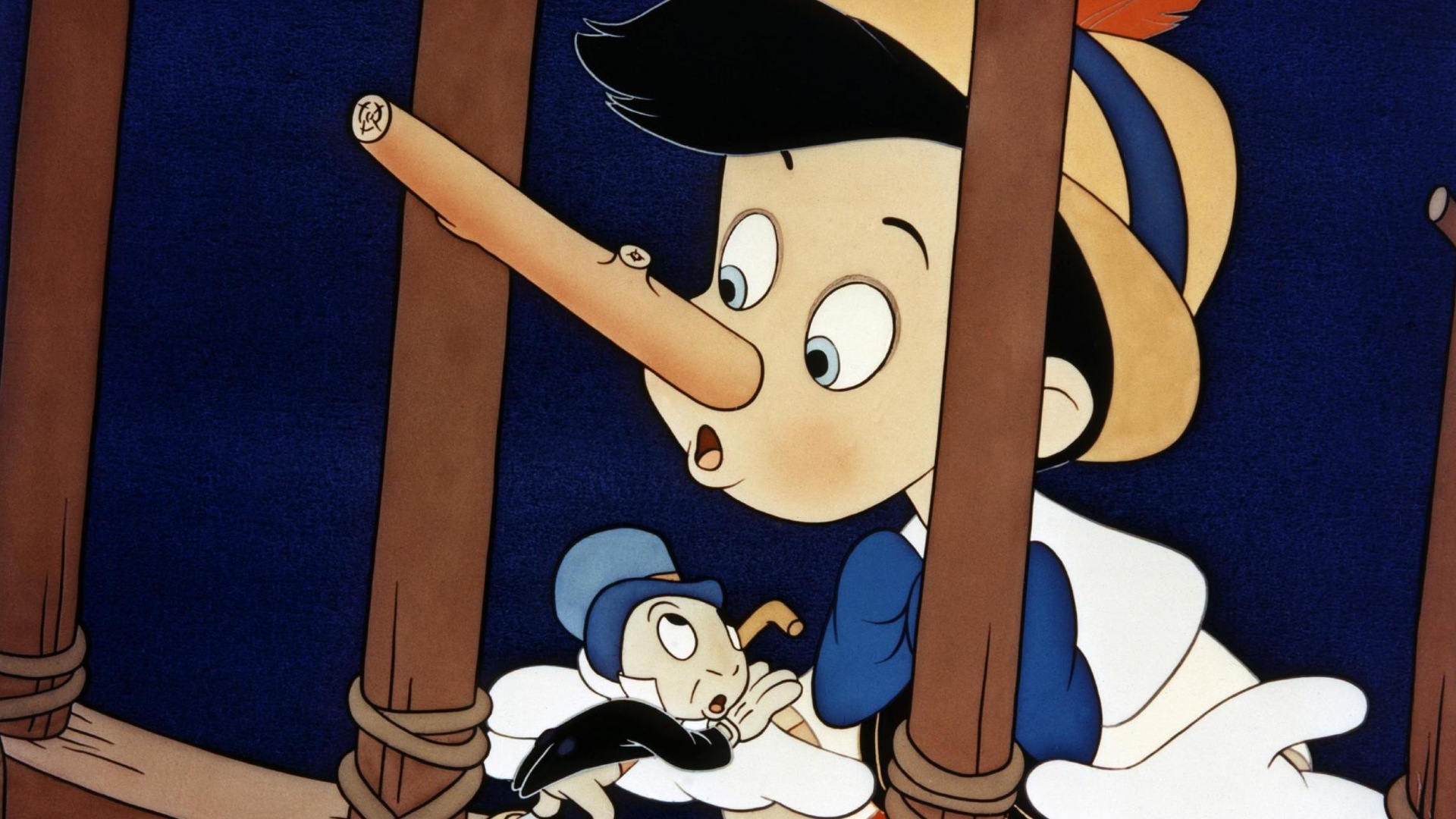
In body language, several physical cues can betray a lie, but there's an even more convincing clue to sniffing out attempts at fabrication. The next time you doubt the veracity of someone's words, look at the appearance of their nose. This unmistakable facial feature is an excellent lie detector. It's what scientists call the "Pinocchio effect." No need to spell it out; you know the story of the little wooden man.
What is the Pinocchio effect?
You surely remember this iconic tale about the adventures of Pinocchio, the living puppet created by Geppetto. The little boy with the limp body and bark-like skin has a peculiar characteristic. Whenever he dares to lie or bend the truth even slightly, his nose grows longer like a branch nourished with fertilizer. It's impossible for him to falsify his stories or embellish reality without risking the consequences and developing an enormous nose capable of supporting the entire forest. His lies are as plain as the nose on your face, and not just figuratively.
This fable by Carlo Collodi, adapted by Disney, is not as trivial as it seems. The author of Pinocchio, whose sole aim was to entertain children and lull them to sleep, unintentionally recounted a scientific phenomenon, a result of his imagination. Spanish researchers at the University of Granada have continued this line of inquiry, almost turning Pinocchio into a textbook case study.
According to the results of their studies , in cases of deceitful speech or bluffing, the nose undergoes a transformation. It doesn't grow in length, otherwise we'd all have a trunk in its place. Instead, it subtly swells and reddens at the tip, on the sides, and around the eyes. That was all it took to name this reaction: the Pinocchio effect.
The explanation behind this curious phenomenon
The researchers used more than just guesswork to reach this revealing conclusion. They subjected the bodies of willing con artists to thermal imaging. This tool captures body temperature in real time, invisible to the naked eye. The images speak for themselves. The sense of smell appears redder than the rest of the face. And unlike Pinocchio, who is the victim of a rather well-chosen magic spell, human beings are simply subject to the laws of the body.
This "Pinocchio effect," which allows us to see through lies and unmask potential imposters, is thought to be due to decreased activity in the insula, a part of the brain that manages consciousness, the reward system, and the regulation of body temperature. It's a bit like an internal thermostat going into alert mode. In short, the mouth tells a lie, but the body tells the truth.
When the body speaks louder than words
The Pinocchio effect isn't limited to a simple swelling or reddening of the nose. It's part of a series of micro-physiological reactions that accompany lying. Sweating , dilated pupils, changes in heart rate, and muscle tension are all indicators that the body activates when it tries to conceal the truth.
The nose, meanwhile, acts as an involuntary visual signal. The dilation of blood vessels, caused by the stress of lying, leads to localized redness and sometimes slight swelling. The effect is subtle, but detectable by thermal cameras or by an observer trained to interpret these signals. In short, the body betrays what the mouth tries to conceal.
The Pinocchio effect, therefore, perfectly illustrates the inner workings of the human body. While cheeks flush with shyness and lips purse in moments of desire, the nose is highly sensitive to lies and betrays its own owner. In any case, Disney cartoons have almost become a medical dictionary. From the Cinderella complex to Tinker Bell syndrome, the iconic characters of our childhood lend their names to various ailments.