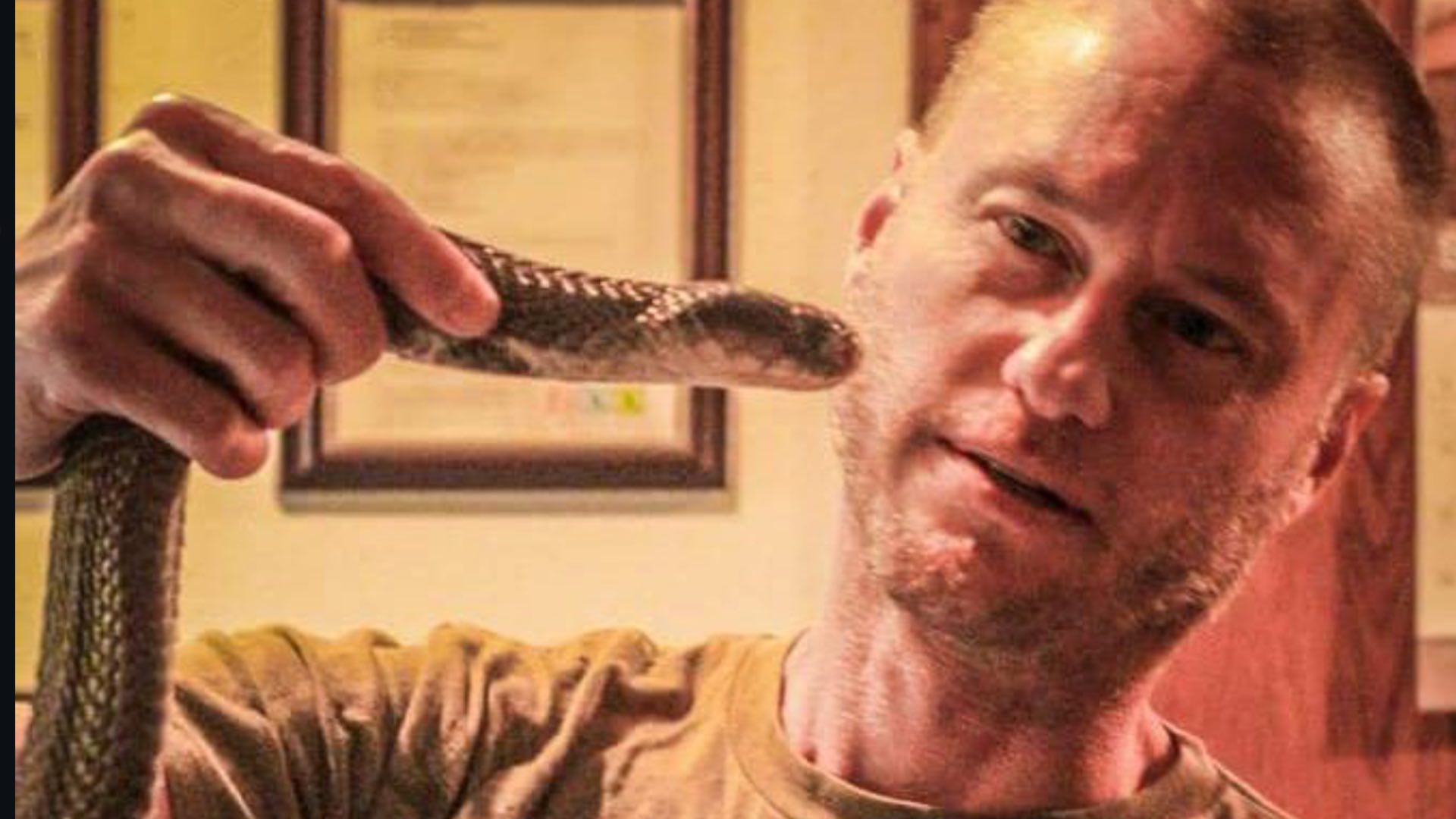
The story may seem straight out of a movie, yet it intrigues scientists today. An American, Tim Friede, exposed himself to snake venom for years. Behind this extraordinary journey lies a research avenue that could, in time, perhaps lead to advancements in certain medical treatments.
An extreme long-term approach
Since the early 2000s, Tim Friede has undertaken a particularly risky form of self-experimentation: injecting himself with small amounts of snake venom to gradually acclimate his body. Over nearly 25 years, he has accumulated more than 800 exposures, involving various venomous species. An impressive, but above all dangerous, practice that is by no means a recognized medical method. His initial objective stemmed from a personal quest, but what makes his case so fascinating today is the way his body reacted.
A body that adapts and intrigues science
Over time, Tim Friede's body developed antibodies capable of reacting to certain venoms. This natural defense mechanism attracted the attention of immunology researchers. The biotechnology company Centivax, in particular, studied his case, working with immunologist Jacob Glanville. Their goal: to understand how these antibodies work and whether they could be used in a medical context.
Researchers have identified elements capable of neutralizing certain toxins. They also explored their interaction with a molecule called varespladib to assess their effectiveness against different types of venom. This work, published in the scientific journal Cell, opens up promising avenues… while remaining at an experimental stage.
Why current treatments have their limitations
Today, most antivenoms are produced from antibodies derived from animals, often horses. This method has been used for over a century. While it has saved many lives, it also has limitations: high costs, unequal access depending on the region of the world, and sometimes immune reactions in patients.
Snakebites remain a major public health problem, particularly in certain tropical areas. Each year, several million people are affected, sometimes with serious consequences if treatment is not received promptly. In this context, developing more accessible and effective alternatives is becoming increasingly important.
View this post on Instagram
This research also raises ethical questions.
The study of new antibodies, like those observed in Tim Friede, is part of a drive to improve treatments. It also fits into a broader reflection on medical practices. Indeed, some animal rights groups remind us that animals are not meant to be exploited for scientific or medical purposes.
In today's world, numerous innovations are emerging to limit, or even replace, the use of animals in research. Technologies based on cell cultures, computer models, and advanced biotechnologies now offer promising alternatives. The goal: to advance medicine while showing greater respect for all living beings.
A promising lead, but still under construction
Research into this unusual case does not mean that a new treatment is ready for use. Many steps remain before any potential application in humans. Scientists still need to verify the efficacy, safety, and reproducibility of these approaches on a larger scale.
However, this story reminds us of one essential thing: the human body possesses amazing adaptive capabilities, and science continues to explore these mechanisms to imagine more inclusive and accessible solutions.
In summary, between scientific curiosity, medical innovation and ethical reflection, this exceptional case opens a door to new ways of thinking about the medicines of tomorrow.