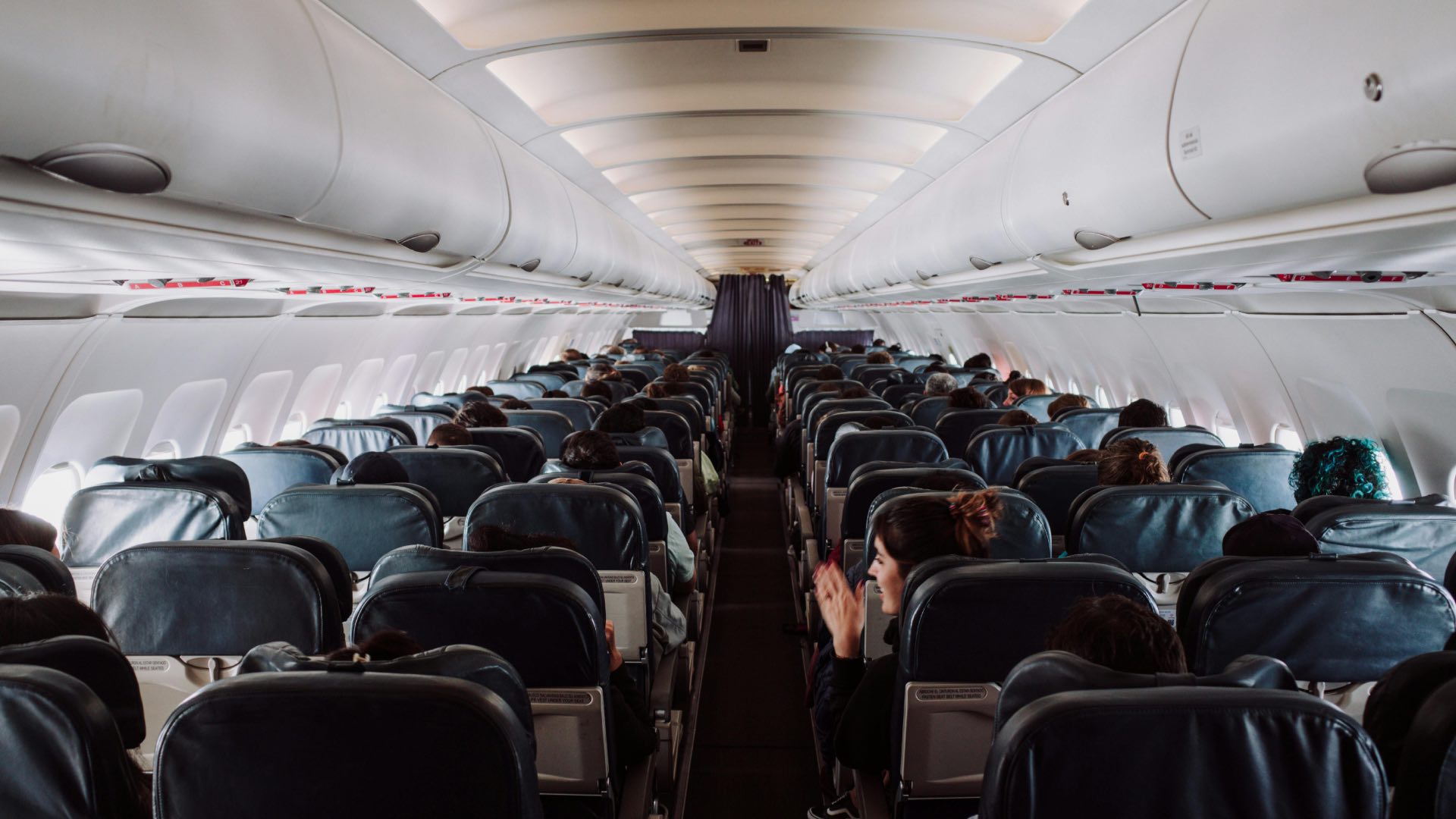
Flying means sharing an enclosed space with many other travelers for several hours. While the experience remains comfortable and exciting for many, some experts point out that seat choice could play a role in the level of exposure to germs on board.
The aisle-side seat: more foot traffic, more contact
According to several infectious disease specialists, the aisle seat offers the greatest risk of indirect interaction with other passengers. Dr. Jarod Fox, an infectious disease specialist at Orlando Health, explains that this seating position puts you directly in the path of travelers moving through the cabin. Going to the restroom, accessing luggage, or simply stretching your legs: these movements are frequent.
Dr. Ashley Drews, an epidemiologist at Houston Methodist, also points out that this type of seating involves more unintentional contact with people moving in the aisle. A study from Emory University indicates that approximately 40% of passengers get up at least once during a flight, and nearly 20% get up several times. In other words, the aisle becomes an area of constant traffic, where encounters are more frequent.
Proximity: the real determining factor
Experts emphasize one crucial point: the main risk depends not only on the seat, but primarily on proximity to an infected person. Sitting next to an infected passenger increases the risk more than simply sitting in an aisle or window seat. Seats directly next to, in front of, or behind an infected person may therefore be more at risk, as the proximity is direct and prolonged.
A study published in Proceedings of the National Academy of Sciences shows that close interactions between passengers strongly influence the likelihood of exposure to infectious agents on an airplane.
The window seat: a little quieter?
In contrast, a window seat is often presented as a "quieter" option. People seated by the window tend to get up less often, which reduces contact with other passengers. Less movement also means less walking in the aisle, and therefore potentially fewer interactions with moving surfaces or people.
However, experts remain cautious: no seat guarantees total protection. According to the Centers for Disease Control and Prevention (CDC), the risk depends on many factors, such as flight duration, passenger density, and the presence of symptoms in some individuals.
The surfaces of the aircraft are also affected
Beyond the seats, several areas of the aircraft are regularly affected and can harbor microorganisms. The most frequently cited are:
- folding shelves
- the armrests
- touchscreens
- belt buckles
- toilet handles
A study conducted by TravelMath has shown that certain surfaces in the cabin can harbor bacteria, simply due to the high number of contacts throughout a flight.
A few simple steps to travel more peacefully
Without becoming obsessive, a few simple habits can help reduce exposure to microbes during a flight:
- wash or disinfect your hands regularly
- avoid touching your face after touching surfaces
- Clean the tablet and armrests with a suitable wipe
- pay close attention to your health after the trip
These habits do not eliminate the risk, but they help to limit contact with potentially undesirable agents.
An environment that is better controlled than we think
Despite these factors, experts point out a reassuring fact: modern aircraft are equipped with highly efficient air filtration systems. HEPA filters capture a large proportion of airborne particles and regularly renew the cabin air. In other words, while exposure to microbes is never completely eliminated in a shared space, conditions on airplanes are better controlled than they might seem.
Ultimately, the aisle-side seat may be exposed to more foot traffic, but the key factor remains the same: human proximity in an enclosed space.