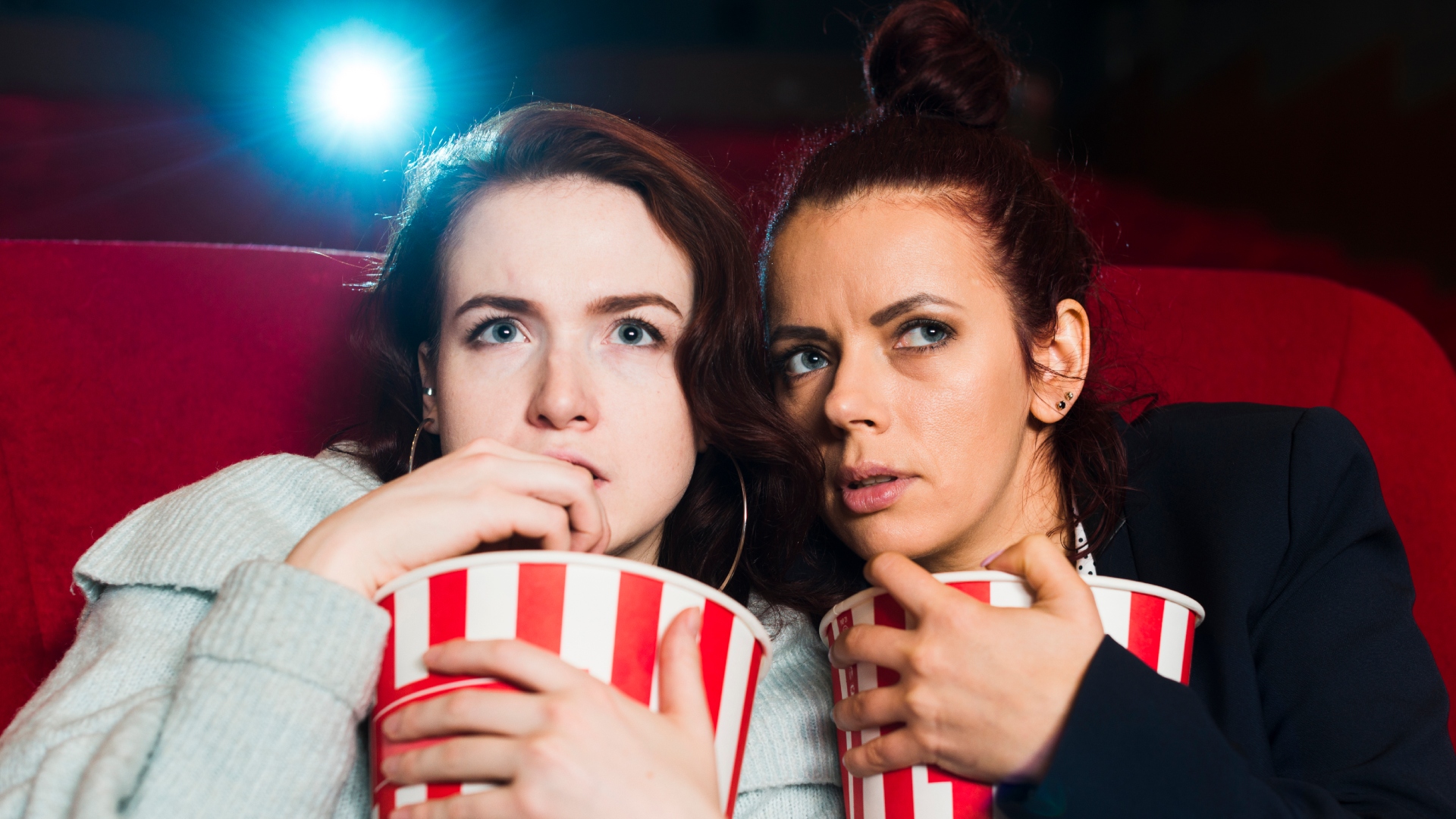
Long associated with a male audience, horror cinema is increasingly attracting women. Cinemas, streaming platforms, and fan communities all attest to this. Behind this enthusiasm lies a fascinating story: that of a genre long based on gender roles, then gradually reinvented by the women it portrayed.
When fear was still a matter of roles
To understand this change, we need to go back to the 1980s. In 1986, a team of researchers led by Dolf Zillmann published a study in the Journal of Personality and Social Psychology that would mark research on reactions to horror films.
The principle is simple: students watch a scary movie with a partner of the opposite sex. Depending on the group, this partner displays composure, indifference, or, conversely, very visible fear. The participants then rate their own enjoyment as well as their perception of their partner. The results are particularly revealing.
He must remain impassive; she may tremble.
At the time, the observed reactions seemed almost like a scene straight out of a movie. Men reported enjoying the experience more when accompanied by a frightened woman. Conversely, their enjoyment diminished when their partner remained perfectly calm. For women, the pattern was reversed: they enjoyed the film more when with an impassive man and much less when he openly displayed his fear.
The movie screening then becomes a kind of small social scene where everyone is invited to play their part: fear for her, courage for him. However, one should be careful not to draw definitive conclusions about so-called "feminine" or "masculine" tastes from this experience. The study dates back almost forty years, involves American students, and is based on a single film. It primarily reflects the social norms of its time. And that is precisely what makes it interesting.
The great turnaround in horror cinema
Since then, women's relationship to horror has profoundly changed. One of the emblematic figures of this transformation is that of the " final girl ," the survivor who appears notably in the slasher films of the 1970s.
Initially, she is primarily the one who escapes the massacre. Little by little, she becomes much more: a strong, determined heroine, capable of understanding the danger, resisting, and sometimes even gaining the upper hand over the one who threatens her.
The change doesn't stop there. Female directors have embraced the genre to tell intimate and powerful stories: grief, motherhood, bodily transformations, violence, but also the very real anxiety of feeling vulnerable in public spaces. Horror then becomes a particularly effective language for highlighting what is frightening, without needing to look away.
Why do women love being scared so much?
This is perhaps the most fascinating point. Horror cinema transforms into an amplified spectacle an emotion that many women may experience in their daily lives: remaining attentive to their surroundings, spotting a disturbing situation, anticipating a potential danger.
Facing the screen, this fear takes on a new dimension. It becomes fictional, contained, and above all, controllable. You can close your eyes, pause, or simply turn off the television. The danger remains behind the screen. This distance allows you to symbolically regain control over an emotion that, in real life, isn't always so easy to manage.
From victims to agents of their own fear
This is perhaps the real game-changer. Women haven't simply joined the horror audience; they've helped transform the genre. What was once a territory where they often appeared as the perfect victims has become a space where they can tell their own stories about fear, the body, and danger.
The fascinating phenomenon, then, isn't that women like horror films. It's that they've reclaimed a genre that had long confined them to the role of screamers, transforming it into a powerful platform for expression, resistance, and empowerment. Ultimately, facing fear head-on might be one of the most liberating ways to stop letting it have the last word.