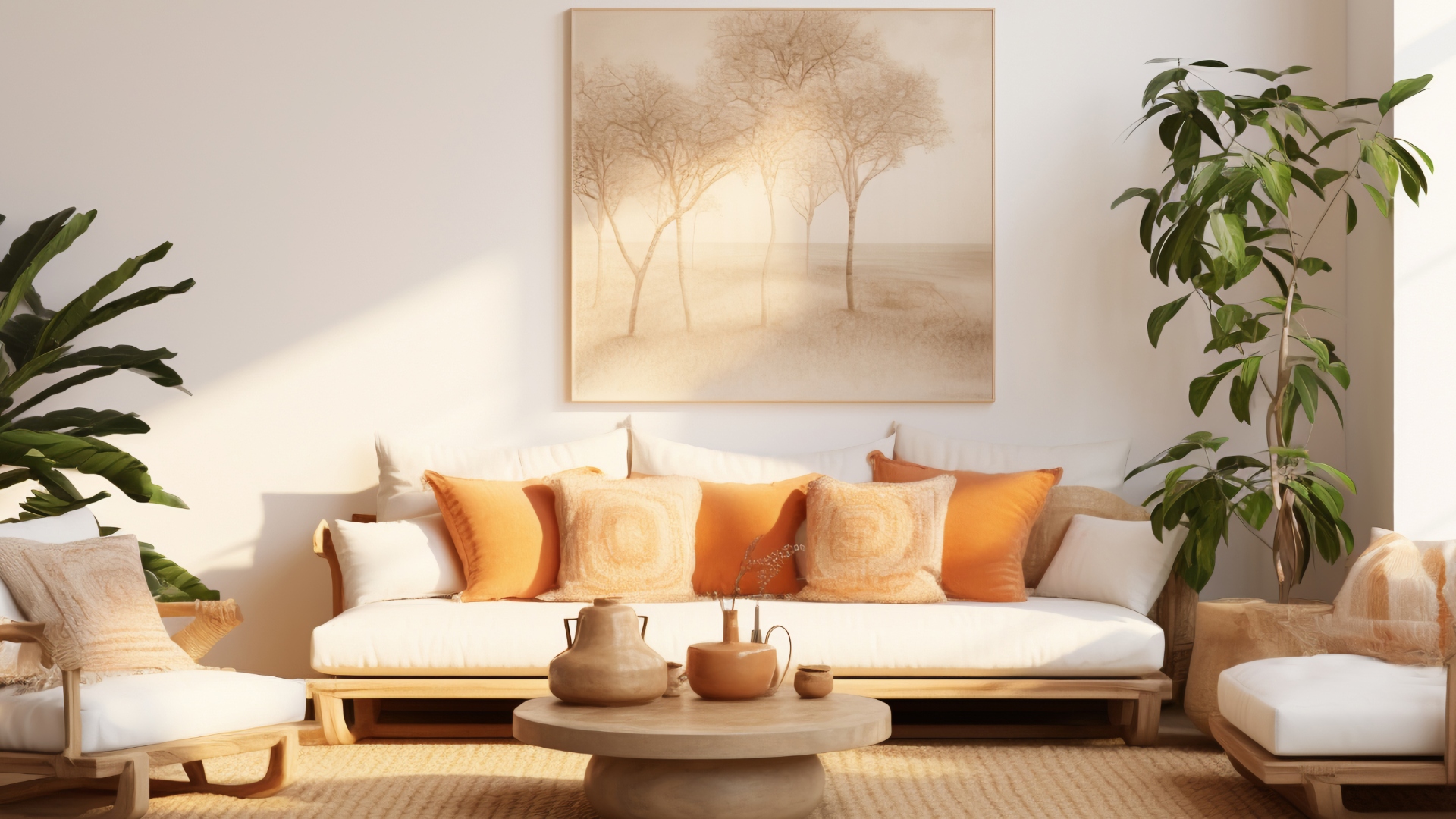
In the living room, the sofa sets the tone: it structures the space, invites relaxation, and brings loved ones together. Yet, a very common arrangement choice can sometimes throw the room off balance. Does it really always have to be placed against a wall? Not necessarily.
The reflex to place one's sofa against a wall
Out of habit, lack of space, or simply because it seems the most logical solution, many people place their sofa directly against a wall. This arrangement can indeed be practical in some homes, especially small spaces where every centimeter counts.
However, in a larger room, this automatic placement can create a less welcoming effect. By pushing all the furniture against the walls, a large empty space is created in the center of the living room, which can give a cold and uninviting impression. The room then seems less lively, as if the furniture is waiting for its place instead of creating a true haven.
Lifting the sofa: a simple trick for a more balanced living room
Sometimes, just a few centimeters are enough to completely transform the atmosphere of a room. Moving the sofa slightly away from the wall can give the living room more depth and create a more organized sense of space. This trick, often used by interior design professionals, helps create a more fluid and harmonious space. The sofa then becomes an integral part of the decor, and not simply a piece of furniture placed against a wall.
In large rooms or open spaces, this idea can even become a real asset. A sofa placed in the center can serve as a natural divider between several areas: the relaxation area can thus be distinguished from the dining room or kitchen without the need to add a partition.
Prioritize conviviality above all
A pleasant living room is first and foremost a place for sharing. The furniture arrangement therefore plays a crucial role in the overall atmosphere. Rather than placing seating far apart, it's better to create a space that encourages conversation. An armchair placed opposite the sofa, a second seat, or a well-positioned coffee table can transform the room into a true gathering place.
The goal isn't just to have a pretty living room, but a space where you feel comfortable, where you want to settle in and chat. A rug can also help structure the space. Chosen in an appropriate size, it visually connects the different pieces of furniture. Ideally, the front legs of the sofa and armchairs should rest on it to create a more cohesive composition.
Preserve light and natural circulation
The perfect placement for your sofa also depends on the room's surroundings. Even the most beautiful arrangement loses its appeal if it blocks a window, reduces natural light, or forces you to navigate between furniture. Maintaining a smooth flow of movement is essential for a pleasant everyday living space.
The sofa can ideally be positioned to face a focal point: a fireplace, a bookcase, a beautiful window, or a decorative piece of furniture. Conversely, placing the sofa with its back to the entrance can sometimes create a less open and welcoming feeling.
There are no absolute rules in decorating.
While moving your sofa away from the wall can bring a new balance to some living rooms, it doesn't mean there's a hard and fast rule to follow. Every home is different, every room has its constraints, and every person has their own desires. Decorating isn't a list of prohibitions to be strictly observed. There are no hard and fast rules when it comes to layout, just as there are no rules in any other area. If having your sofa against a wall suits you, provides comfort, and reflects your lifestyle, then it's the right choice.
Ultimately, the most important thing is to create an interior where you feel comfortable. Sometimes, a simple change of position is enough to rediscover your living room, but the best layout will always be the one that suits your daily life and your personality.