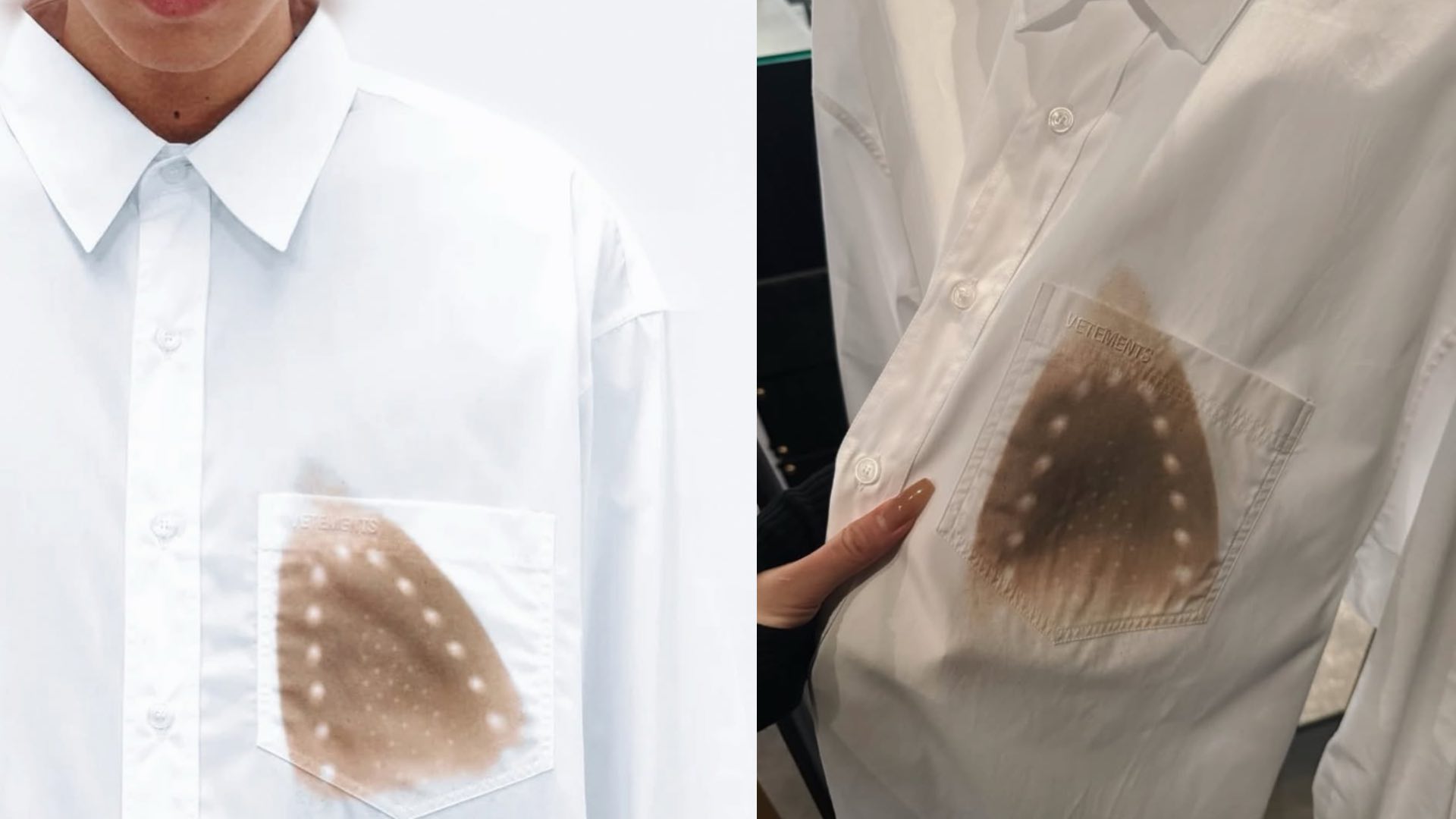
A white shirt with a brownish mark, as if your iron had slipped… and priced at nearly $1,000. That was all it took to set social media ablaze. Behind the laughter, indignation, and fascination, a real question arises: what if imperfection has become the new language of luxury?
CLOTHING: irony as a signature
The VETEMENTS brand, headed by Guram Gvasalia, recently unveiled a white shirt deliberately marked with a trace reminiscent of an iron burn. A detail that, in another life, would have triggered a crisis before an important meeting. Here, it becomes the heart of the design.
Priced at around $1,000 according to several specialized media outlets, the garment plays with a universal symbol: for decades, the impeccable, perfectly ironed shirt symbolized seriousness, control, and respectability. With this "worn" version, the flaw is no longer hidden. It is embraced.
On social media, reactions are mixed. Some applaud the provocation, which is true to the conceptual DNA of the VETEMENTS brand. Others denounce it as an excess of the luxury industry, arguing that a garment with a distressed appearance shouldn't command such a price.
View this post on Instagram
A conceptual legacy: from Maison Margiela to today
The approach is not new. In 2007, Martin Margiela presented a tank top for Maison Margiela called "Iron Burn," also featuring a simulated burn effect. Even then, the garments seemed to bear the marks of a history: visible seams, exposed linings, and deliberately aged materials.
This aesthetic already challenged the classic definition of luxury, long associated with "immaculate perfection" and "dazzling newness." Why should a garment automatically lose value simply because it bears a brand name? What if, on the contrary, that brand became a desirable element? The VETEMENTS shirt clearly falls into this category: it transforms what would normally be perceived as a "flaw" into a visual signature.
Is imperfection the new code of chic?
In recent seasons, several fashion houses have explored the idea of intentionally imperfect clothing. At Prada, under the direction of Miuccia Prada and Raf Simons, creased or distressed silhouettes graced the runway. Meanwhile, Acne Studios regularly offers faded, patinated, or stained jeans, their wear and tear meticulously crafted in the atelier.
According to analyses published by Vogue and Business of Fashion, contemporary luxury is no longer solely based on brilliance and perfection. It now draws on storytelling, artistic intent, and a statement of intent.
Marketing provocation or cultural reflection?
The virality of the VETEMENTS shirt is largely due to its price. In the collective imagination, a stain or a burn diminishes the value of a garment. Here, it justifies it. This reversal fuels the global debate: is luxury fashion seeking to challenge our aesthetic norms or simply to generate buzz?
Fashion sociologists remind us that luxury operates through distinction. What seems absurd to some can become a sign of belonging for others. The object transcends its practical function to become a cultural symbol. In a context where sustainability and simplicity are increasingly valued, seeing a garment designed to mimic wear and tear sold at a high price may seem paradoxical. Yet, some also see it as a way to normalize the marks of time, to demystify the idea of the "perfect garment."
Beyond the controversy, this shirt raises a broader question: why do we still associate value with the complete absence of flaws? In other areas—the body, skin, hair—attitudes are evolving toward greater acceptance and authenticity. Fashion, too, seems to be exploring this path.
Ultimately, the "damaged" shirt from the VETEMENTS brand is more than just a marketing ploy. It's part of a conceptual tradition that questions perfection, value, and our relationship with objects. Whether you find it brilliant or perplexing, it has already achieved something: sparking a global conversation about what you consider desirable. And sometimes, in luxury as elsewhere, it's precisely this discussion that creates value.