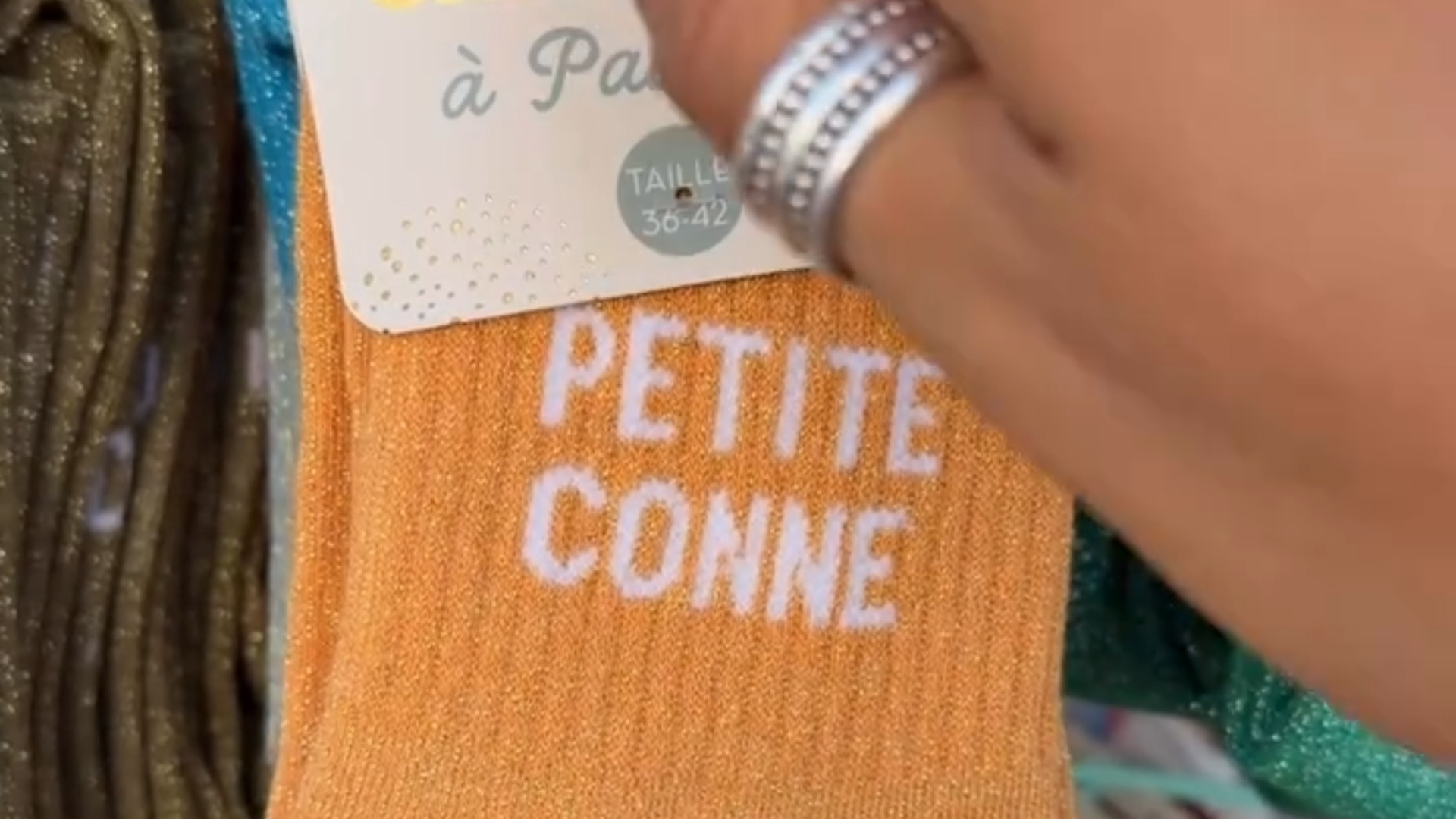
Clothing with slogans blends seamlessly into everyday outfits. However, these socks feature not feminist slogans or positive affirmations, but rather insults disguised as feminine terms, softened by glitter and pastel colors. These insults, presented as a style statement, perpetuate sexism even in the realm of fashion. A content creator has deemed this design choice misogynistic and is calling for a boycott of these unflattering fabrics.
Controversial anti-feminist socks
In the stores, fashion items become epitaphs, even billboards in their own right. T-shirts take the form of scribbled blank sheets of paper, while accessories display catchy phrases or keywords that instantly lift your spirits. These clothes are particularly articulate. Positive maxims are written in capital letters across chests. Activist slogans embroidered on blouses transform the body into a living placard.
Generally, these fashion pieces, resembling posters, are quite complimentary. Admittedly, the quotes plastered across the middle of the garment are sometimes kitschy or seem to have been salvaged from an old Skyblog page, but they remain harmless. However, a pair of socks, spotted at random on a shelf, between candy necklaces and birthday glasses adorned with dollar signs, breaks this sacrosanct benevolence.
Instead of promoting self-love and self-respect under jeans, they gratuitously attack women. “Bitch,” “crazy,” “tease,” and other delightful linguistic insults adorn these socks, which are clearly not designed to mend our confidence. Presented as a humorous gift or a joke to wear, they are, in fact, a pure product of sexism. Far from supporting self-esteem, they bruise it and reflect a mindset that is the antithesis of positivity. “We absolutely must consider the energetic impact of these words when we wear them,” proclaims @ jade.fitoussi, a content creator who practices introspection and also leads spiritual retreats.
View this post on Instagram
The problem: there is no male equivalent, or very few.
These socks, sprinkled with glitter and available in cheerful colors that contrast sharply with the crude messages stitched across them, are unlikely to cause their recipients' ankles to swell. Far from the endearing declarations prescribed in self-help manuals, they are almost always addressed to women.
Men, on the other hand, are entitled to more lenient variations such as “charming,” “champion,” “ideal son-in-law,” or even “little guy.” Yet, on supply websites, there are harsher messages at the polar opposite of compliments, such as “player,” “loser,” and “stingy.” However, retailers rarely include these in their inventory. And this is far from being a coincidence or simply a matter of taste. This difference in treatment between men and women is a recurring issue.
In a society that praises ambitious men but labels their female counterparts as mercenary careerists, and that heaps superlatives on men while heaping criticism on women, it's no surprise to see the emergence of socks that are degrading for women and empowering for men. "As long as we find this funny and tolerate this kind of talk, there will always be inequality," adds @theafourdrinier, a lawyer by profession.
View this post on Instagram
Using positive words, the response to this aggressive design
These socks, straight out of the patriarchal imagination, can affect our self-esteem and influence our way of thinking. They have the same effect as those vicious nicknames heard on the playground. They belong more in the starting pack of haters or masculinists than on the feet of women, who deserve better than this outburst of verbal violence. “Every word has a vibration, an impact on our mood, our cortisol levels, our muscle tension,” reminds @jade.fitoussi, who advocates for choosing more courteous and less humiliating fabrics.
And not clothes labeled “Pretty Lady” that once again reduce women to their appearance, nor t-shirts emblazoned with “Miss Perfection,” which refer to an unattainable ideal. No, pieces with the word “Love” as the main motif or praise written in the first person on the front of a shirt. Because flowers are worth more than spikes.
These socks, covered in insults, hit the ground hard. Even if insults can be a code word among girlfriends, in the shopping aisle, they come across as a targeted attack, a veiled hatred, or even an attempt to belittle someone. Instead, we opt for models that are good for us, adorned with "badass" or "girl power."