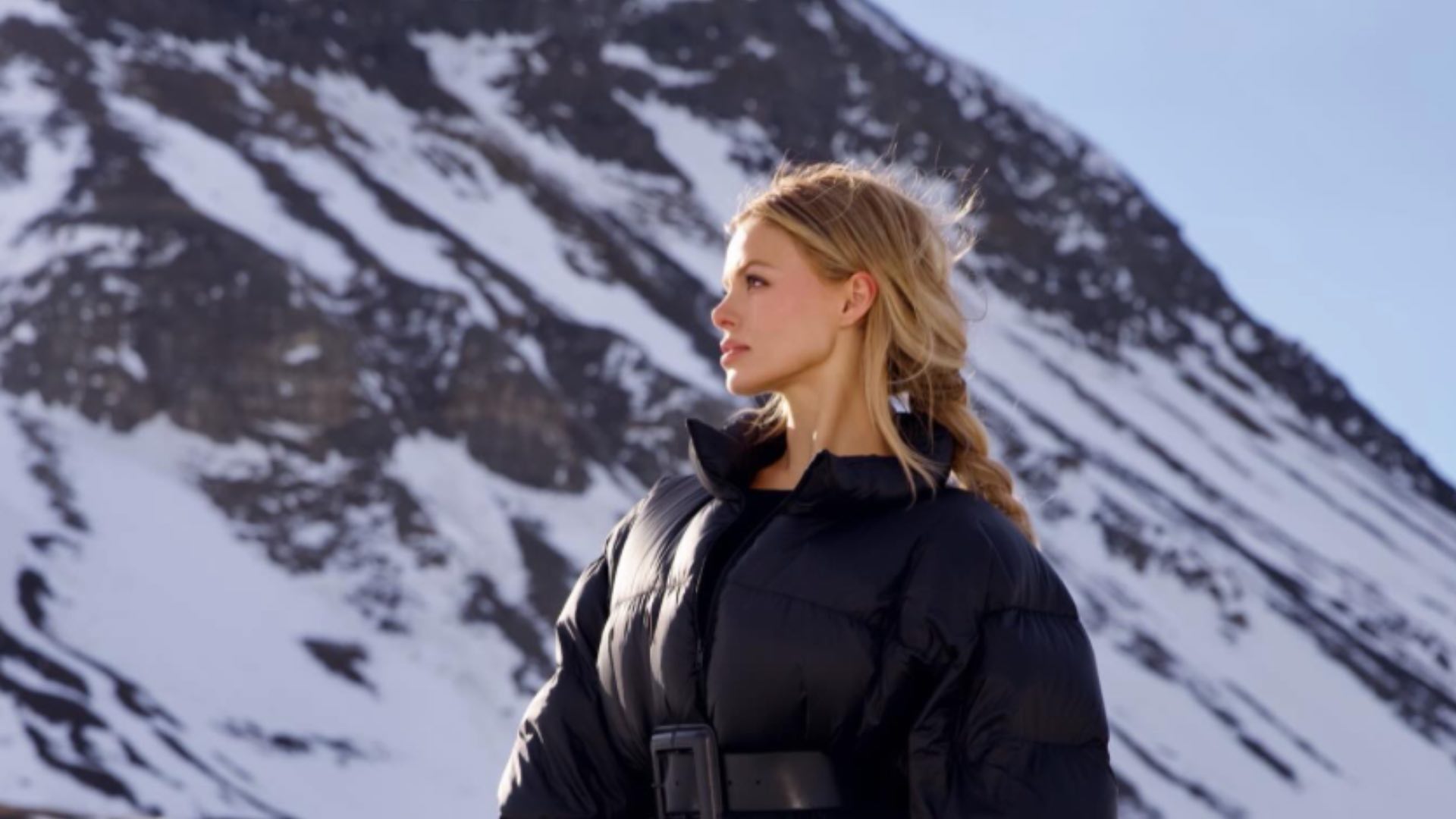
Four girls from Louisiana (USA), the Arctic, and an expedition that "almost went wrong"—that's how American model and television personality Brooks Nader summed up her adventure on Instagram. Behind the "playful" caption was a real scientific mission, and an immediate debate about what she wore.
A serious scientific expedition
Brooks Nader and her three sisters—Mary Holland, Grace Ann, and Sarah Jane—traveled to Svalbard, Norway, to participate in the first-ever study examining how extreme polar environments affect women's health. Conducted in partnership with the Space Prize Foundation, NYU Langone Health, and the University of Arizona, the experiment was designed to replicate the conditions astronauts face in space: extreme temperatures, isolation, and disrupted light-dark cycles. The program included snowmobiling, cross-country skiing through glacial valleys, and the collection of real-time biological data.
What the researchers wanted to measure
The data collected concerned the effects of extreme environmental conditions on female hormonal balance, menstrual cycles, sleep patterns, and overall physiological adaptation. Wearable sleep monitoring and biological sampling devices were used throughout the trip, followed by post-trip assessments to analyze recovery and physiological recalibration. The results will be submitted to a peer-reviewed scientific journal and presented at international conferences, including the SLEEP Meeting in June 2026.
The debate over the outfit
Beyond the scientific expedition itself, it was Brooks Nader's outfit that truly captured attention on her Instagram post. While her lighthearted and quirky caption ("4 girls from southern Louisiana go to the Arctic and almost don't come back... All for SCIENCE, girls") helped generate buzz around the ABC Nightline report, it was primarily the clothing choices seen in some of the photos that sparked the most reactions.
Between criticism of their unsuitability for the Arctic climate and defenses of a more accessible and modern approach to science, the debate quickly shifted from the project's substance to its appearance. It remains essential to remember that there is no place to comment on or judge a woman's body or appearance—or anyone else's, for that matter. Everyone is free to dress as they please, and being a public figure in no way justifies criticism or judgment of images shared on social media.
View this post on Instagram
An issue that goes far beyond the expedition.
In a statement, the Nader sisters expressed their vision for the project: "This is both a scientific contribution and a cultural statement. We see this as an opportunity to continue the conversation we have around women's health towards a new frontier - what our bodies are capable of when pushed to the extreme. We hope that our participation will inspire other women to participate in future research."
The study was designed to "fill a critical gap in medical and space research, with implications for women's health on Earth and for the feasibility of human reproduction and long-duration space travel." In other words, understanding how the female body reacts to extreme conditions is not a minor issue. It is fundamental to the future of space exploration—and the Nader sisters, with their open jackets and smiles, have become its "most unexpected" ambassadors.
Ultimately, regardless of their light clothing in the Arctic, Brooks Nader and his three sisters, Mary Holland, Grace Ann, and Sarah Jane, brought back scientific data from Svalbard that few would have thought to collect. The debate about their attire has at least had one merit: shining a spotlight on research that desperately needed it.