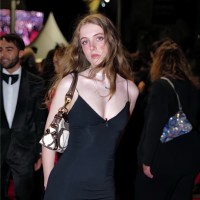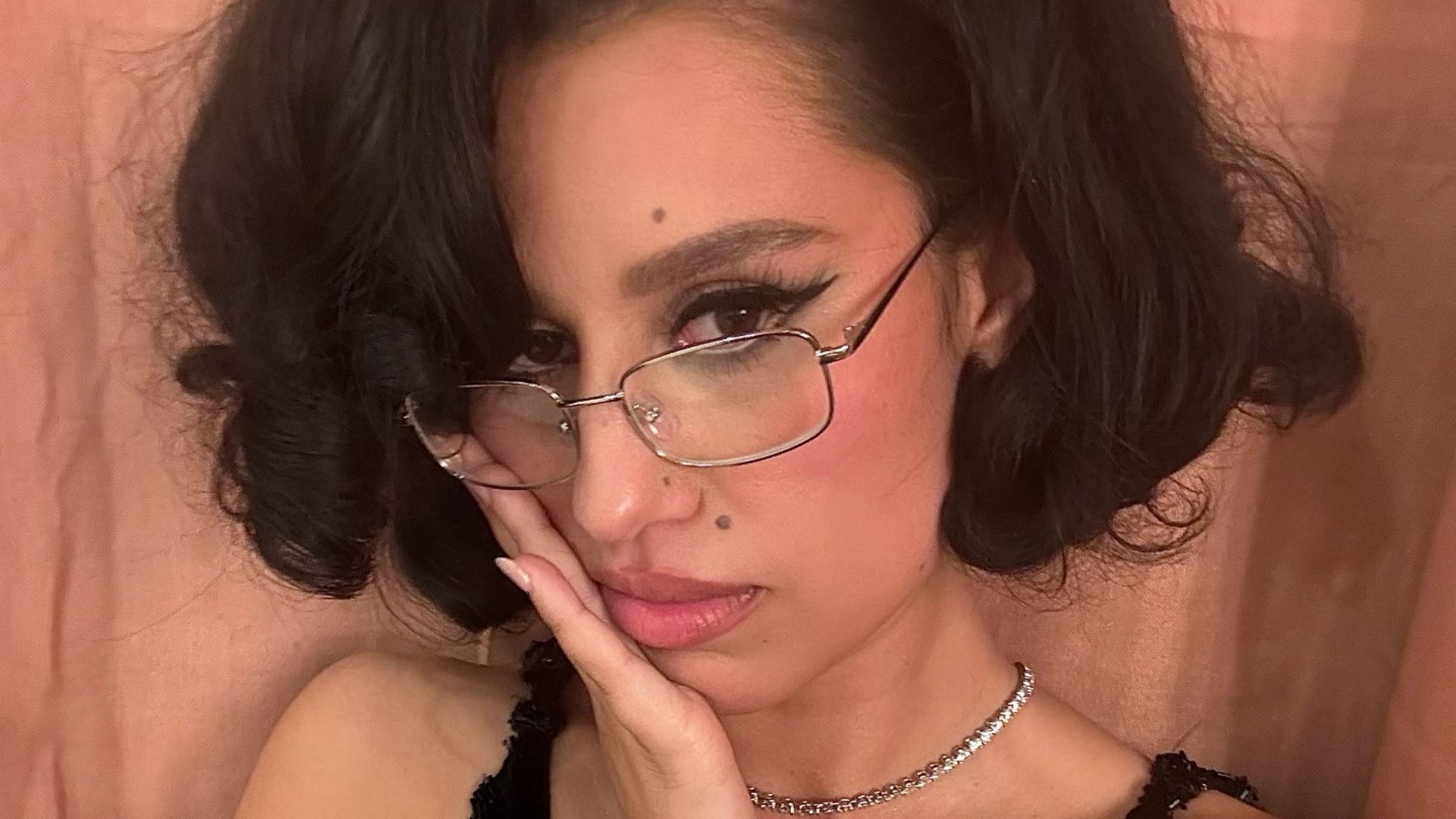
British singer-songwriter Raye, often compared to British singer Amy Winehouse, has decided to directly address these comparisons and the online hate that accompanies them. In a recent interview , she affirms her admiration for the Camden legend while reiterating that Amy is, and will remain, "irreplaceable and inimitable."
An "heiress" against her will
Since her rise to fame, Raye has regularly been presented as a kind of successor to Amy Winehouse, as their musical worlds draw from the same sources of jazz, soul, and retro influences. She explains that she "lives and breathes" the same influences, citing icons such as the American blues, jazz, and gospel singer and pianist Dinah Washington, the American jazz singer Ella Fitzgerald, and the American jazz singer Sarah Vaughan, who nourish her writing and singing style.
However, Raye refuses to be given a crown that doesn't belong to her. She insists that what Amy Winehouse accomplished remains unique, emphasizing that no artist, herself included, will ever be able to "do what she did."
"You'll never be her": the violence of social media
Behind the flattering comparisons lies a much darker reality: the cyberbullying Raye has endured since her career took off globally. She recounts the brutality of the messages she receives, where some internet users hurl phrases at her like: “You’ll never be her. You’re an absolute failure. You disgust me for even thinking you could be anything like her.” What strikes her most is the tragic irony of this hatred, often expressed in the name of defending Amy Winehouse. According to Raye, those who claim to protect her memory are replicating the very media and public cruelty that contributed to shattering the British icon in the 2000s.
A painful mirror with Amy Winehouse
Without positioning herself as Amy's equal or "double," Raye acknowledges perceiving an echo between the hatred she faces and that which struck the "Back to Black" singer. She clarifies that she hasn't experienced "even a hundredth" of what Amy endured, but admits that the atmosphere of harassment and constant surveillance reminds her of certain aspects of it.
Raye goes even further by pointing to the potential role of this violence in the tragic end of Amy Winehouse, who died at 27 in 2011. In his view, if the artist had not been so hounded, judged and humiliated by the media and the public, "she would probably still be here today."
View this post on Instagram
A plea for the mental health of artists
Through this testimony, Raye is not so much seeking to complain as to raise awareness of the fragility of artists exposed to constant pressure. She reminds us that behind the spotlight, every musician remains a vulnerable person, whose equilibrium can be profoundly affected by insults, mockery, and relentless comparisons.
Her message sounds like a warning: idolizing a legend should never be used as a pretext to tear down those who follow in their footsteps. By refusing to "become" Amy Winehouse while still paying tribute to her, Raye asserts her right to exist for who she is, without having to bear a legacy too heavy for one person.
Raye puts a face to the everyday violence of social media and shows how admiration for an icon can be turned into a weapon against other artists. By reminding us that Amy Winehouse is inimitable, she primarily invites the public to change their perspective: to celebrate legacies without demanding imitations, and to protect the mental health of those who, every day, expose their vulnerabilities through music.