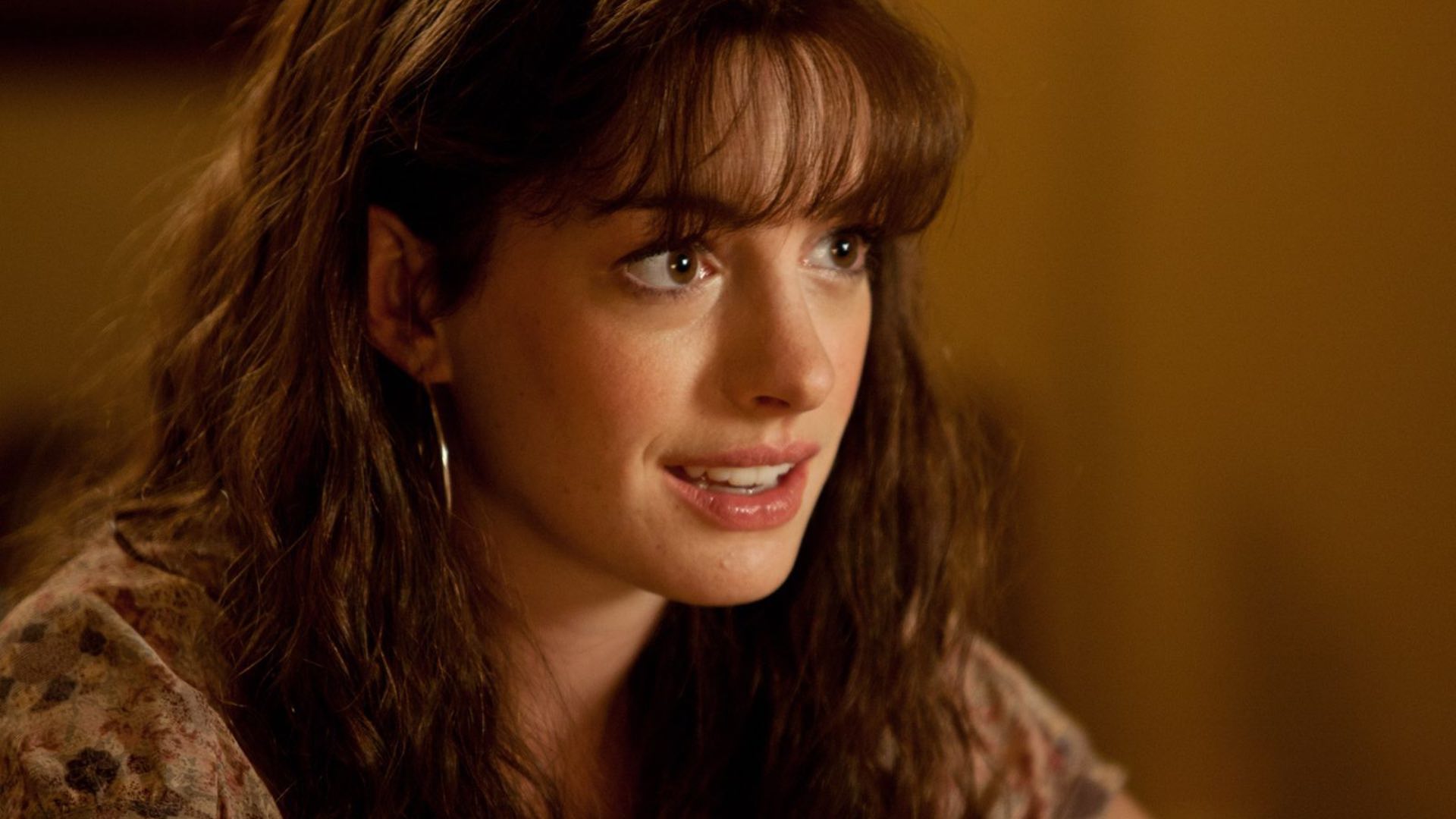
For a decade, American actress Anne Hathaway lived with a heavy secret. She revealed that she had been "half-blind" throughout her thirties, due to a debilitating illness that had remained completely private until now.
"I was half-blind for ten years."
It was during an interview on the New York Times podcast "Popcast" that Anne Hathaway shared an unexpected and intimate revelation. "I was partially blind for ten years," she confided, referring to the period from her 30s to her 40s. She endured this ordeal in silence, never speaking about it publicly, all while continuing to star in successful films. "This might be too much information," she even cautioned, before opening up.
Early cataracts, "legally blind" in one eye
The cause of this disability: early-onset cataracts, which affected her left eye. This condition occurs when the eye's normally clear lens becomes cloudy—a phenomenon most often observed in later life. In Anne Hathaway's case, the vision loss became so severe that, as she explained, "It affected my vision so much that I was practically blind in my left eye."
A life-saving operation
Around the age of forty, Anne Hathaway finally had surgery—a decision that changed everything. “I didn’t realize how much worse things had gotten until I could finally see the full spectrum of colors,” she recounted. Anne Hathaway also discovered, in retrospect, that her condition had put a strain on her nervous system, without her being aware of it. “I’ve calmed down since then,” she acknowledged.
"A miracle": the gratitude of seeing again
Now fully recovered, the star of "The Devil Wears Prada" says she is deeply grateful for advances in medicine. "I appreciate my sight because I literally feel like every day when I wake up and can see like this, it's a miracle," she confides. And she adds, with emotion, "Two generations ago, none of this would have been possible for someone like me." This realization leads her to savor every moment.
By breaking the silence surrounding this long-secret illness, Anne Hathaway reminds us that the most difficult trials are not always visible. Her account, both intimate and luminous, celebrates a "second chance"—and the sometimes-forgotten value of simply being able to see the world in color.