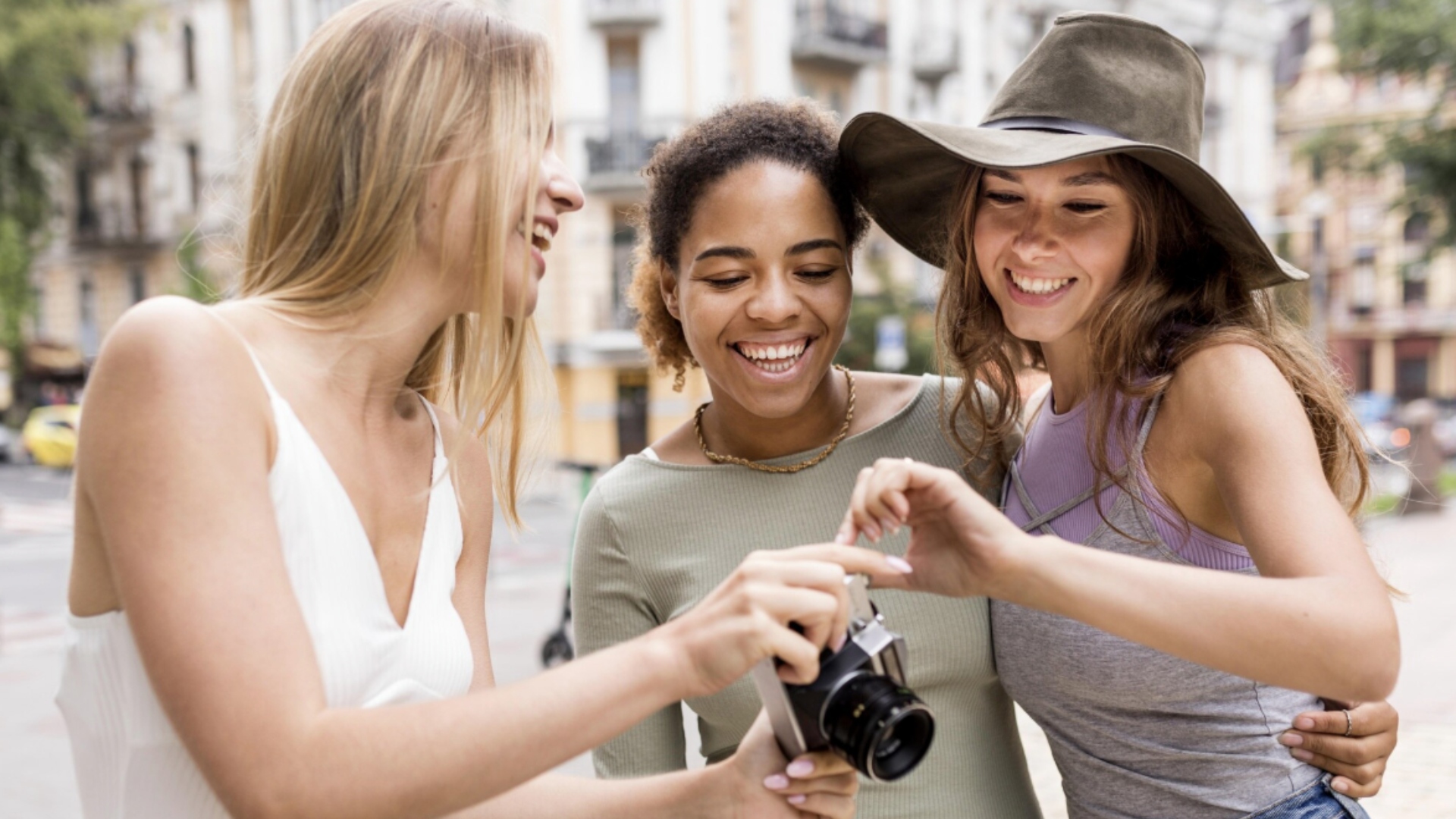
At the moment of the group click, some women prefer to slip out of the frame. This discreet gesture is intriguing, but it stems neither from a whim nor a simple lack of desire. Behind this refusal often lies an intimate, complex, and profoundly human connection to one's self-image.
A self-image under close surveillance
In the age of social media, photography is no longer a simple memory: it has become an object of analysis, comparison, and sometimes judgment. For many women, appearing in a group photo means exposing themselves to a double gaze—that of others, but also their own. Once the photo is taken, a silent decoding often begins: posture, smile, outfit, angle… everything is scrutinized.
Even without negative intent, this moment can trigger a flood of self-assessments. Do I look my best? Do I look comfortable? Do I recognize myself? These thoughts, sometimes fleeting, sometimes persistent, can be enough to make the experience uncomfortable. Refusing the photo then becomes a way to protect oneself emotionally.
Social comparison: an amplified human reflex
Comparing oneself is part of human nature, but visual environments like Instagram and Facebook have intensified this phenomenon . A group photo becomes fertile ground for self-comparison, especially when self-esteem is fragile. Some women unconsciously fear measuring themselves against others, whether in terms of appearance, confidence, style, or energy.
In a society that often values the most flattering images, the idea of appearing in an uncontrolled photograph can be unsettling. This isn't a matter of vanity, but an understandable reaction to a culture of image where perfection seems to be the norm—while true beauty lies in diversity, uniqueness, and authenticity.
A still very gendered aesthetic pressure
The mental burden associated with appearance disproportionately affects women. From a very young age, they learn that their bodies, faces, and demeanor are scrutinized, evaluated, and commented on. This constant pressure can make visual exposure more difficult to bear. In this context, refusing a group photo can become an act of self-protection, even gentle resistance. It's not a rejection of others, but a way of saying, "I choose when and how I present myself." A legitimate choice, imbued with self-respect and an awareness of one's boundaries.
The need for control over one's image
Some women also express a strong need to control their image. Being photographed unprepared, in an unchosen pose, or under unflattering lighting can create a feeling of vulnerability. In the digital age, where an image can be shared instantly and without explicit consent, this need for control becomes even more important.
Refusing a group photo is sometimes simply a way of taking back control of how we present ourselves. It's about choosing what we show, when we show it, and to whom. This gesture, far from being superficial, can be deeply rooted in a desire to respect and protect ourselves.
A common behavior, but often misunderstood
This discreet withdrawal is frequently interpreted as shyness, reserve, or a lack of enthusiasm. Yet, it often masks personal experiences related to image, self-confidence, or a feeling of not fitting in with certain social norms. Behind this choice sometimes lie life stories, invisible wounds, or simply a particular sensitivity to the gaze of others.
Recognizing these realities also means broadening our understanding of how women position themselves in relation to themselves and others. It means accepting that the relationship to image is neither simple nor universal.
Ultimately, refusing a group photo doesn't mean rejecting your own beauty. On the contrary, it can be a step towards a more respectful, conscious, and compassionate relationship with your body and image. Every woman deserves to feel comfortable, dignified, and confident, whether she's in the frame or not.