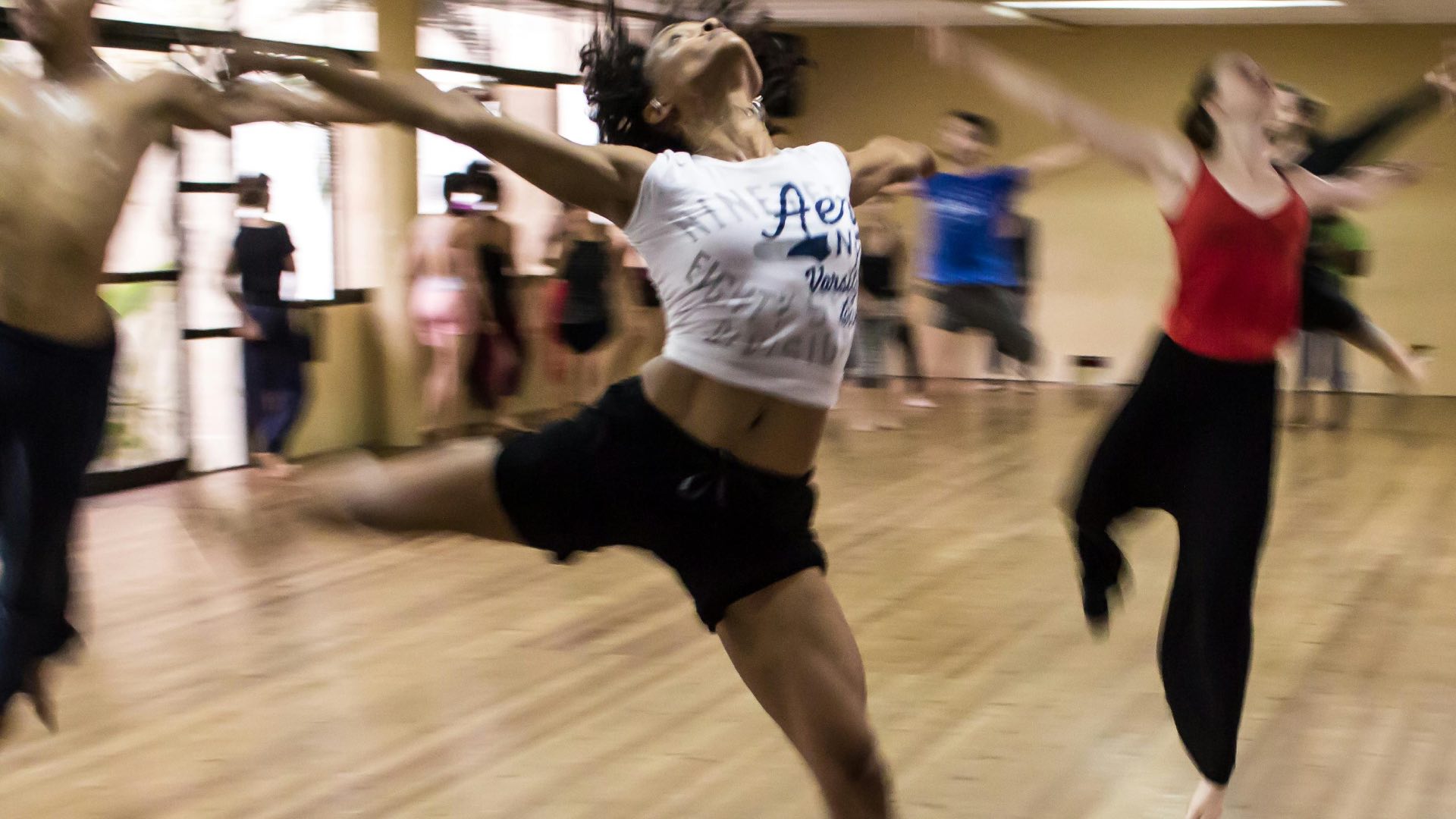
What if your dance steps worked much more than just your legs? According to a study published in 2025, regular dance practice is associated with a brain exhibiting characteristics comparable to those of younger people, sometimes up to seven years behind in certain markers. This is welcome news, provided we don't turn it into a new injunction to stay "young at all costs."
A study that intrigues the scientific community
Research published in Nature Communications observed that people who dance regularly exhibit brain characteristics less marked by aging than those who are more sedentary. Note that your brain cannot turn back time. However, certain indicators related to memory and learning appear to be better preserved.
Researchers report a difference of up to seven years in certain brain markers. This means that the structure or function of some brain areas more closely resembles that of younger individuals. An encouraging result, but one that is part of a broader set of lifestyle-related factors.
Why does dance stimulate the brain so much?
All physical activities are beneficial for overall health, but dance has a unique characteristic: it engages both body and mind simultaneously. Dancing is not simply repeating a mechanical movement. You must memorize sequences, anticipate the rhythm, coordinate your movements in space, and sometimes interact with a partner. Memory, attention, balance, sensory perception, and executive functions are all mobilized at the same time.
This multiple stimulation activates brain plasticity, the brain's ability to create and strengthen neural connections throughout life. According to current neuroscience , this plasticity plays a key role in learning and preserving cognitive functions. By introducing new steps, new choreography, and new coordination, dance maintains this dynamic.
Much more than just physical exercise
Dance is more than just an energy expenditure. It also engages emotions and fosters social connection. Interpreting music, feeling a rhythm, moving in a group: all of this stimulates extensive brain networks. Regular social interaction is associated with better mental health. Music, in turn, activates numerous areas of the brain linked to memory and emotions. Combined with movement, they enhance cognitive engagement.
The World Health Organization also points out that regular physical activity helps reduce the risk of cognitive decline. Dance fits perfectly into these recommendations, with the added bonus of a playful and creative dimension that encourages regularity.
Do you have to dance intensely to enjoy it?
No. The observed benefits seem primarily linked to regularity. A few sessions per week can be enough, whether it's ballroom dancing, salsa, contemporary dance, or even classes taken at home. The most important thing is consistency. An activity you enjoy is more likely to stick with you long-term. And it's this gentle but regular repetition that supports the mechanisms associated with brain stimulation.
Not a race for youth
It's essential to put these results into perspective. Yes, dance can be associated with more favorable brain markers. No, this doesn't mean you absolutely have to sign up for a class to "stay young." Aging is natural. Your body changes, your skin evolves, your pace changes too. And that's perfectly okay.
Moving should never become an added pressure, nor a new imperative to defy time. You can choose to dance for pleasure, for the joy of movement, to feel your body expressive. You can also prefer another activity. Or simply move in your own way, when you can and when you feel like it.
Ultimately, dance beautifully illustrates the link between movement and brain health. It combines physical exertion, intellectual stimulation, emotion, and social connection. However, the most important message isn't about chasing a "younger" brain. It's about taking care of yourself gently. Your worth isn't measured by your age or your performance. Growing older isn't a failure to correct; it's an evolution to fully embrace—with or without choreography.