
On the occasion of World Bipolar Day on March 30th, a question deserves to be asked: why do certain experiences remain on the margins of wellness discourse? While inclusivity and self-acceptance are increasingly discussed, some journeys, particularly those related to bipolar disorder, remain largely invisible, as many psychiatry and mental health specialists lament. And what if body positivity, too, has blind spots?
When well-being overlooks certain realities
Body positivity has helped shift perceptions of bodies. It has opened up spaces for discussing acceptance, diversity, and self-respect. However, in the realm of mental health, not all experiences yet receive the same visibility. In current discussions, anxiety and depression occupy a significant place, and this is essential. But other realities, such as bipolar disorder, often remain in the background, as if they were more difficult to integrate into "inclusive narratives of well-being."
This imbalance does not mean that these topics are less important; quite the contrary. Rather, it shows that areas of silence still exist, even in spaces designed to be inclusive, despite numerous studies and testimonies from people affected by bipolar disorder highlighting that speaking out helps to break down taboos, promotes self-acceptance, and fosters greater social recognition.
"Too much": the word that sticks
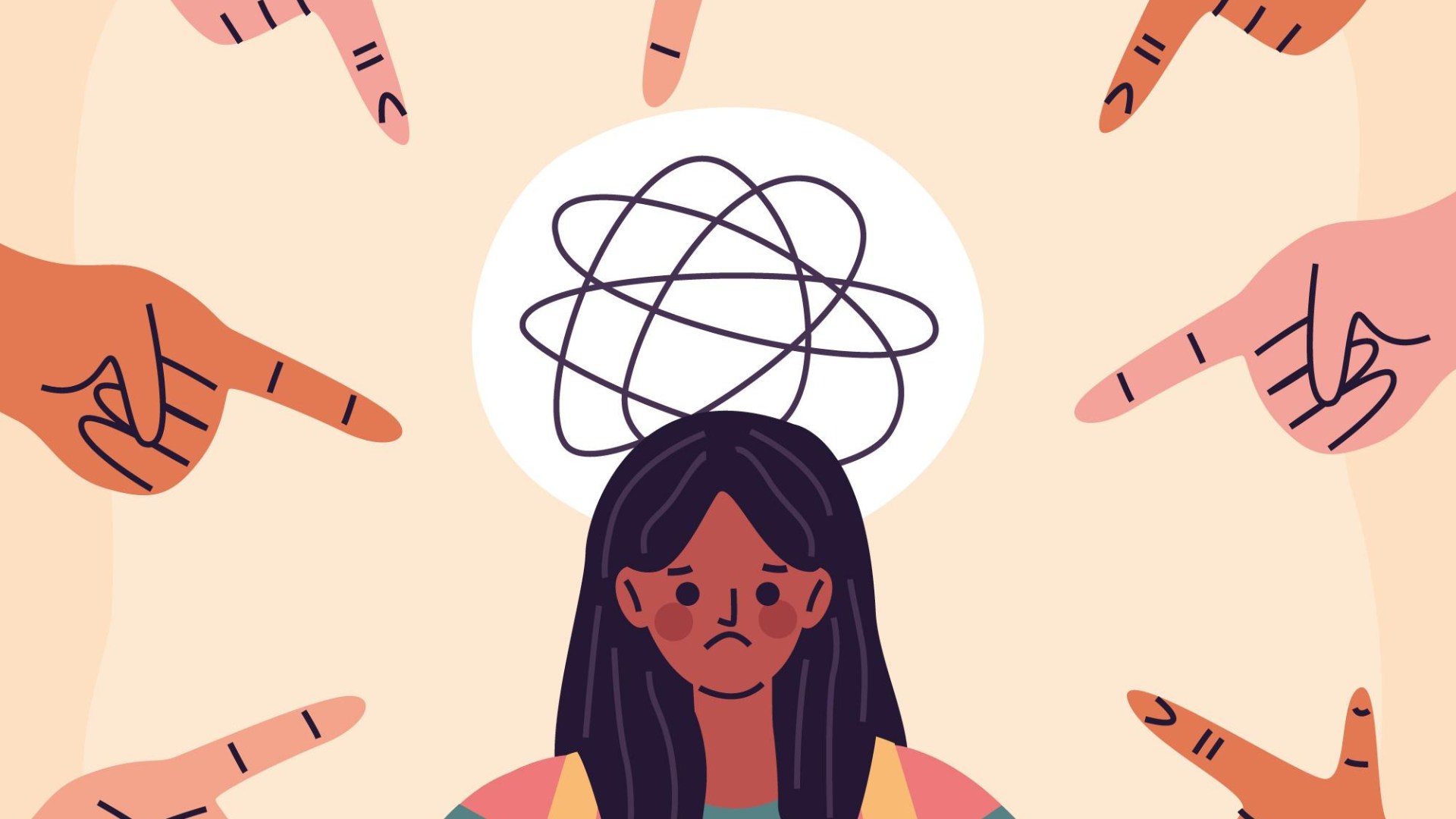
Many people affected by bipolar disorder share a common feeling: that of being perceived as "too much." "Too intense," "too emotional," "too unstable," sometimes even "too visible" or, conversely, "too withdrawn." These labels don't just apply to emotions. They can also affect the body, energy levels, the way of expressing oneself, or the way one experiences life.
In a society that often values consistency and control, these variations can be misunderstood. They then become a source of judgment, even exclusion, rather than listening. Body positivity encourages us to accept bodies as they are, but fully accepting people also means recognizing that emotional and psychological experiences can fluctuate, without this diminishing their value. As psychiatrists remind us, describing bipolar disorder as an alternation of states ranging from euphoria to depression , this is a complex reality that can be unsettling for those around the individual, but can in no way justify rejection, stigmatization, or minimization.
Words that are finally being freed.
On social media, things are slowly starting to change. More and more people are speaking out to share their experiences with bipolar disorder, without filters or oversimplification. These accounts offer a valuable form of authenticity. They reveal complex journeys, full of highs and lows, far removed from the sanitized or idealized portrayals of well-being.
This visibility also helps to dismantle certain misconceptions . No, living with bipolar disorder is not a caricature. And yes, it is possible to build a positive relationship with your body and yourself, even with fluctuating mental health. These voices contribute to broadening the scope of body positivity, incorporating realities that are still too often overlooked.
@leestomber No, bipolar disorder isn't "just mood swings." It's a real, invisible, but devastating mental illness that disrupts the lives of thousands of people. In this story, I'll explain where this disorder comes from, what it causes, and how to live with it. • #storytime #psychiatry #psychology #psychoeducation ♬ Original sound - Candice Lees 🌻
There is still a long way to go in the fight against psychophobia
Despite these advances, there is still a long way to go to combat psychophobia. It can manifest itself subtly, through judgments, stereotypes, or distancing. It can also be more direct, by limiting access to certain spaces or invalidating lived experiences.
In a body-positive approach, it's not just about valuing visible bodies, but also about recognizing all dimensions of identity, including mental health. This implies making space for stories that are less "comfortable," less "inspiring" in the traditional sense, but profoundly human.
Towards truly inclusive healthcare
If body positivity is to continue evolving, it must broaden its perspective. This means including diverse, sometimes unsettling, and often invisible experiences. Acknowledging bipolar disorder in these discussions means refusing to rank experiences. It also means remembering that you have the right to exist fully, with your body, your emotions, and your fluctuations.
Today, on World Bipolar Day, the challenge is not just to raise awareness. It is also to continue building spaces where everyone can feel legitimate, heard, and respected. Because a truly inclusive movement leaves no one behind.
