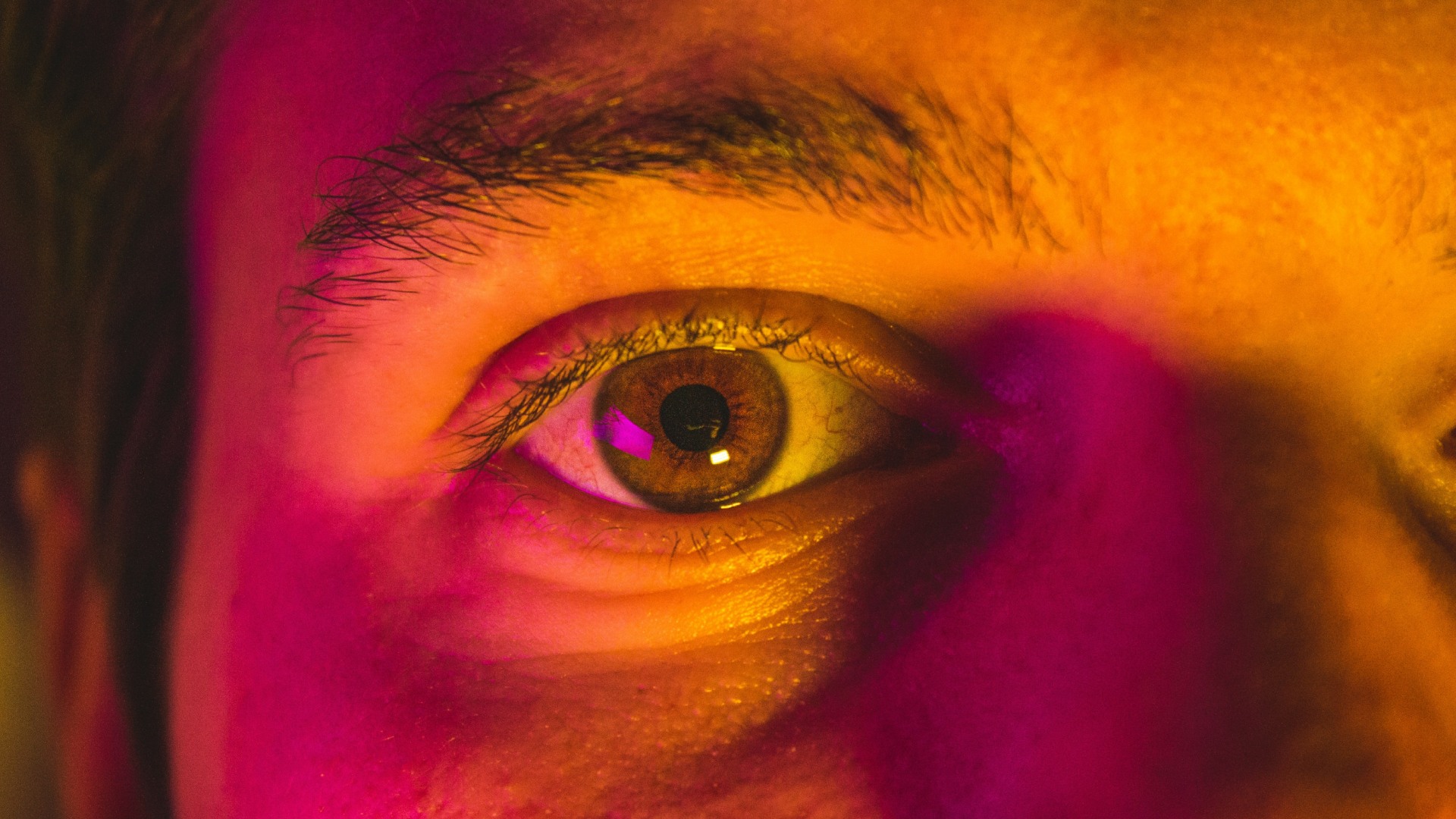
You do it without even realizing it. Your eyelids blink faster, and it's usually not to brush away a speck of dust. While in movies this little visual reflex is often associated with flirting—hence the expression "giving someone the eye"—it's far from being a demonstration of charm. Blinking rapidly is a signal from the body.
Interpretation through body language
The body can be very demonstrative and particularly expressive. It betrays certain emotions through subtle but clearly visible gestures: crossing the legs, tapping the foot, biting the nails, touching the nose for no apparent reason, twirling the hair around the index finger… A real-time translator would be needed to read the body and decipher these movements.
In body language, the eyes are also laden with messages. Sometimes we use them to enchant our audience, like Puss in Boots in Shrek, and other times we squint to show our displeasure. In the past, womanizers, the same ones who called all women "dolls," would wink in the hope of seducing them. The eyes, windows to the soul, can embody malice, anger, but also materialize stress.
Rapid blinking is often a sign of high stress. Blinking is a mechanical action that lubricates and cleans the eye. However, when eyes open and close so quickly that it attracts attention, it becomes a "protective reflex." "It can be an involuntary mechanism for relieving stress or tension," explains Dr. Kierzek in an article on Doctissimo . Rapid blinking can also be a form of nervous tic, just like fiddling with your hair or biting your cheeks.
An early sign of fatigue
Generally, when you're feeling tired, your eyelids feel heavy and threaten to close at any moment. You might feel like you have weights on the tips of your eyelashes. However, rapid blinking can also be an unconscious strategy to stay awake and maintain control.
Dr. Kierzek also mentions eye strain, the kind you experience after a long day in front of screens, which is sometimes accompanied by ocular migraines. It's a "response to eye strain." Hence the importance of taking regular breaks to disconnect from blue light.
Allergies as a backdrop
Sometimes the simplest explanation is the best. Rapid blinking isn't always a distress signal. Sometimes it's a natural tactic to counteract the adverse effects of an allergy. This can happen when someone is vaping in the car or when you're cleaning out your dusty attic. This can cause discomfort or irritation in the eyes, leading to more frequent blinking.
The pathologies that may be hiding behind
Blinking more frequently than normal may seem harmless at first. However, when it becomes repetitive, difficult to control, or persistent, it can reveal causes far more complex than simple temporary fatigue.
In some cases, this phenomenon is linked to so-called psychogenic disorders. These are physical manifestations that do not originate from a visible neurological abnormality, but rather from psychological tension. The body then takes over from the mind to express this unease, and the eyes unwittingly become the stage for this inner turmoil. Without giving in to panic or imagining the worst, rapid blinking can induce:
- Eye problems: dry eyes, irritation or a condition like cataracts can cause the eyelids to close.
- Migraines : some attacks are accompanied by eye symptoms, including more sustained blinking, linked to hypersensitivity to light or nervous tension.
- Anxiety disorders or post-traumatic stress: anxiety can manifest physically through tics or involuntary movements. Blinking then becomes a way for the body to release internal pressure.
- Neurological disorders: after a head injury or in rare cases related to brain abnormalities, the normal functioning of the eyelids may be disrupted.
- Side effects of substances or medications : caffeine , alcohol, certain antihistamines or antidepressants can influence the nervous system and cause this type of reaction.
While rapid blinking is often used in cartoons to charm audiences, the anatomical reality is much broader. From the resurgence of stress and fatigue to deeper issues, pay attention to your blinking as you would to your heartbeat.