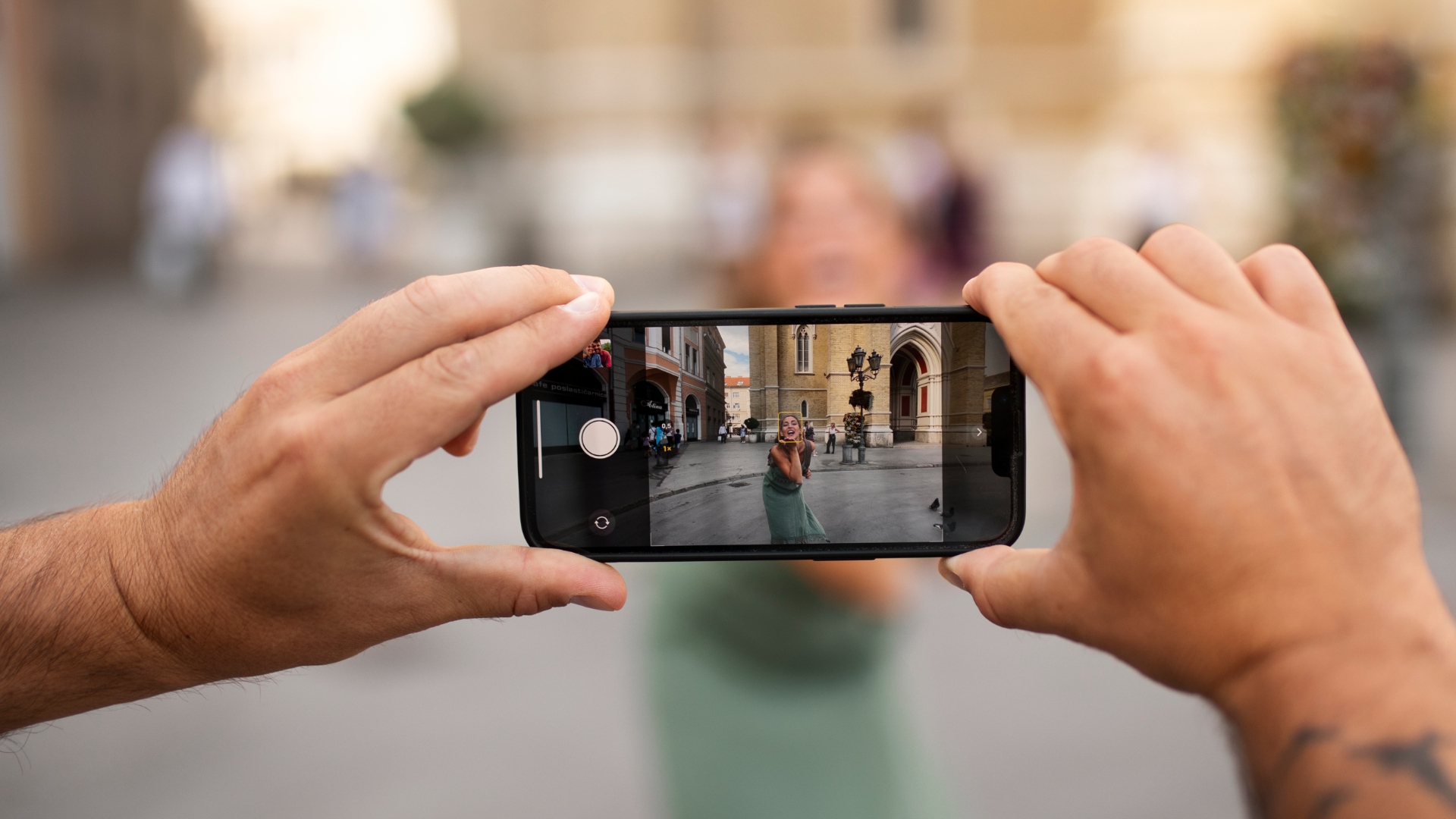
In the street, on public transport, or while queuing in a shop, women are increasingly being filmed without their knowledge. This act, facilitated by technology, is far from harmless: it infringes on privacy, respect, and the fundamental right to control one's own image.
A practice rendered almost invisible by technology
Today, filming someone no longer requires a bulky camera. A simple smartphone, disguised as a fake message, a pair of smart glasses, or even a watch with a built-in camera is enough to capture images without arousing suspicion. This discretion makes the act difficult to detect, and therefore more frequent.
What makes the situation even more concerning is how easily these videos can be shared. Some end up on social media, sometimes accompanied by inappropriate or sexualized comments. Others circulate in private groups, hidden from public view, but not from the consequences. A woman's image can thus be disseminated, misused, commented on, or mocked without her ever knowing. This loss of control is a direct attack on dignity and individual freedom.
Gender-based violence that is too often trivialized
This practice does not affect everyone in the same way. Women are by far the majority of those filmed without their consent, often because of their appearance, their clothing, or simply their presence in public. Their bodies become objects of digital consumption, frozen in a stolen image, taken out of context, and subjected to unwanted scrutiny.
Even without physical contact, it is a form of insidious violence. It creates a climate of insecurity, reinforces mistrust, and adds to an already significant mental burden. Wondering whether one is being watched, filmed, judged, or recorded becomes a silent but very real preoccupation. Yet, every woman has the right to move freely, to feel beautiful, confident, and legitimate in public spaces, without fearing that her image will be captured without her consent.
The legal framework: worrying grey areas
In France and many other countries, filming or photographing someone without their consent, in a private place or in an intimate situation, is punishable by law. However, in public spaces, the legal framework is less clear. As long as there is no dissemination or clear violation of dignity, it is often difficult to prosecute the perpetrators.
However, filming with the intent to harass, fetishize, or distribute without authorization can constitute an offense. The problem lies in identifying those responsible and proving intent, especially when the devices are discreet and the videos circulate rapidly. This legal difficulty reinforces the feeling of impunity and contributes to the normalization of the phenomenon.
Regain collective control
Faced with this reality, the response cannot rely solely on the victims. It is essential to raise public awareness, encourage witnesses to come forward, and reiterate a simple rule: just as one does not touch a body without consent, one does not capture an image without authorization.
In short, claiming the right to anonymity in public spaces means defending a vision of the world in which everyone can exist freely, without being reduced to a stolen image. It also means affirming that every woman deserves respect, safety, and the freedom to move about without fear. Your body, your image, and your presence belong to you, and that should never be negotiable.