Instead of relaxing under palm trees, fans of Mike Horn and other aspiring Robinsons are learning to make fire in extreme conditions and survive in hostile environments. Lately, bookings for survival courses have skyrocketed, as if people were preparing for an imminent disaster. So, is this a passing fad or a genuine alternative to traditional holidays on sun loungers?
Survival courses, a trendy practice
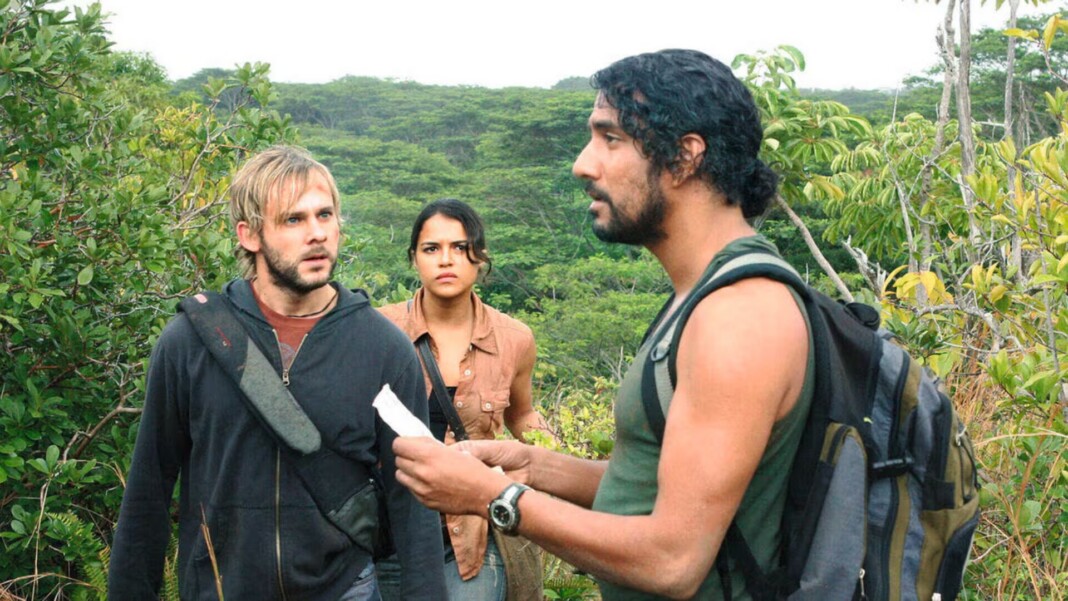
What if, for your next vacation, you went to get lost in the forest with only the bare essentials and a simple compass to guide you? What if, instead of diving into a hotel pool with an ocean view, you made a fire like prehistoric humans and slept in a makeshift shelter built with a few branches? These trips, which give the illusion of being part of the series "Lost" or participating in "Survivor," attract crowds.
While those who crave comfort and all-inclusive packages spend their holidays soaking up the sun , sipping cocktails from coconuts, the MacGyvers at heart are training for the apocalypse. They hone their resourcefulness, carrying only a backpack and a map as their guide. And this is far from a fringe activity, booked only by pessimistic conspiracy theorists. According to statistics, around 10,000 people participate in a survival course each year, across some 1,500 sessions organized in France.


Those nostalgic for scout camps, nature lovers, and thrill-seekers flock to these programs, hoping to emerge from the week a more mature and prepared person for the end of the world. These programs, which promise to transform participants into better versions of themselves and enhance their adaptability, leave no room for rest. They hone their sense of direction, build water filters using whatever materials are available, and sleep on the bare ground alongside insects. For some, it borders on pure masochism, while for those most directly involved, it's a valuable, even vital, learning experience.
The arguments put forward by his followers
Survival courses, despite their somewhat primitive and cult-like image, primarily advocate a return to basics in an era where every action is assisted. Ultimately, participants rediscover the lives of our hunter-gatherer ancestors, who had no choice but to be self-sufficient. They find solace in a simpler, less materialistic way of life.
Certainly, they are subject to varying weather conditions, must adapt to very basic, if not nonexistent, comforts, and eat whatever they can find, taking care not to poison themselves. But at the same time, they undertake a welcome digital detox, learn to listen to their instincts, develop their self-reliance in forests teeming with dangers, and train their minds from morning till night.
Of course, there's also the proximity to nature, a haven of peace that can quickly become the stage for all our fears, especially in the event of an invasion of red ants, giant spiders, or unexplained noises in the middle of the night. These are the main advantages mentioned on websites dedicated to this survival initiation, worthy of science fiction.
Harsh stays that are not always well supervised
These survival courses, a hardcore version of urban escape games and bivouac excursions, appeal to those who enjoy a challenge, dystopian enthusiasts, and families seeking bonding experiences. However, even though participants are not left to their own devices and are accompanied by guides, these trips, which resemble military training more than a pleasant getaway, are not subject to any specific French law.
"Today, if I want to organize a windsurfing course or a boxing course in the town next to my home, I need a state-issued license. On the other hand, if I want to take ten people into nature to force them to eat any kind of plant while claiming to be a specialist, I can do it without a license," laments Mathieu Burgalassi, an anthropologist, in the pages of Geo .


So you can quickly find yourself with a stranger who proclaims himself pack leader and whose knowledge of nature comes solely from internet tutorials. "After a few months in those circles, I was taught how to strangle people from behind with a rope," adds the expert, who spent four years immersed in these supposedly toughening survival courses. Survival courses are also the common ground for aspiring masculinists and conspiracy theorists. Sometimes, they are used as propaganda tools.
Survival courses, far more demanding and rigorous than the orienteering of our childhood, can thus be beneficial "in case" an unprecedented tragedy or crisis were to occur. However, even if they resemble a "rite of passage," they still require some legal adjustments.