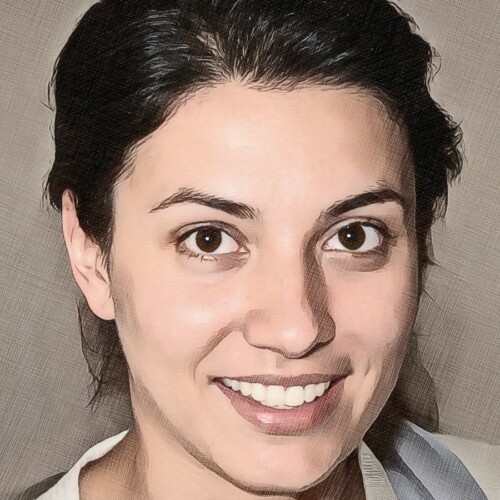
A longtime leading figure in the body positivity movement, Gabriella Lascano surprised her community by distancing herself from it. In an opinion video , she reflects on a journey marked by empowerment, doubt, and controversy.
From empowerment to questioning
Followed by over 600,000 people on Instagram and TikTok, Gabriella Lascano has established herself since 2010 as a powerful voice for plus-size women. Fashion, beauty, self-confidence: her content celebrates the body with pride. She has collaborated with brands and inspired thousands of women to reclaim their image.
Yet, at her heaviest weight—around 181 kilos—she explains that she felt "physically limited." Wearing heels became difficult, and certain airplane seats and attractions were inaccessible to her. Gradually, a sense of unease set in. She recounts feeling as though she were adhering to an increasingly radical discourse, where certain words like "obesity" or "intentional weight loss" were rejected outright. Her initial intention was self-love, but she says she began to question it: should acceptance exclude any reflection on health?
View this post on Instagram
The turning point and the video that divided people
In December 2022, the deaths of two prominent figures in the movement—Jamie Lopez, who succumbed to heart complications, and Brittany Sauer, who had expressed regrets about her eating habits—acted as a wake-up call. Gabriella admits she realized she may have ignored some warning signs.
In 2023, she posted a video that went viral. In it, she asserted that health is a tangible reality: heart disease, diabetes, and organ failure exist, and being concerned about them is not, in her view, an act of fatphobia. These remarks triggered a massive backlash. Accused of betraying the movement, she found herself criticized and ostracized by a segment of the community that had supported her.
Shedding the label, not self-love
Since then, Gabriella Lascano has distanced herself from the body positivity movement. She continues to create lifestyle content, but without officially aligning herself with it. For her, it's possible to deeply love oneself while acknowledging that certain medical risks exist. Her story highlights a divide: between empowerment and the fear of health denial—though it's essential to introduce a fundamental nuance.
Health and weight: beware of shortcuts
Being overweight doesn't necessarily mean being unhealthy. Being thin doesn't guarantee good health. Medical reality is infinitely more complex than the visible silhouette. One can live in a large body and have excellent blood tests, stable blood pressure, and regular physical activity. Conversely, one can be thin and suffer from invisible heart, metabolic, or psychological disorders. Yet, society monitors the health of overweight people more closely than that of thin people.
As soon as a woman is overweight, her health becomes a public issue. People worry about her. They project risks onto her. They make assumptions. When a thin woman adopts so-called harmful habits, the collective concern is much more discreet. This asymmetry reveals a bias: automatically associating weight with poor health is a form of fatphobia.
There are many reasons why someone might gain weight: hormonal factors, genetics, medical treatments, eating disorders, socioeconomic conditions, and chronic stress. Reducing a body to a health indicator is scientifically inaccurate and unfair to humanity.
View this post on Instagram
A debate that deserves nuance
Gabriella Lascano's story shouldn't be used to validate the idea that "being fat = being sick," but rather to open up a more mature space for discussion. Yes, health must remain a priority, regardless of your weight. No, it shouldn't become a weapon to make you feel guilty or stigmatize you. You have the right to love your body as it is today. You also have the right to want to take care of it differently tomorrow. These two desires are not mutually exclusive.
Ultimately, Gabriella Lascano's story reminds us that social movements evolve and that individual experiences are diverse. Self-acceptance doesn't preclude health awareness, but health should never be used to judge a body. Whether it's thin, fat, muscular, etc., your body deserves respect. The essential thing is not to conform to a label, but to cultivate a clear, kind, and free relationship with yourself.