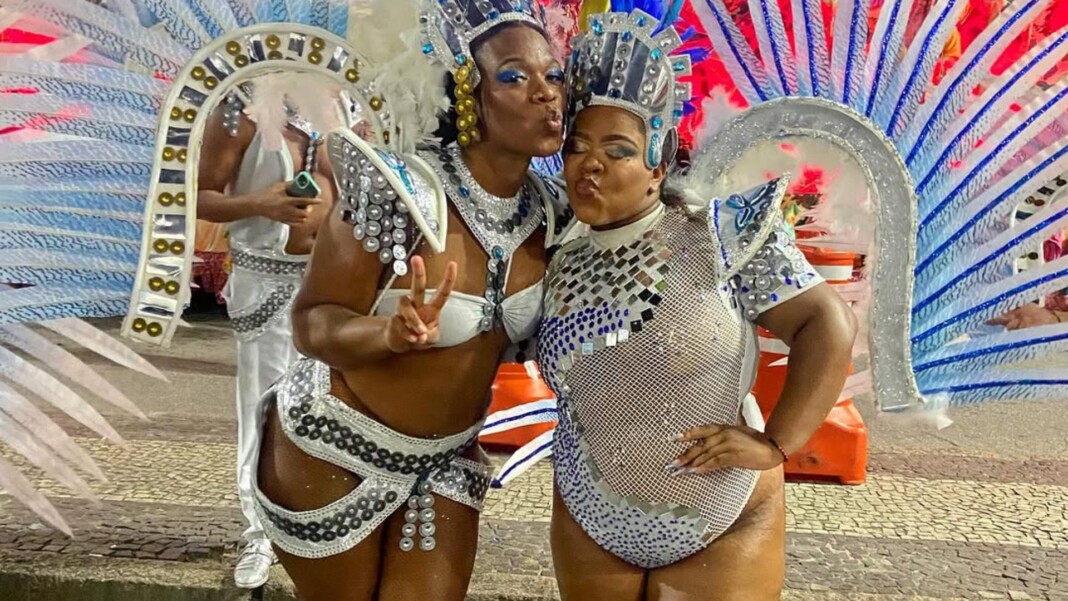
Spectacular floats, a feverish atmosphere, an infectious rhythm that leaves no hip unmoved… the Rio Carnival, held from February 13th to 18th, 2026, is a dazzling spectacle where bodies speak volumes. However, beneath the shimmering feathers and jeweled costumes, body types lack diversity and curves are conspicuously absent. In a country that worships cosmetic surgery, some samba dancers have made their curves an emblem.
The Rio Carnival, a ball of stereotypical bodies?
The Rio Carnival offered a vibrant respite amidst the somber news. Considered the world's largest festival, it's a true institution in Brazil and a feast for the eyes. From February 13th to 18th, the city, dominated by Christ the Redeemer, transformed into a vast open-air celebration, witnessing thousands of dancers, their energy heightened by the rhythmic beats. During the parades, samba school students performed choreographed routines in unison from their platforms. Perched atop majestic and strikingly creative floats, they were in their element, swept away by the joyful and vibrant music.
During this visually stunning spectacle that captivates bodies and sets legs twitching, the figures take center stage. Adorned with pearls, vibrant embroidery, and grandiose thematic details, these costumes—sometimes inspired by folklore, sometimes fueled by boundless creativity—are the highlight of this grand cultural event. The women, who embrace this incredible exercise in style, almost resemble Marvel heroines or ancient goddesses beneath these ornate seams. With their rhinestone-encrusted cuffs, architectural headdresses, and oversized wings, they seem to have stepped straight out of a mythological tale. And while the costumes are diverse, the figures themselves seamlessly transition from one float to the next, remaining perfectly sculpted beneath the fabric.


They are virtually identical, differing only by a few centimeters, and embody the ideal of an entire country: so-called generous hips, a defined waist, a rounded bottom, and slender legs. Amidst this frenzied crowd, the curvy dancers remain hidden from view. And the Plusamba troupe intends to change that, by making love handles sway and flesh move.
View this post on Instagram
View this post on Instagram
A troupe entirely led by curvy dancers
In Brazil, a haven for cosmetic surgery and the land of the "Brazilian butt lift," most of the figures paraded under the Carnival spotlights have artificial shapes, sculpted by gloved fingers like Frankenstein's monster. There, implants are practically the norm, and bodies left untouched are silently discriminated against. Silicone breasts fill silver bras while satin thongs are tucked under reshaped, XXL buttocks.
In this profusion of enhanced bodies, authentic silhouettes powerfully command the stage. Driven by "Plus in Samba," a project founded by dancer Nilma Duarte in 2017, plus-size women are reclaiming their place on the catwalk. And they bring a beautiful depth to the spotlight. Their curves are their most beautiful adornment, but also their strongest armor.
And these dancers, with the sun etched on their faces and rhythm in their blood, don't need rhinestones and sequins to shine. Their aura is enough to capture attention. With their contagious energy and great freedom of movement, they soften and refine the image of the "made in Brazil" muse. Far from the frozen figures, static despite the constant movement, their bodies come alive with every note.


View this post on Instagram
When the body becomes a living sculpture
At the Rio Carnival, the body is not a showcase or a marketing tool. The dancers are not like boxed Barbies or magnets for fantasies. Even if at times they give the impression of being unreal and strangely reminiscent of the horde of Victoria's Secret Angels, they devote themselves almost religiously to these technical gestures.
And curves, often presented as excesses and condemned by a pro-thin society, are here works of art. They are decorative elements, the equivalent of a note on a musical score and a stroke in a painting. On the floats or on the ground, their bodies undulate with magnetic ease. Love handles become choreographic forms. Bellies vibrate to the rhythm of the percussion. Thighs collide with pride. Nothing is hidden. Nothing is held back. Where some bodies seem strained by aesthetic demands, theirs appear inhabited, fluid, joyful.
At the Rio Carnival, the body is a language. And these dancers are writing a new grammar. What if, ultimately, the greatest beauty of the Carnival lies in this plurality? In these bodies that tell a thousand different stories under the same spotlights?