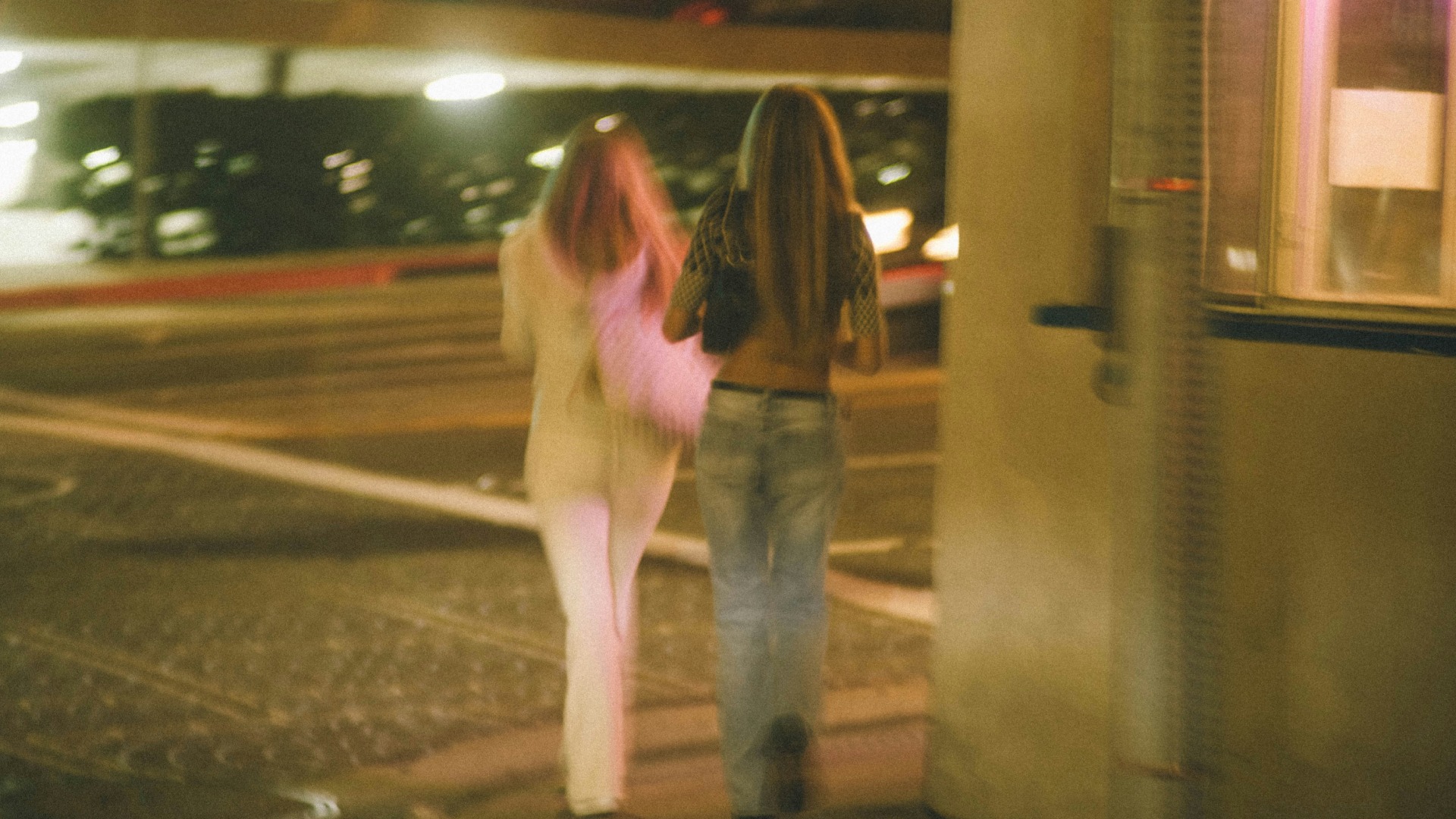
What if men were banned from going out after a certain hour, like teenagers during their "rebellious phase"? This rule, which would be right at home in a "Black Mirror"-style series, is unanimously supported by women. On social media, many women would like to see this curfew become a reality. While for men it's pure discrimination, for them it's a beautiful utopia: the promise of safer public spaces and peaceful nighttime strolls.
Originally, it was prescribed by a British baroness
Everyone still remembers the repeated lockdowns and the imposed curfew. It even felt like a pre-pubescent punishment. At the time, the media were practically talking about an apocalyptic scenario. With this nighttime isolation, residents felt like prisoners in cages. A British baroness drew inspiration from this strict pandemic measure when she made recommendations to combat the scourge of gender-based violence and street harassment .
During a speech in the House of Lords of the British Parliament the day after International Women's Day in 2021, Jenny Jones, a member of the Green Party, suggested imposing a curfew on men starting at 6 p.m. This is the time when women begin to quicken their pace in the streets and check their backs.
Generally, it's women who lock themselves in after nightfall for fear of encountering a dangerous person, ending up locked in a car trunk and trapped by a predator. According to a large-scale study , 80% of women aged 18-25 feel unsafe walking alone at night. This observation is international: at dusk, women succumb to self-censorship and avoid public spaces. Aware of this sad reality, the politician wanted to radically reverse this trend.
@yahoonews Jenny Jones suggested a 6 pm curfew for men during a debate on domestic violence on March 10. #news #politics #saraheverard #yahoonews ♬ original sound - Yahoo News
On social media, women approve of the idea
This curfew, non-negotiable for men, is reminiscent of the story in the series "The Handmaid's Tale," but from a different perspective. To defend this idea, deemed extreme by the opposition, the British baroness declared , "I believe this would significantly improve women's safety and reduce discrimination of all kinds."
And she didn't need a megaphone to make her voice heard by the female public. On social media, women easily imagine themselves in a nocturnal society where they could stroll around in miniskirts, take public transport home without worrying about the time, and go for a jog under the streetlights.
Female internet users didn't hide their enthusiasm for what was presented as a "bill" and not just a utopian theory. "Could I feel safe for the first time in my life?" exclaimed @sophiemitchhh . This idea, which applies the saying "women belong at home" to men, appeals to a large majority of women. However, this "shocking" measure also raises questions about gender equality. "Isn't this a new form of discrimination?" internet users ask in unison.
The men, for their part, feel targeted.
Upon learning of this proposal, which was no hoax, men spontaneously jumped to their keyboards. They even cried foul. Some presented themselves as grieving victims or even as perpetual oppressed. Others, their egos bruised, were eager to prove their usefulness, believing themselves indispensable to public order. "If there are no men on the streets, who will enforce the law?" "95% of firefighters are men." This is the kind of argument one can read in response to Jenny Jones's statement.
More enlightened women and men believe that those who are outraged by this practice have completely missed the point. This idea of isolating men to neutralize them is primarily a cry for help, a way of drawing attention to the issue. The politician is compelled to propose this drastic measure to provoke collective awareness and denounce an endemic problem.
Because if there were no insecurities, she wouldn't have needed to seek such firm solutions. "I responded to the local police's instructions that women should not go out alone at night by completely turning the idea on its head," Jones later explained in a Facebook post.
For many women, nighttime remains a time of surveillance, a time when routes are carefully planned, keys become discreet tools of self-defense, and the phone is always ready to dial in case of trouble. This measure, more symbolic than practical, is not a naive ideal. It reflects a purely feminine dream: that of a reassuring, egalitarian public space where women don't risk their lives on every street corner.