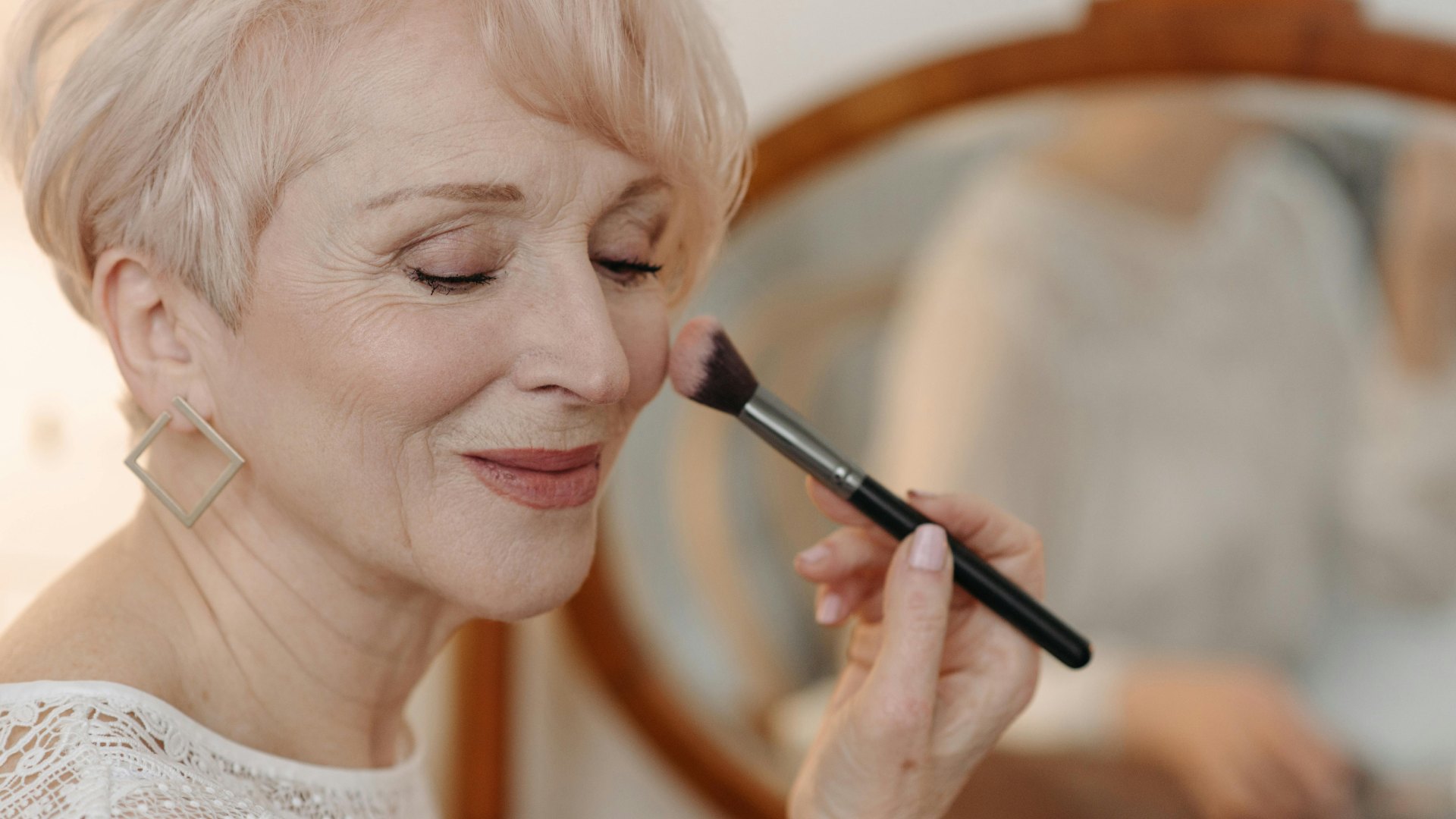
Blush is one of the simplest… yet most powerful makeup techniques. At any age, it can brighten the complexion, soften features, and provide that coveted healthy glow that makes all the difference. After 60, when skin changes, a slight adjustment to its application can enhance the face—though it should never be a hard and fast rule.
Blush, a luminous ally at every stage of life
Whether you're 30, 45, 60, or older, blush remains a must-have for brightening your complexion and restoring freshness to your face. As we age, our skin naturally changes: it may lose some density, volume, and radiance. But this absolutely doesn't mean you have to wear makeup in only one way after a certain age. There are no rules in beauty, only options. Makeup is a playground, not an instruction manual.
Blush, in particular, can be a wonderful tool for reshaping facial contours, highlighting key areas, and adding softness. When applied correctly, it creates an immediate impression of vitality. When applied incorrectly—or simply without intention—it can sometimes weigh down the features. But again, it all depends on the effect you want to achieve, not on your age.
The detail that changes everything: placing blush at the center of the face
In recent years, trends have popularized blush applied very high up towards the temples, sometimes even reaching the hairline. This lifting effect can be stunning, but it's neither universally flattering nor necessary. An equally flattering alternative is to return to a more centered application, focusing on the roundest, fullest part of the cheekbone, and then blending lightly upwards.
This gentler placement allows for:
- to recreate volume where the face may naturally become thinner over time;
- to capture the light in the center of the face, for a more natural glow;
- to avoid the effect being too "pulled" or too sculpted if that's not what you're looking for.
This is not a rule, but one option among others, which can bring a playful, bright and elegant freshness.
View this post on Instagram
Textures and colors that enhance the skin
As skin changes, certain textures can become particularly pleasant to wear. Cream or liquid blushes, for example, often blend more naturally into the skin, without settling into fine lines, while providing a luminous and vibrant finish. But again, if you love powder blushes, there's no need to switch.
In terms of color, soft pink, peach, or coral tones are often very flattering, as they reproduce the skin's natural color when it's well-oxygenated. Satin or slightly dewy finishes provide a subtle radiance without making the complexion look cakey. Ideally, application is done by gently tapping with your fingers or a soft brush to blend the product smoothly and soften the edges.
No rules, only desires
The key takeaway is simple: there are no age-related beauty rules. You don't have to change how you apply blush just because you're 60, 50, or older. You can continue applying it the way you did at 30, completely change your style, or alternate as you please. Makeup isn't meant to correct, but to express.
If you like a high, intense, sculpting blush: keep it. If you prefer a soft veil in the center of your cheeks: go for it. If you sometimes like to wear nothing at all: that's just as perfect.
In short, this small detail of placement can make a difference… but the real difference is your freedom. Your face is alive, expressive, and beautiful at every age. Blush is just one tool among many to celebrate this beauty, never to constrain it.