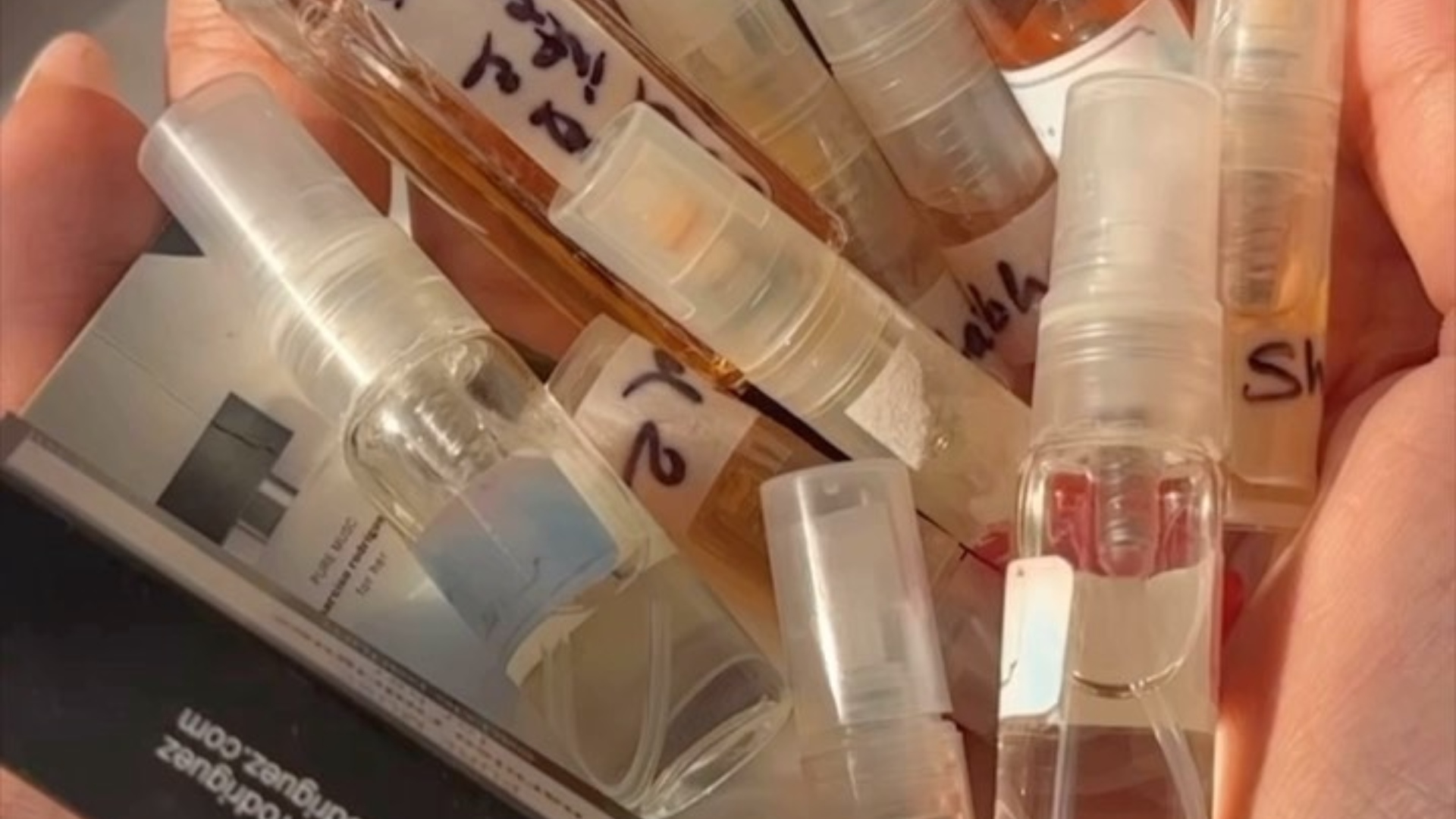
Overflowing toiletry bags, overflowing bathroom drawers, free samples from perfume shops carefully saved "for later"... beauty samples tend to accumulate faster than full-size products. We keep them for an upcoming trip, a special occasion, or simply because they're "too pretty to throw away." Yet, this collection of miniatures isn't as harmless as it seems.
These small formats that we store without ever using
Samples are everywhere. They're included in online orders, accompany purchases in perfume shops, and fill beauty advent calendars. Their main appeal is simple: they allow you to discover a product without investing in the full-size version.
The problem is that they quickly pile up. Many end up forgotten at the back of a cupboard for months, even years. A serum tested only once, a miniature perfume reserved for a hypothetical getaway, or a moisturizer kept "just in case": these small sizes often become objects that we accumulate more than we use. We collect them like others collect stamps or the little trinkets found in galettes des rois (king cakes).
Products that don't last forever
Because they are small, we sometimes tend to believe that samples are exempt from the usual rules of cosmetics. However, they contain the same active ingredients as regular products and are subject to the same storage requirements.
Over time, formulas can lose their effectiveness. Antioxidant agents, vitamin C, and certain ingredients believed to contribute to healthy skin are particularly sensitive to air, heat, and light. Fragrances can also change and develop a scent different from the original.
Once opened, the samples are even more vulnerable. Their small size often means less protective packaging and greater exposure to oxygen with each use.
The problem of miniature packaging
Unlike larger bottles, mini-formats are often difficult to recycle. Their small size complicates the work of sorting centers, which sometimes struggle to identify them correctly. "Basically, all small containers like samples and travel sizes are completely non-recyclable. Even if they are made from the most recyclable plastics, they are almost never recycled," adds Mark Falinski, a scientist specializing in sustainable development, speaking to POPSUGAR magazine.
The result: even when made from theoretically recyclable materials, many items escape recycling channels and end up in regular waste. This reality applies to small tubes, mini perfume bottles, cream jars , and single-use sachets alike.
The right reflexes to adopt
There's no need to completely banish beauty samples. They remain useful for trying out a formula before buying or traveling light. To prevent them from accumulating unnecessarily:
- use them quickly after receiving them;
- store them away from heat and humidity;
- check their expiry date or their duration of use after opening;
- Take them with you on your weekends or trips;
- Give away those that don't suit you to a relative before they expire;
- Opt for reusable travel containers to transport your usual products.
In the pages of POPSUGAR, the expert cites a logical alternative for traveling light: reusable containers. Because you clearly can't nourish your skin for a week with a tiny sample of moisturizer. It's practically a single-use dose.
It's better to use them than to collect them.
Samples are meant to be tested, not left to gather dust in a drawer. As convenient as they may be, they don't improve in quality or value over time. On the contrary, the longer you wait, the more likely you are to lose their effectiveness and unintentionally contribute to waste. The next time a miniature cream or perfume slips into your bag, consider it a product to use immediately rather than a treasure to hoard.
Furthermore, since a decree was issued in 2024, cosmetics stores are no longer supposed to give you samples at every checkout. If you want them, you have to ask for them. A symbolic measure to limit waste.