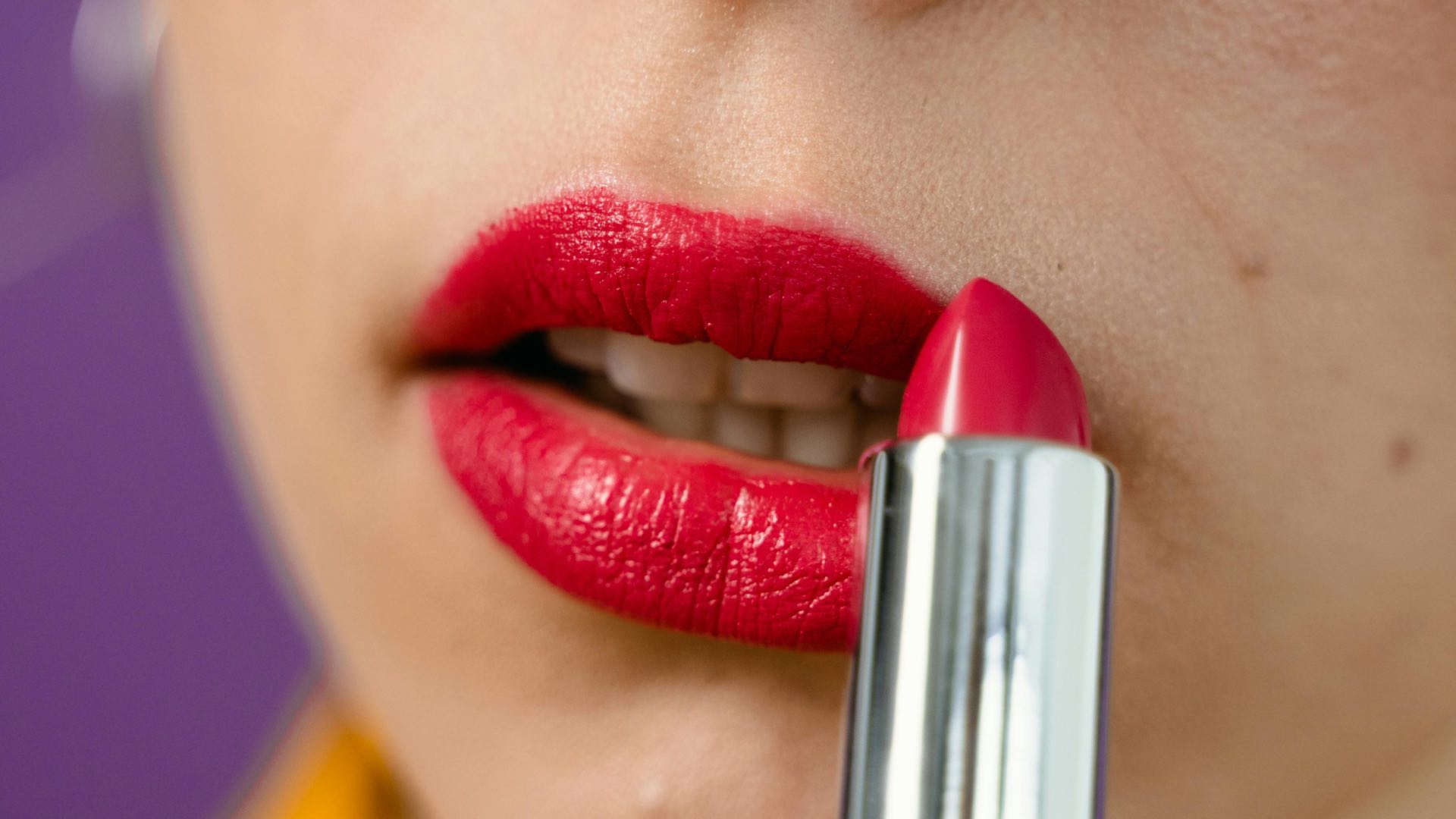
Red lipstick has stood the test of time without losing its allure, but beyond its style, several studies have examined its effect on perception. The result: this color may capture more attention and influence how a face is viewed.
Red, a color that doesn't go unnoticed.
In color psychology, red is often presented as a particularly visible hue. It quickly attracts the eye and stands out easily in the environment. This strong visual presence partly explains why it makes such a strong impression in the realm of appearance.
Some studies have observed that people wearing red may be perceived as more attractive than those wearing other colors. This doesn't mean that red possesses any "magical power." Rather, it's an effect related to attention: what is more noticeable may also appear more striking.
A contrast that highlights facial features
Lipstick also affects visual perception through contrast. Intense lip color accentuates the difference between the skin, mouth, and other facial features. Research suggests that this contrast can make certain areas of the face more visible and guide the eye.
The lips then become a focal point, which can alter how the entire face is perceived. In short, lipstick doesn't change your features: it highlights them differently.
Red lipstick: a symbol of confidence?
Red is also laden with cultural references. In many collective imaginations, it is associated with confidence, elegance, boldness, and charisma. Some studies on makeup even show that it can influence the overall perception of a face, notably by reinforcing impressions of confidence or competence. In other words, when a person wears red lipstick, they can be perceived through a whole set of social codes already deeply ingrained in our minds.
When social perception comes into play
However, it is essential to qualify these results. While some people judge a woman with red lipstick as "more attractive," this may also reflect deeply entrenched social norms and patriarchal biases.
For a long time, feminine appearance has been interpreted through the eyes of others, and particularly through the male gaze. A woman wearing makeup, red lipstick, a miniskirt, or a low-cut top is still sometimes perceived as "trying to seduce." Yet, wearing red lipstick doesn't mean wanting to please anyone. It can simply mean: "I like this color, I feel good in it, I wanted to wear it today."
The same logic applies to clothing: a mini-skirt is not an invitation, a low-cut top is not a message, and lipstick is not a statement of intent. These are, above all, personal choices.
Attractiveness remains multifaceted and subjective
Researchers remind us that attractiveness depends on a multitude of factors: individual preferences, culture, personality, facial expressions, posture, self-confidence, and context. Red lipstick, therefore, does not automatically make someone "more attractive." It can simply influence certain mechanisms related to visual attention and cultural associations. And above all, "being attractive" should never be an obligation.
Ultimately, red lipstick doesn't so much have the power to transform how others see you as it does to enhance self-expression. If you like wearing it, go for it. If you prefer nude, plum, or even a natural lip, that's perfectly fine too. Beauty isn't about a specific color, but about the freedom to shape your image as you see fit.