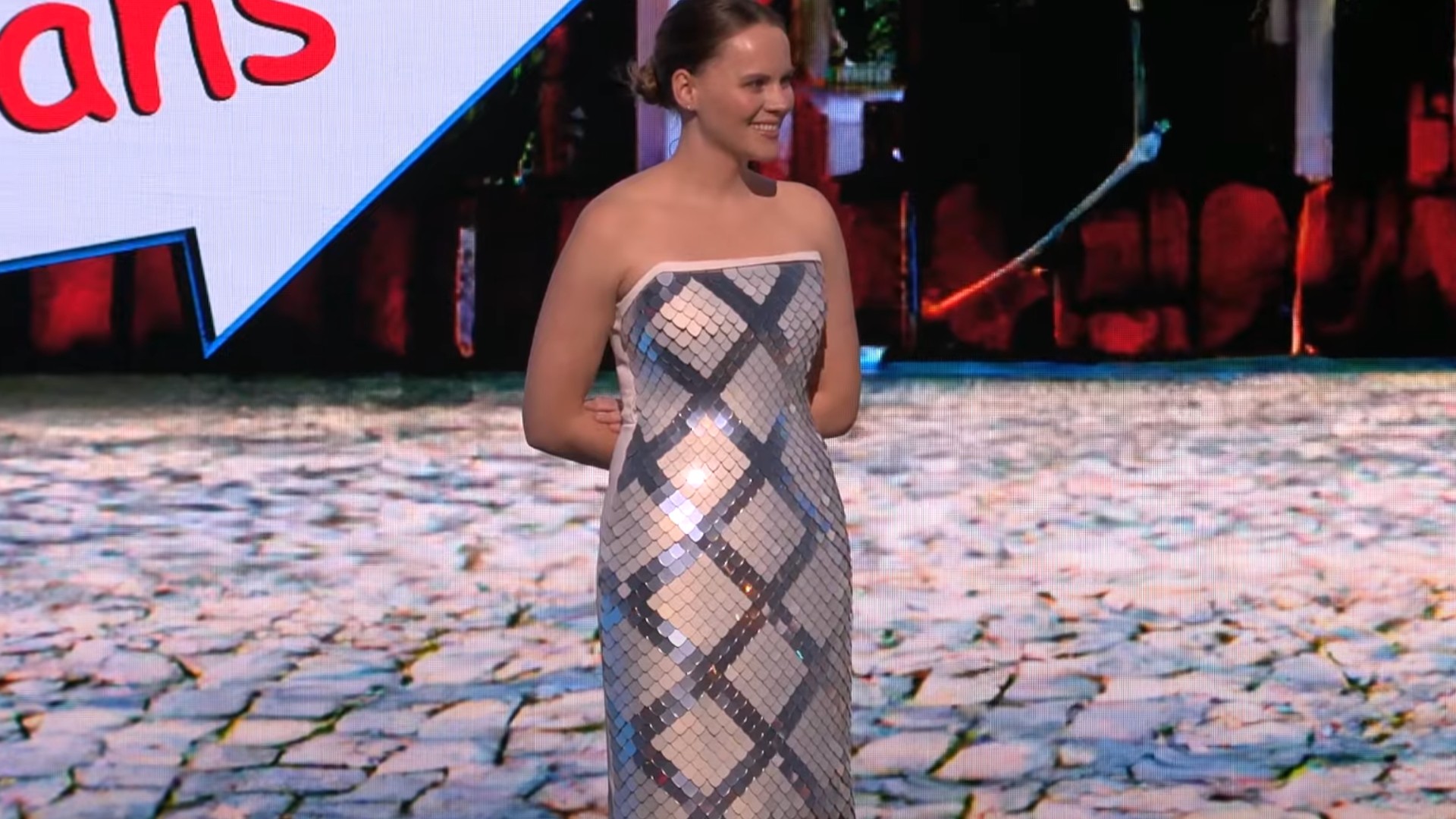
Soon you won't have to choose between a floral pattern or a polka dot print. No more hesitation in front of the mirror or battles over clothes hangers. That's the promise of the smart dress created by Adobe, which guarantees "tailor-made" looks. It single-handedly solves all fashion dilemmas. Its unique feature? It responds to your aesthetic desires and changes patterns instantly.
A dress that transforms in a click
Imagine a world where you can transform your dress design in just a few clicks, without having to go home or find a secluded spot. A dress that saves you from impromptu fashion shows in your bedroom and prevents you from playing "eeny, meeny, miny, moe" with your clothes . A dress where you're your own stylist and can customize it to your heart's content with the touch of a button. This isn't the dress code of a science fiction film, nor is it a plot device like "Black Mirror." It's the fashion revolution brought to you by Adobe.
The software company behind Photoshop has created a unique yet remarkably versatile "digital dress." This chameleon dress, dubbed "Project Primrose," transforms itself according to the wearer's desires, shifting from simple stripes to whimsical graphic shapes. First unveiled in 2023 at Adobe MAX 2023: Sneaks in Los Angeles, it can even animate itself on the wearer's silhouette, giving the impression of a moving work of art.
A modern-day magic trick made possible by "enhanced" sequins. This "snakeskin" effect design contains not leather or sequins, but "reflective light-diffusing modules" made from liquid crystals similar to those used in smart lighting. Beyond fulfilling the dreams of every indecisive fashionista, this futuristic dress heralds a new era in fashion—one that is more personal and practical.
View this post on Instagram
More than just a pattern: a dress that adapts to you
This dress conceals dozens of other layers, and instead of highlighting your insecurities in the mirror, it engages in a beautiful dialogue with your body. It's almost a visual spectacle. The silhouette is reinterpreted and becomes one with the garment. You can refresh your look in a few simple steps and seamlessly transition from "office" to "girls' night out" without ever leaving home. It's hard to ignore the ingenuity of this creation.
And in a world where every outfit seen in town looks the same and is merely a reflection of fleeting trends, this clever dress makes even more sense. Besides saving you precious time in the morning and allowing you to hit the snooze button, it offers a more personal and less uniform style.
Spectacular gadget or true revolution?
Let's be honest: for now, this dress is still more of a spectacular prototype than a ready-to-wear item ready to invade our wardrobes. It intrigues, it impresses, it gets people talking, but can we really imagine going to work in a dress animated by moving patterns?
For some, the idea seems excessive. For others, it's pure excitement: finally, interactive fashion, infinitely customizable, that avoids overconsumption. No more need to buy three different versions to vary your style. One click is all it takes. If the technology becomes accessible and portable for everyday use, it could transform the way we consume fashion. Moreover, Adobe is aiming even further and aspires to make this dress an "all-terrain garment."
“Designers can integrate this technology into clothing, furniture, and other surfaces to unlock endless styling possibilities, such as the ability to download and wear the latest creation from a favorite designer,” Adobe stated. In other words, this dress is designed to be self-sufficient. And this almost utopian piece also graced the runway at Fashion Week, thanks to designer Christian Cowan. He gave it a slight makeover, incorporating 1,264 petals, 144 stars, and 45,000 crystals.
Smart dresses that customize themselves, stretchy clothes that adapt to our weight fluctuations, garments that can transform into bags or jackets... tomorrow's fashion will be made of active textiles, dynamic details, and ingenious additions. It's far more promising than the "cyborg" silhouettes described in science fiction.