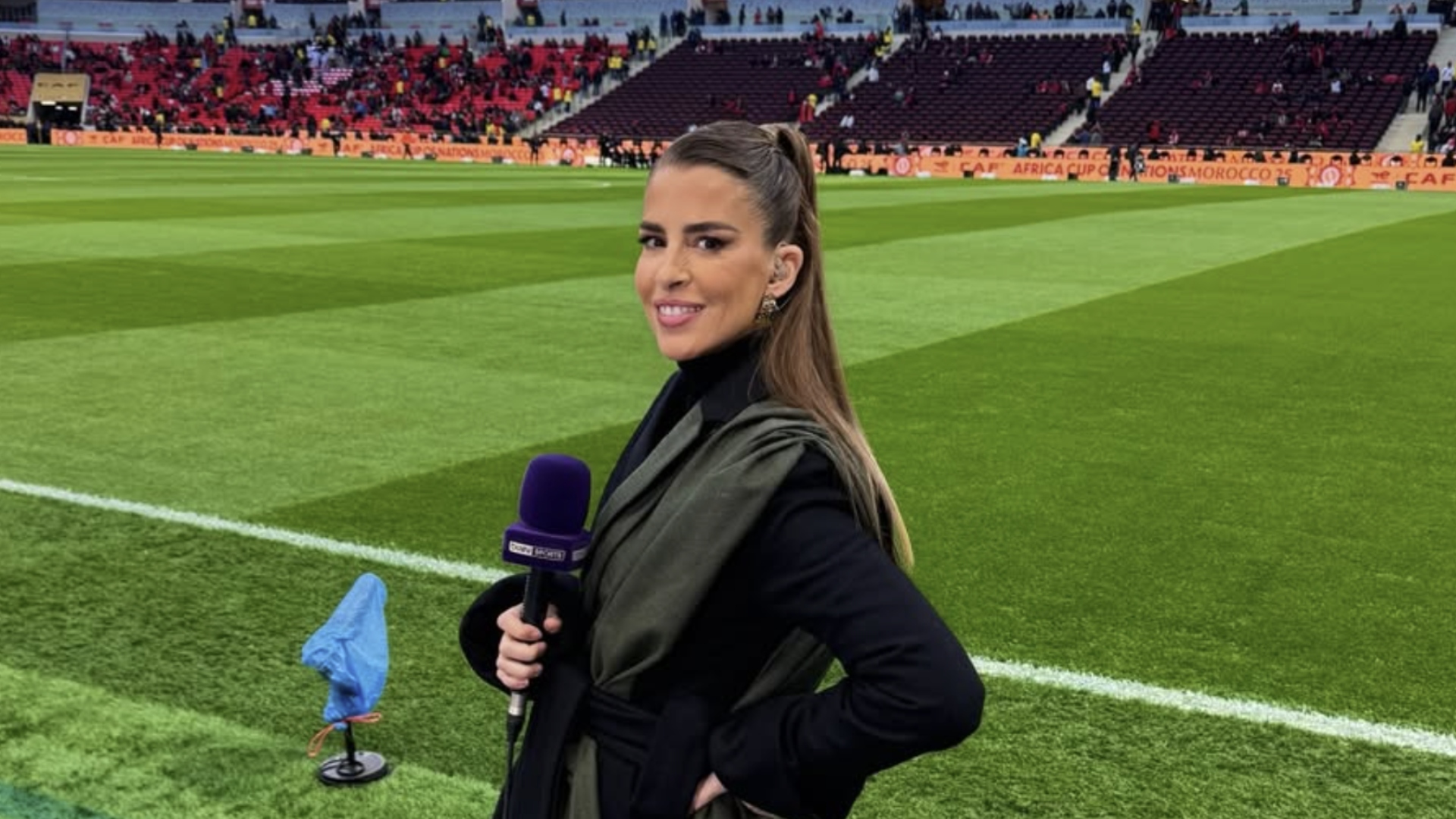
Journalist Vanessa Le Moigne recently announced she was ending her football coverage after being subjected to a vicious wave of cyberbullying. The cause? A question she asked Senegalese goalkeeper Édouard Mendy following the particularly tense final of the 2025 Africa Cup of Nations (AFCON). Her departure, both moving and symbolic, has reignited the debate on online hate and the treatment of female journalists in sports.
A controversial question, an online storm
It all started with a post-match exchange. At the end of the AFCON final, marred by incidents in the stands and on the pitch, Vanessa Le Moigne questioned Édouard Mendy about the penalty save against Morocco. "At no point was there any arrangement between the two teams?" she asked him, referring to certain rumors of a possible compromise.
The remark, made in a context of extreme tension, was immediately taken out of context and widely shared on social media. Within hours, journalist Vanessa Le Moigne became the target of a torrent of insults, mockery, and even threats. A wave of online hate that continued unabated, even after her public explanation.
The impact of media cyberbullying
In a series of Instagram stories, Vanessa Le Moigne shared her exhaustion and her decision to quit football after the season. "Thank you football for the encounters... But next. You won't have my back anymore," she wrote, expressing her weariness with an often ruthless environment. She clarified that at the time of her interview, she didn't know if the two stewards injured in the clashes were still alive: "I wasn't talking about football, but about a dramatic atmosphere." She also denounced the lack of support she received from her peers, highlighting how vulnerable journalists are to online hate campaigns.
View this post on Instagram
Voices are being raised to defend her
While journalist Vanessa Le Moigne faced a wave of online attacks, several colleagues offered her their support. Margot Dumont (Canal+) reminded everyone on Twitter that while it's acceptable to "disagree on an issue," no disagreement justifies such violence.
Vanessa Le Moigne's case is unfortunately just the latest in a long line of female sports professionals—commentators, presenters, and reporters—frequently targeted by sexism and attacks on social media. According to several studies, female journalists are three times more likely than their male counterparts to be victims of cyberbullying. Today, in 2026, women are no longer silent, they no longer apologize for existing: they have just as much right as anyone else to take their place in the public sphere.
A decision that raises questions in the world of sport and the media
By announcing the end of her career covering football, Vanessa Le Moigne highlights a deep-seated problem within sports journalism: the growing confusion between criticism and hate, debate and personal attacks. As sports federations and media outlets become increasingly active in combating cyberbullying, this case illustrates the need for more effective protection mechanisms for professionals facing online violence.
Ultimately, the Vanessa Le Moigne affair goes beyond a simple post-match controversy: it reveals the fragility of public debate in the age of social media and the brutality of online reactions towards female journalists. Her departure from football serves as a wake-up call: without respect and digital moderation, the freedom to inform is exercised under constant threat.