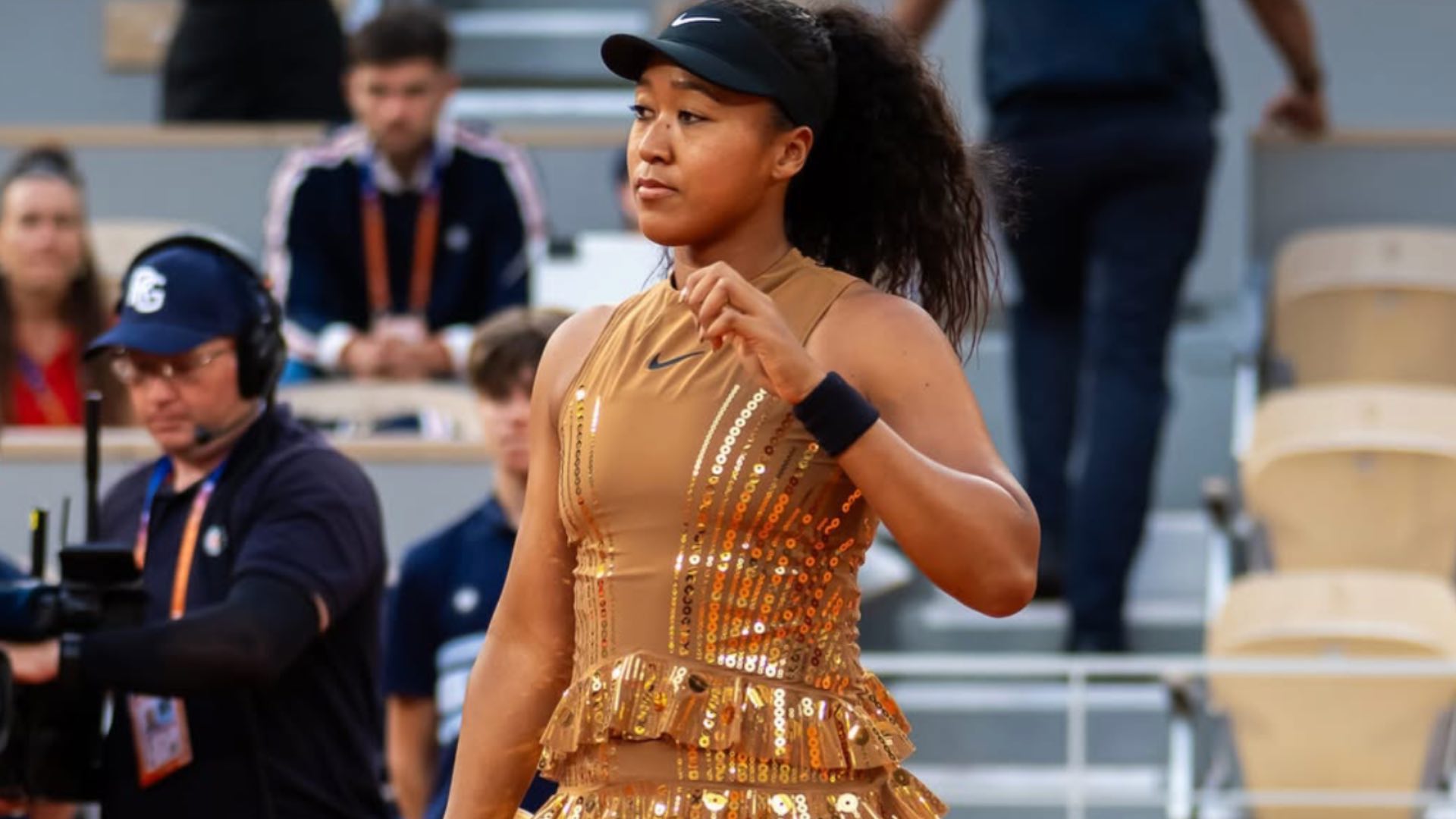
The French Open isn't just the prestigious clay-court tournament. For over a century, it has also been one of the biggest fashion events in the world of sports. Each year, the players transform the Philippe-Chatrier court into a veritable catwalk – much to the delight of both tennis and fashion fans.
Suzanne Lenglen, the tournament's first fashion icon
It all began in the 1920s with the Frenchwoman Suzanne Lenglen. Refusing the long, corseted skirts then imposed on female players, she adopted sleeveless tops and hems raised to the calf - a scandal at the time, which has since become the founding act of an emancipation.
For many, she truly paved the way for all those who followed: those who, later, would dare to be bold, colorful, and modern on the courts. Nearly a century later, the court that now bears her name continues to host figures who have made history – and to provoke, at times, the same debates as in its early days.
2018: Serena Williams and the black catsuit that changed the rules
If we had to pick just one look from the last ten years at Roland-Garros, it would undoubtedly be this one. In 2018, barely recovered from a particularly complicated childbirth, Serena Williams appeared on the Parisian clay courts in a full-body black Nike jumpsuit, cinched with a red band at the waist. The American champion, who at the time compared herself to a "warrior princess of Wakanda," also explained that the garment, thanks to its compression effect, helped prevent the blood clots she had suffered during her pregnancy.
This did little to soften Bernard Giudicelli, then president of the French Tennis Federation, who announced the implementation of a dress code prohibiting such garments on the courts. "We must respect the game and the venue," he explained at the time. The decision sparked an international outcry, led by American tennis player Billie Jean King. What could have remained a simple "fashion controversy" became a political debate about the control exerted over the bodies of female athletes.
Naomi Osaka, the art of transforming the court into a catwalk
For the past few seasons, another player has emerged as the new queen of "court fashion": Japan's Naomi Osaka. At each Grand Slam, the four-time defending champion causes a sensation with Nike outfits designed like true works of art. A Japanese cherry blossom dress for 2025, a jellyfish for the 2026 Australian Open, and more recently, at Roland-Garros 2026, a gold dress inspired by the silhouette of the Eiffel Tower.
All of this unfolds with a deliberate "red carpet" effect: a carefully staged entrance, the play revealed after a few steps, and lively debates on social media. Her opponent, Laura Siegemund, even publicly criticized her in Paris this year, accusing her of turning the match into a "fashion show." For Naomi Osaka, who describes herself as shy, these outfits are, on the contrary, a precious means of expression—a stylistic armor, in short.
View this post on Instagram
Sabalenka, Gauff, Swiatek: the new generation of style
Beyond Naomi Osaka, several other players are now making a name for themselves with their sense of style. World number one Aryna Sabalenka made a bold statement in 2026 with a black, semi-openwork Nike dress layered over a crimson tank top—a racerback design, a keyhole cutout, and a "nightlife" vibe on clay. The dress sold out within hours.
Coco Gauff, for her part, is capitalizing on her 2025 French Open victory to establish herself as a true style icon: a New Balance outfit in "dusk shower" hues, a marbled print, and a black leather jacket last year—which she describes as "Parisian." After her triumph, she even made a series of appearances in head-to-toe Miu Miu looks, a sign of a player who embraces fashion beyond the court. Iga Świątek, a four-time French Open champion, has adopted a summery purple-yellow palette by On, a gradient that breaks with the tournament's more minimalist style.
When style is debated
However, this stylistic explosion is not without its challenges. Some, like Laura Siegemund, believe that "these outfits turn tennis into a spectacle." Others, on the contrary, see it as "a sign of a welcome emancipation for the players," who are taking ownership of their image through a means of expression that belongs to them.
One thing is clear: at Roland-Garros, aesthetics and athleticism are not opposed. On the contrary, they feed off each other – and with each edition, write a new chapter in the grand narrative of sports fashion.
From Suzanne Lenglen to today's daring Nike designs, by way of Serena Williams' catsuit that caused such a stir in 2018, Roland-Garros is writing two parallel stories: that of its champions, and that of a constantly evolving fashion industry. And if we look closely, perhaps both tell the same story: that of women who no longer need to ask permission to assert themselves.