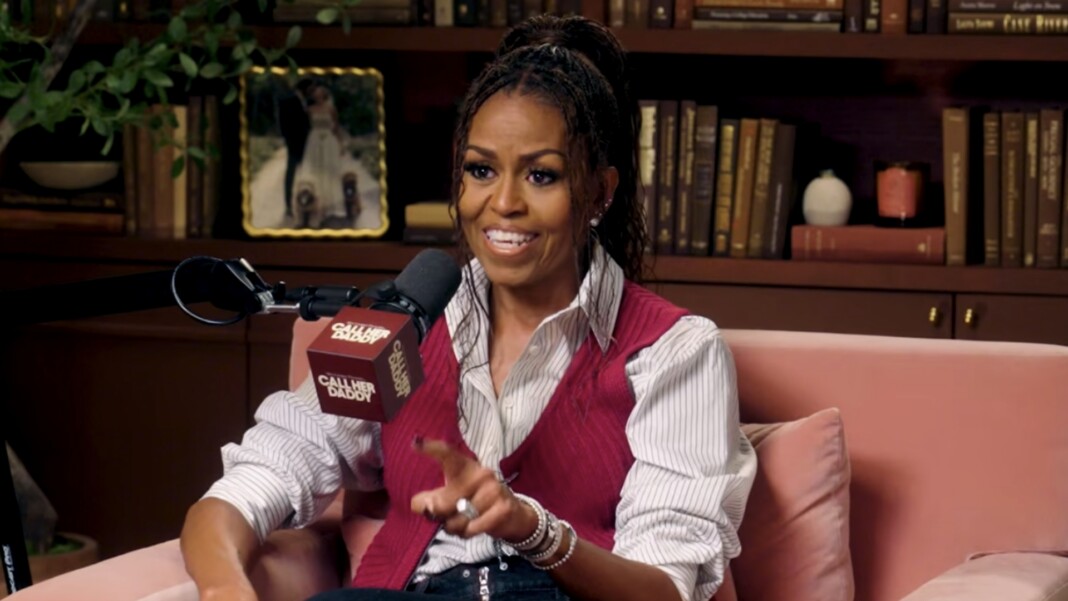
Michelle Obama strongly denounces the persistent double standard faced by women, who are judged primarily on their appearance rather than their accomplishments. In the podcast " Call Her Daddy " by American podcaster Alex Cooper, the former First Lady of the United States shares her personal experience and raises awareness about the misogyny ingrained in global culture, using numerous powerful quotes to support her points.
An exceptional career overshadowed by criticism
A graduate of Princeton and Harvard, Michelle Obama built an impressive career as a lawyer, nonprofit leader, and vice president at the University of Chicago before serving in the White House from 2009 to 2017. Yet, during her time in the media, commentary consistently focused on her outfits rather than her speeches or her background. She cites as an example a magazine profile whose headline began with her outfit, relegating her education and career to the background: "The headline started with what I was wearing, not my education or my career: it all started with how I looked."
Body shaming as a weapon of control
“Men will always attack your appearance if you’re a woman. It’s a deeply ingrained habit in global culture to try to put women in their place by attacking their physical appearance,” she observes with clarity. This strategy, according to Michelle Obama, transcends borders and persists despite feminist progress, transforming the female body into an easy target for discrediting expressed ideas.


Education and the private sphere: activist choices
To counter this misogyny, Michelle Obama has increased her public appearances in books like "Becoming" and at conferences. At home, she is careful with her words towards her daughters, Malia and Sasha: she avoids asking them if they are "dating someone," a question she considers sexist and indicative of parental insecurities, emphasizing "why would women need 'someone' to exist?"
Michelle Obama thus transforms her own experience into a universal plea against double standards, inviting us to question our linguistic and cultural reflexes. Her message resonates as a call to value women for their intellect and actions, far removed from the superficial judgments that still hinder their development.