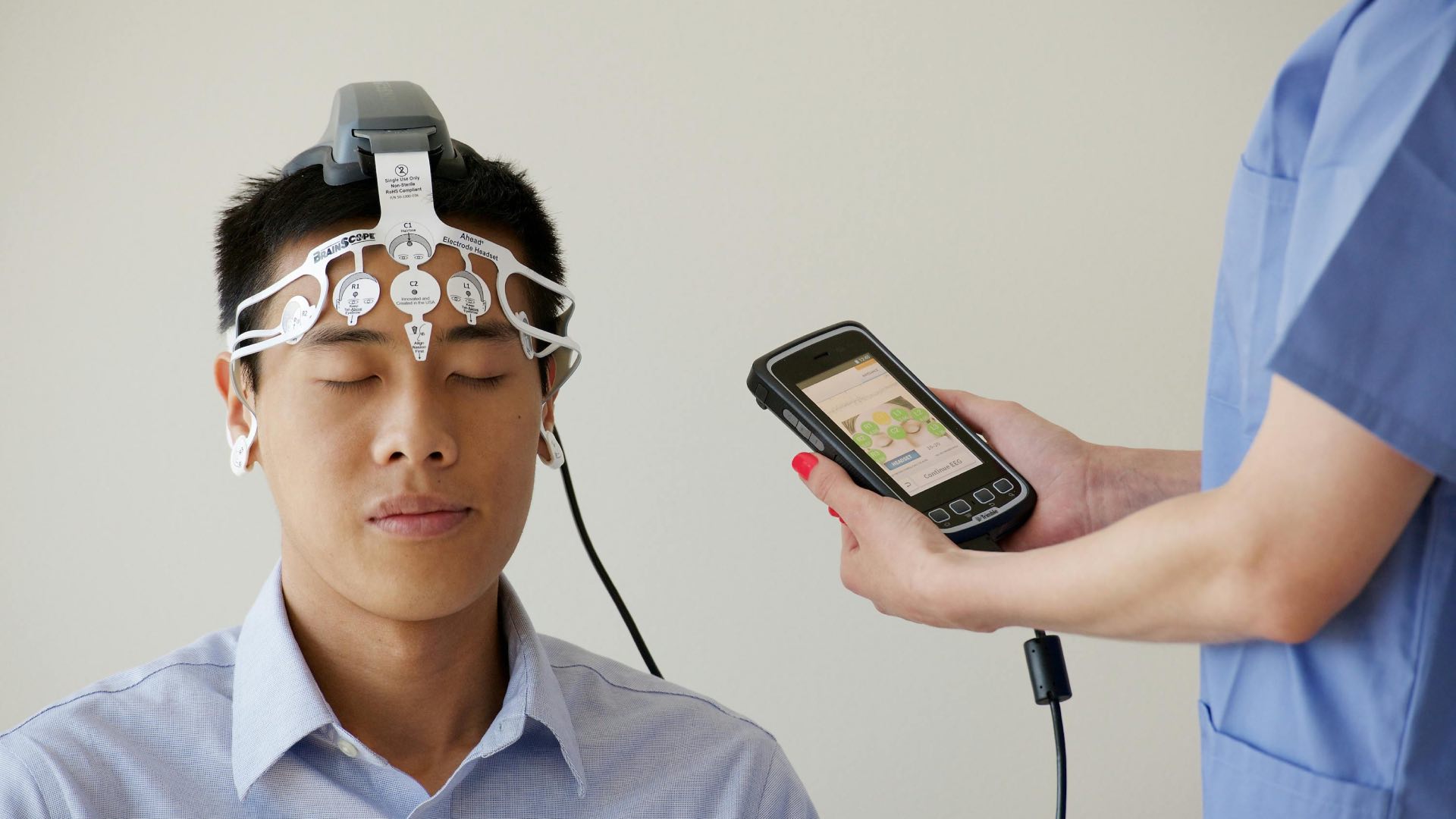
New research suggests that sound at a specific frequency could help the brain "clean up" deposits associated with Alzheimer's. This non-invasive approach, tested on primates, is attracting the attention of the scientific community.
Alzheimer's and the accumulation of toxic proteins
Alzheimer's disease is a neurodegenerative disorder characterized by the accumulation of amyloid proteins (β-amyloid) in the brain, forming plaques that disrupt communication between neurons and contribute to progressive cognitive decline: memory loss, language difficulties, and thinking disorders. These deposits develop well before the onset of clinical symptoms, making any intervention difficult once the disease has manifested.
A 40 Hz sound stimulation tested on primates
A recent study , published on January 5, 2026 in Proceedings of the National Academy of Sciences, explored a strategy previously studied mainly in rodents: auditory stimulation at 40 Hz. A team of researchers from the Kunming Institute of Zoology exposed nine aged rhesus macaques—which naturally develop amyloid plaques similar to those seen in aging humans—to targeted sound stimulation for one hour a day for seven consecutive days.
Twice as much amyloid protein in cerebrospinal fluid
After this listening cycle, the levels of amyloid proteins Aβ42 and Aβ40 in the monkeys' cerebrospinal fluid increased by approximately 200%, compared to their pre-stimulation state. Researchers interpret this change as a sign that these proteins were cleared from brain tissue into the spinal fluid, which would be consistent with the activation of the brain's natural cleansing mechanisms, particularly the lymphatic system.
What distinguishes this study from previous work is the durability of the effect: high levels of amyloid in the cerebrospinal fluid persisted for more than five weeks after the stimulation was stopped, a feature that had not been observed in studies on mouse models.
Why the sound at 40 Hz?
The 40 Hz frequency corresponds to a band of brain rhythms called gamma oscillations, involved in cognitive functions such as attention and memory. Previous work had already shown that sensory stimulation at this frequency—visual or auditory—could reduce amyloid deposits in mice genetically modified to mimic Alzheimer's.
The hypothesis is that this stimulation could resynchronize certain neuronal rhythms and activate brain cleaning processes that are otherwise less effective with age or in the context of disease. In monkeys, whose cortex is closer to that of humans than that of rodents, the data obtained confirm the value of exploring this avenue.
A non-invasive approach that complements existing therapies
Current approved treatments for Alzheimer's—such as monoclonal antibodies—have shown modest effects and can be accompanied by serious side effects, including cerebral edema or hemorrhages. Auditory stimulation at 40 Hz, on the other hand, requires neither injection nor surgery and relies on a simple device that produces a sound at a precise frequency. This makes it potentially applicable at home or in care facilities, with a favorable safety profile.
Towards human trials?
While these results in primates represent an important step—closer to humans than mouse models—much remains to be understood before widespread clinical application can be considered. At this stage, the observed effects relate to biomarkers linked to protein elimination, not yet direct measures of cognition, memory, or symptom slowing.
Pilot studies in humans have already explored sensory stimulation at 40 Hz, but these are still preliminary and require more robust validation to assess their real effectiveness and safety in populations.
In summary, 40 Hz auditory stimulation opens up an intriguing and promising avenue of research in the fight against Alzheimer's disease. By potentially activating the brain's natural cleaning mechanisms, this sound signal could promote the elimination of amyloid proteins—a central component of the disease—without requiring invasive intervention. However, years of research, including in humans, will be needed before it is known whether this approach can become a viable treatment or a complement to existing therapies.