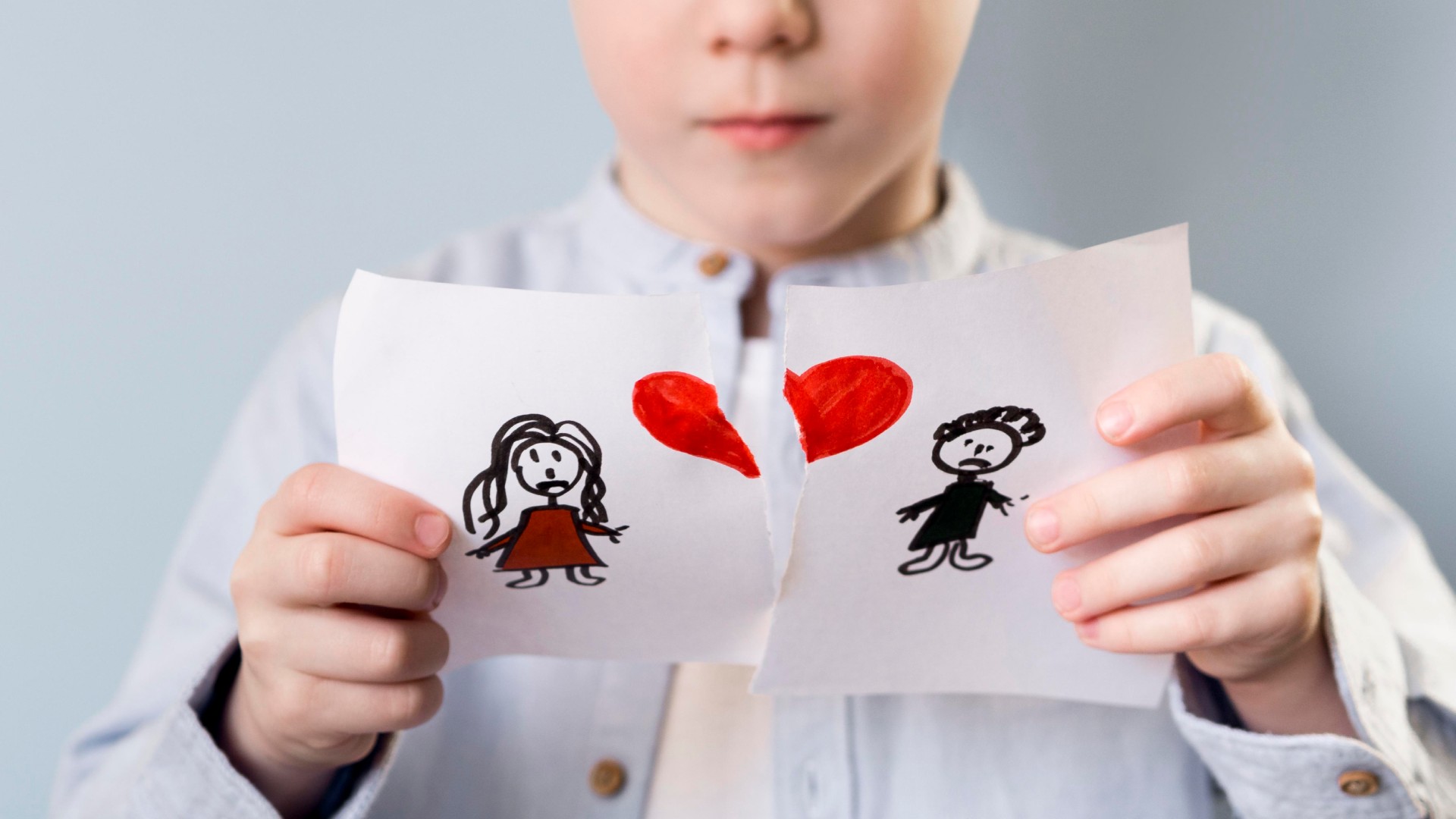
If you've just gotten married, you might fear that your marriage will end badly like your parents'. You're afraid of mimicking their mistakes and breaking the pact of love you just made. This scenario isn't impossible. However, psychologists offer reassurance: your parents' chaotic love life doesn't have that much influence on yours.
A theory rather than a reality
During their early years, we almost envy children of divorced parents and only remember the advantages: they get twice as many presents at Christmas, they celebrate their birthdays twice, in short, they experience everything twice. However, those most directly affected cannot say the same. A divorce , even when it is amicable and mutually agreed upon, always leaves its mark on those who witness it. Children suffer and endure the situation without being able to voice their opinions. Above all, once they reach adulthood, they try not to repeat what they experienced and to lead happy romantic lives.
They undergo therapy to get to the bottom of their love story and find out if they are predisposed to divorce. If you are one of those children who changed homes every other week and unwittingly played the role of marital mediator, you are certainly afraid that your marriage will fail. For a long time, psychologists believed that parents' past relationships could influence their children's current romances. However, this is more of a popular theory than an absolute truth.
For decades, everyone believed the adage that "children of divorced parents, failed marriages." However, this turns out to be largely false. Certainly, these children may not have had the best role models or the healthiest foundations, but they are not all destined for emotional disaster. "A divorce is part of life; it's a break in attachment, it's difficult, it disrupts the child's reassuring daily routine, but if the parents' relationship continues in a positive way, then it's not traumatic for the child," explains psychiatrist and psychoanalyst Marie-France Hirigoyen on France Inter radio.
What the numbers really say
Do children of divorced parents suffer the same fate as their parents, and must they cut short their promise of eternal life? Statistics suggest otherwise. According to an analysis based on data from the General Social Survey, an American polling institute, the intergenerational transmission of divorce decreased by half between 1972 and 1996. This is a surprising finding given the rise in divorces since the 1970s.
Of course, these figures need to be qualified, since marriage is no longer automatic and is no longer a primary consideration in couples' plans. While for older generations, marriage was almost a rite of passage, young people prefer cohabitation or the alternative of a civil partnership (PACS).
Children of divorced parents are not at greater risk, but they can sabotage their romance without realizing it. "They develop hypervigilance towards problems that could lead to this situation. They fear that it won't last. On a daily basis, this can be debilitating," explains Gérard Poussin, a clinical psychologist interviewed by 20 Minutes .
Divorce is becoming increasingly accepted.
Divorce is no longer seen as inevitable; it's almost commonplace. While for our ancestors divorce wasn't even an option, for young people it's now just another excuse to party. With the rise of " divorce parties ," these post-breakup celebrations featuring "thank you, next" layer cakes and "just divorced" scarves, divorce has become nothing more than a simple formality.
In short, children of divorced parents no longer worry about their romantic future and see divorce as a solution rather than a defeat. Which is actually quite positive. The less you think about it, the less likely it is to happen (those with a purely rational mindset should beware).