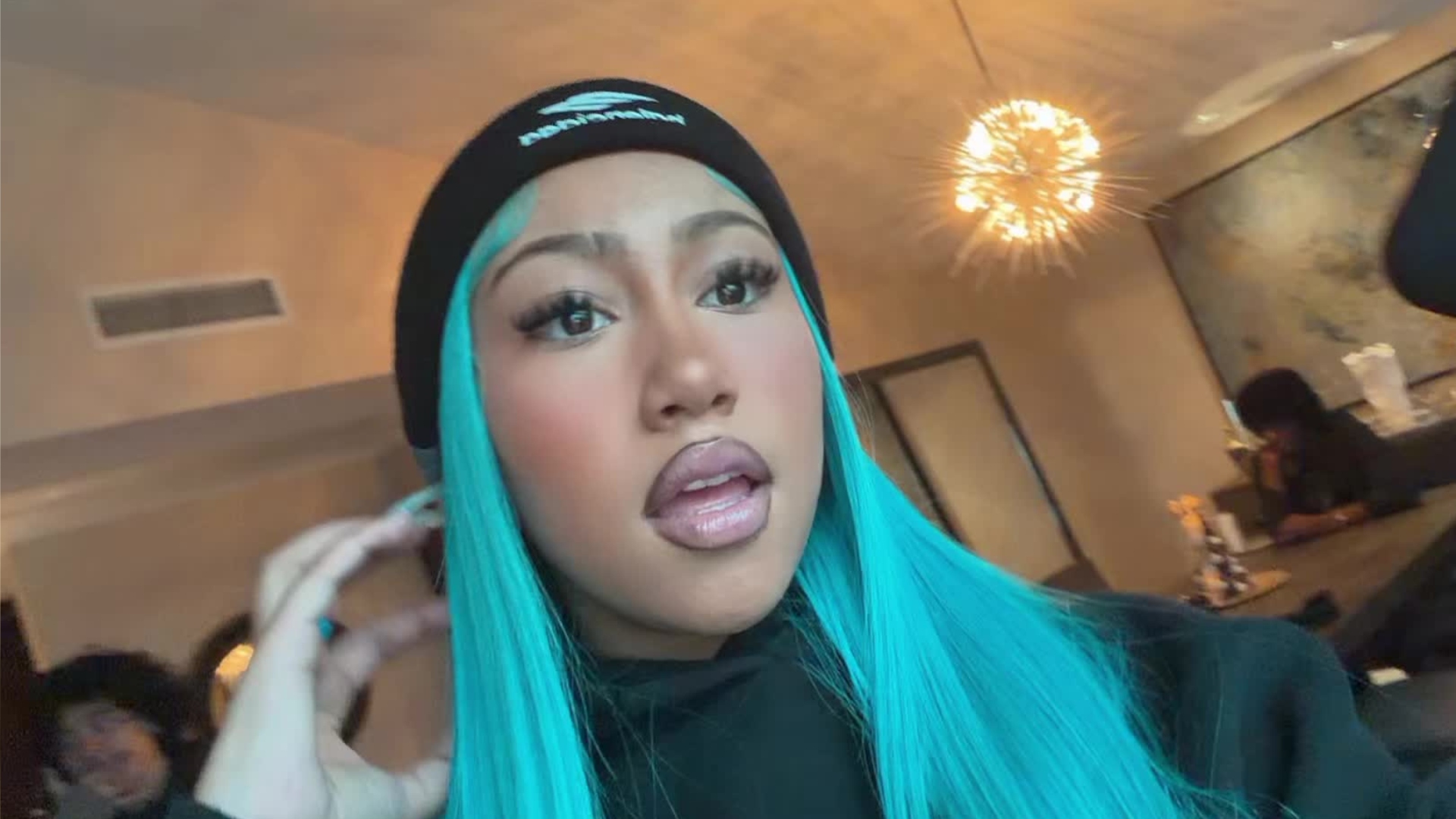
At just 12 years old, North West, the eldest daughter of Kim Kardashian and Kanye West, has once again set social media ablaze. Appearing on TikTok with bleached eyebrows, a blue wig, and full makeup, the young girl likely didn't expect such a deluge of reactions. While some praise her "creativity," others denounce "a worrying trend": that of a generation of children being exposed to adult beauty standards far too early.
North West's bleached eyebrows: just a trend or a warning sign?
Images of North West quickly circulated on social media, accompanied by heated debates. Many see this look as a form of reverse infantilization, where young girls adopt the aesthetic codes of influencers. Between flawless complexions, bleached eyebrows, and sophisticated manicures, internet users are asking: where does the fun end and the pressure to conform to beauty standards begin?
The issue goes beyond appearance. The products used—often poorly suited to children's sensitive skin—can cause irritation and even lasting skin problems. Several specialists, particularly at Rocky Vista University in Denver, emphasize the urgent need to educate young people and their parents about the responsible use of cosmetics.
@kimandnorth @Kim Kardashian ♬ how do you feel? - Destroy Lonely
"Sephora Kids": when makeup goes viral
North West is not an isolated case. The "Sephora Kids" movement, where children aged 6 to 14 film their beauty shopping trips to cosmetics stores, is spreading rapidly. On TikTok, they document their skincare and makeup routines inspired by Generation Z – including glycolic acid masks, serums, and retinol creams.
The consequences aren't just dermatological. According to psychologists, this early exposure to beauty ideals can lead to a loss of self-confidence and body image anxiety. Children learn to link self-love to their appearance, a dynamic that is already a cause for concern in adults.
Social media, distorting mirrors of childhood
Generation Alpha is growing up in a world where digital visibility is virtually unavoidable. Platforms like TikTok and Instagram encourage performance and comparison, fostering social mimicry of influencers and celebrities. Seeing North West replicate her mother's aesthetic is therefore not surprising, but it raises a shared responsibility between parents, the media, and these platforms.
Despite legislation setting the minimum age for social media registration at 16, most children easily circumvent these restrictions. The framework thus remains largely symbolic, leaving a void where image takes precedence over personal development.
What levers can be used to protect the youngest?
Experts agree on the importance of education and prevention. Parents need to be better informed about the composition of cosmetic products, but also about the psychological consequences of early exposure to beauty standards.
Furthermore, platforms could strengthen the moderation of content targeting children and promote messages of body diversity and self-acceptance. Finally, encouraging public figures to adopt a responsible stance—as some celebrities already do by appearing without makeup or denouncing excessive retouching—remains essential.
The North West case reveals far more than a simple fad: it highlights a cultural crisis surrounding childhood and identity in the age of social media. Behind the bleached eyebrows of a 12-year-old girl, an entire society must examine how it shapes the relationship of new generations to beauty, celebrity, and self-esteem.