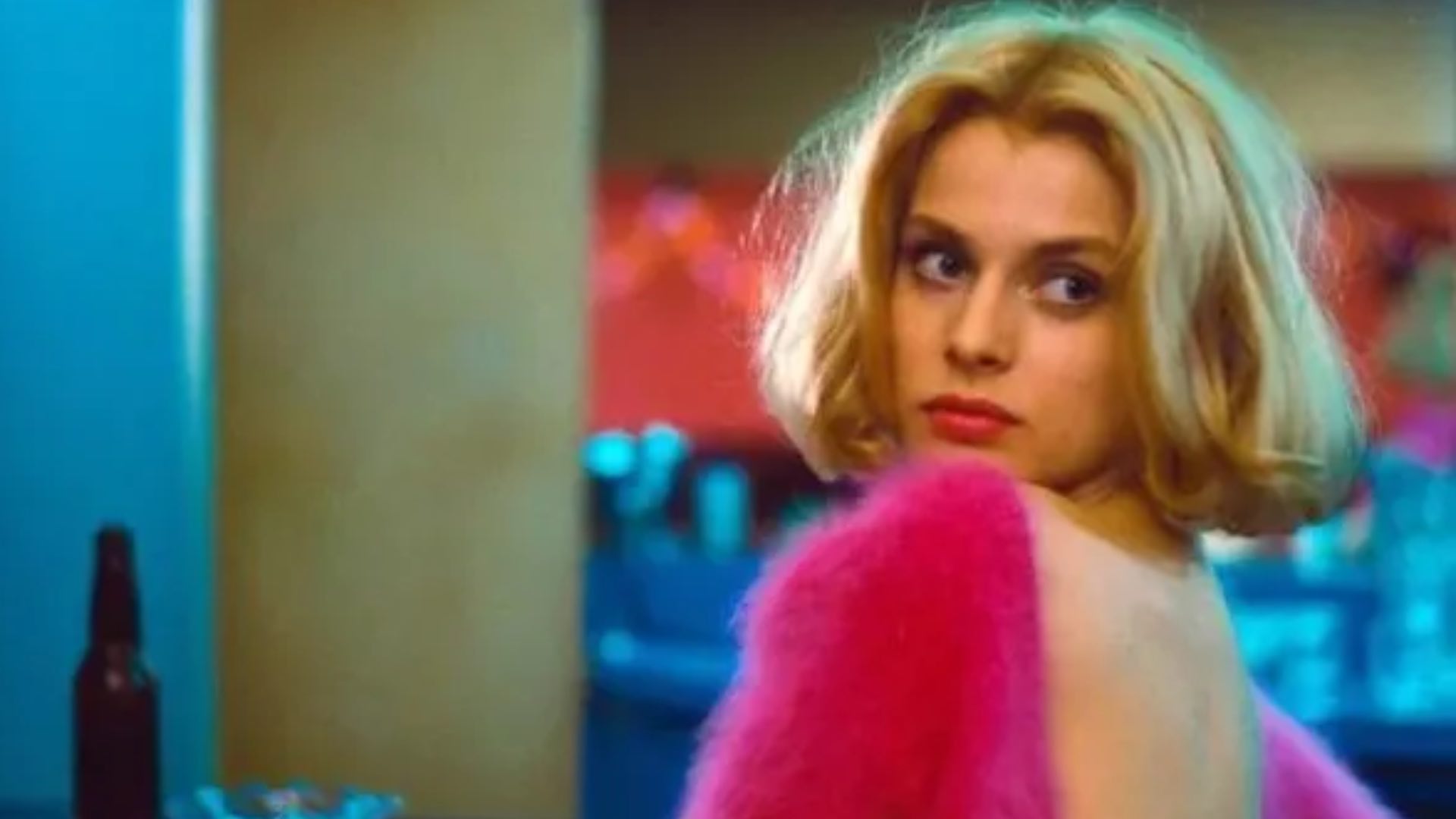
German actress and model Nastassja Kinski has just won a historic victory. After a decade-long legal battle, she has succeeded in having a film shot in 1975 removed, at least temporarily, in which she appears at only 13 years old, in a scene she considers "deeply inappropriate." This is an unprecedented fight in the history of European cinema.
A scene that no longer works
The film in question is titled "Wrong Move" ("Falsche Bewegung"), directed by German filmmaker Wim Wenders in 1975. Nastassja Kinski, then 13 years old, plays Mignon, a mute girl. The problematic scene shows her in "a state of bodily exposure particularly inappropriate for her age," interacting with an adult man who slaps her and then caresses her face. The actress herself now describes the scene as "abnormal"—and, following the #MeToo movement, it has become intolerable to many.
The director himself publicly acknowledged this at a gala of the German Film Academy on May 29, 2026: "I would never do that again today. I know more today, much more. Sensibilities have changed; we live in a completely different world than fifty years ago," said the German director, film producer, screenwriter and photographer Wim Wenders.
Ten years of legal battles
To achieve this result, actress Nastassja Kinski fought for nearly ten years. According to her own statements, she was never informed at the time of filming that she would have to undress in front of an entire crew. The #MeToo movement gave her, decades later, the courage to launch an unprecedented legal action—aiming to have the scene completely removed from the final cut and to obtain compensation.
“Even though, at 13, I didn’t know much yet, I had already noticed that it wasn’t normal,” she told the Süddeutsche Zeitung newspaper. And in 2024, on the German broadcaster RTL, she added: “It was my first film, my first director, he didn’t protect me.” A statement that perfectly encapsulates the full scope of her commitment.
The film's temporary withdrawal and the filmmaker's mea culpa
On June 3, 2026, the film's temporary withdrawal was officially announced. According to the Wim Wenders Foundation, which holds the exploitation rights, the film will only be made available again once a solution acceptable to all parties—including Nastassja Kinski—has been found. In a public statement, filmmaker Wim Wenders acknowledged, in a sort of mea culpa, that "Natassja Kinski should have been better protected" at the time of filming. A belated statement, but one that marks a major shift in how the industry is beginning to confront its own past.
A question that goes beyond his personal case
This struggle actually raises a fundamental question that goes far beyond Nastassja Kinski's individual case. She herself formulated it publicly with remarkable clarity: "How do you manage cinematic heritage? Is it permissible, or even desirable, to cut a scene if it hurts an actress? Can a film be shortened after the fact?" This is a question that challenges the entire industry. In the name of the right to be forgotten, can history be rewritten? In the name of artistic freedom, should images that would no longer be filmed today be preserved? The debate is far from settled, but with Nastassja Kinski, a precedent now exists—and it will undoubtedly influence future decisions.
A fight linked to #MeToo
Far from being an isolated case, this fight is part of a broader trend. In recent years, several actresses who acted as children have requested the removal or modification of scenes they deemed unacceptable. In 2025, Nastassja Kinski had already succeeded in getting the German broadcaster NDR to remove an episode of the series "Tatort," in which she appeared at age 15 in a similar situation.
With this victory, Nastassja Kinski is not only reclaiming her image. She is opening a door that previously seemed closed for an entire generation of actresses who acted as children. And she is reminding us that the protection of minors on film sets—as everywhere else—should never again be left solely to the discretion of the adults who direct them.