There are stories that powerfully remind us that memory is not limited to words. Some are conveyed through the body, through movement, through pure emotion. Marta Cinta González Saldaña's story is a moving and luminous demonstration of this.
A simple scene that has become universal
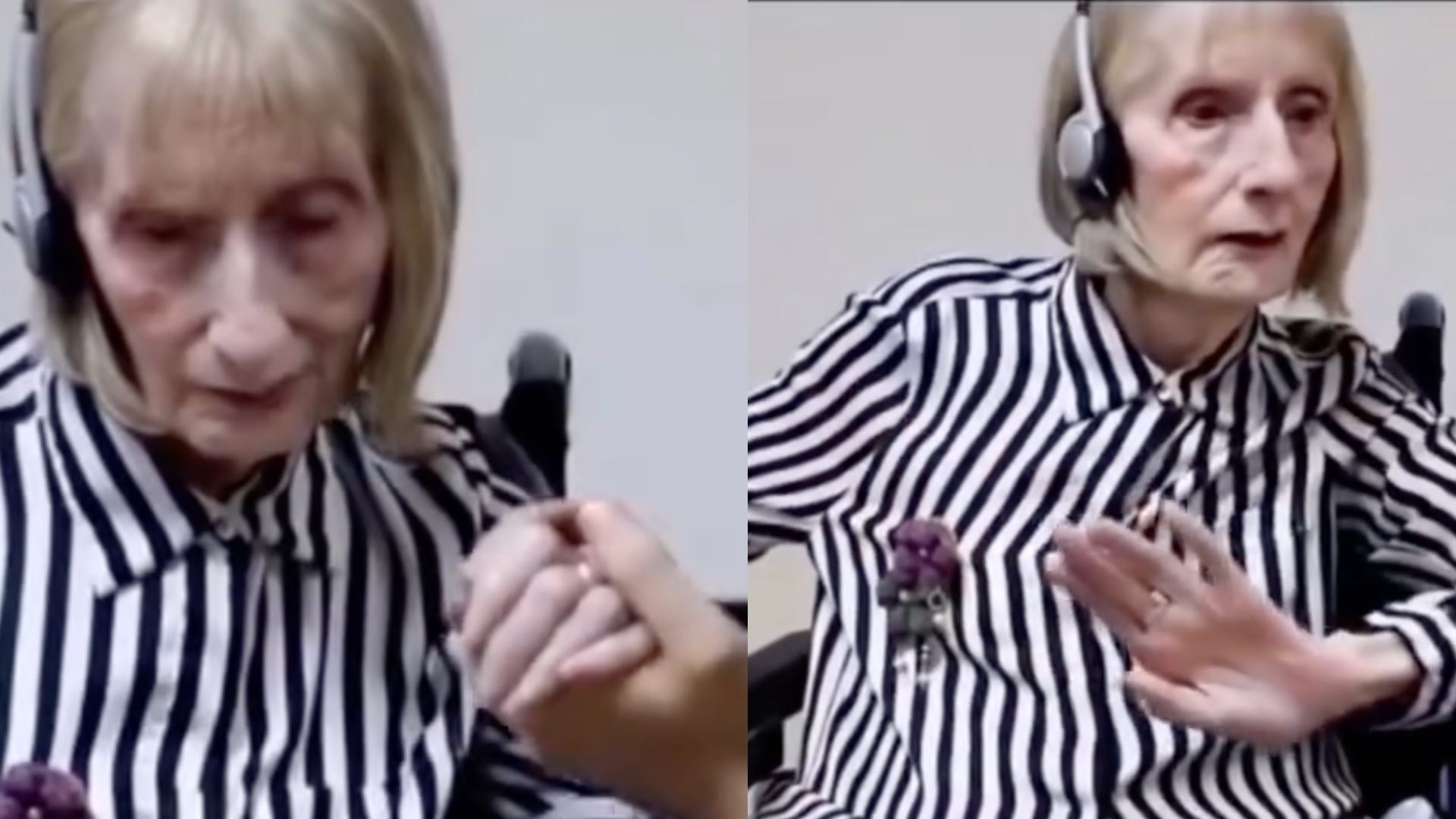
In 2019, in a nursing home in Valencia, Spain, a video filmed without any particular staging touched millions of people around the world. It shows Marta Cinta González Saldaña, a former ballet dancer now suffering from Alzheimer's disease. Seated in an armchair, she appears calm, almost motionless. Then the first notes of Tchaikovsky's Swan Lake begin to play.
At that precise moment, something stirs. Her body straightens, her arms rise, her hands open with precision. Every gesture is fluid, graceful, perfectly controlled. This is not an improvised movement, but a deeply rooted dance, the dance of a lifetime dedicated to the art of ballet.
View this post on Instagram
When the body remembers before words
Marta doesn't speak. Yet her body tells the whole story. Her movements are precise, rhythmic, guided by an intact bodily memory. Despite her illness, her body remains a space of knowledge, power, and beauty. It becomes a language in its own right, capable of expressing what words can no longer convey.
This scene reminds us that the body is never empty, never useless. Even weakened by illness, it retains its dignity, its intelligence, and its capacity to feel. Marta's gestures are proof that the body holds deeply ingrained memories, far beyond cognitive abilities.
The key role of therapeutic music
The video was filmed by the association Música para Despertar, which specializes in using music as a therapeutic tool for people with cognitive disorders. Their approach is based on a simple yet powerful idea: personalized music can stimulate memory, soothe anxiety, and rebuild emotional connections.
In Marta's case, the effect is immediate. From the very first notes, the melody acts as a trigger. The music opens a space where the body can express itself freely, without constraint, without judgment.
A memory that resists illness
Neuroscience confirms what this scene so powerfully illustrates. Musical and motor memory are often among the last to disappear in people with Alzheimer's. Areas of the brain linked to rhythm, music, and long-learned gestures are sometimes less affected by degeneration. This is why some people can still sing, keep time, or dance, even when they no longer recognize their loved ones. Music acts as an invisible thread connecting the past to the present, the body to emotion.
A video that went viral and gave hope
Marta's video quickly went viral on social media. It garnered millions of views and sparked a global wave of emotion. Many internet users shared their own experiences, mentioning a parent, grandparent, or loved one affected by the disease. This filmed moment helped change perceptions of Alzheimer's. It was no longer seen simply as a disease of forgetfulness, but also as a condition where spaces for sensitivity, pleasure, and physical expression still exist.
The scene is short, but its impact is immense. Marta didn't recover her memories verbally, but she danced. And this gesture is enough to remind us that, even in oblivion, certain landmarks remain deeply ingrained. Her body becomes a symbol of hope: it shows that memory can take other forms, that beauty still exists, and that dance, sometimes, remembers for us.