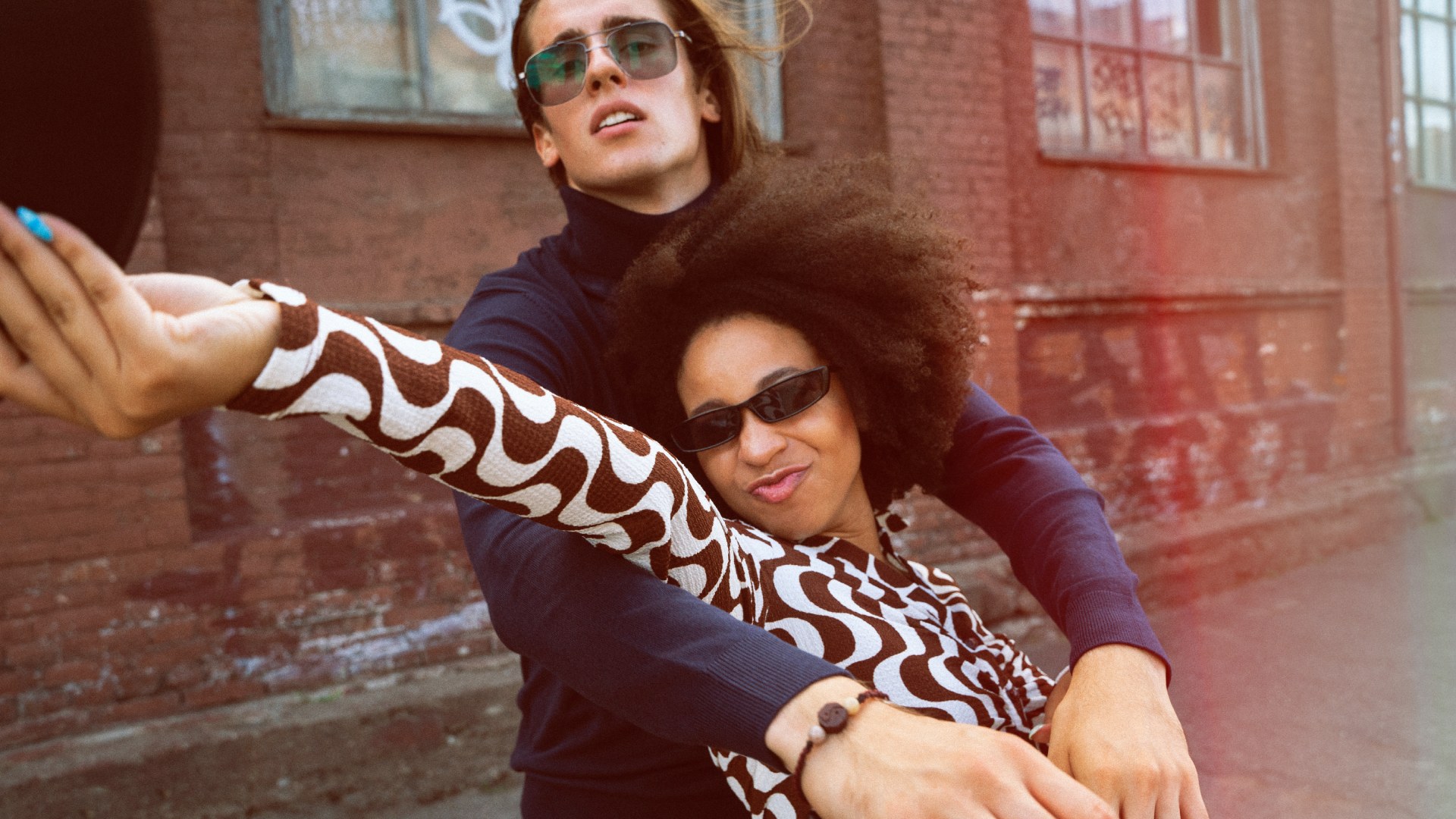
Changing your relationship status on Facebook from "single" to "in a relationship" used to be almost a badge of success, even a way to boost your popularity. Back then, posting saccharine photos of yourself holding hands or arm in arm was the ultimate achievement. But now, those photos, dripping with love and documenting the couple's entire life, are less visible in our feeds, as if having a boyfriend has become passé.
Hiding your boyfriend instead of showing him off
“To live happily, live hidden .” This saying has never been more true. Back in the days of strawberry-flavored Vans and MP3 players, girls flaunted their partners like trophies. They'd barely made their romance official before they were already posting saccharine declarations of love on their Facebook walls. They tagged their partners in explicit posts and shared every outing, complete with sappy snapshots. We watched this canoodling up close and practically reached for the popcorn. Their entire social media presence revolved around their boyfriends and resembled a juicy telenovela.
But times have changed. Today, women crave more discretion. While they once plastered their sweetheart's face all over the internet, now they let his presence be hinted at. They no longer loudly proclaim "I'm in a relationship," they even keep this romantic reality to themselves. The rare glimpses of their love story are limited to fingertips, silhouettes, or an artistic blur. It's not just to protect their privacy that they eclipse their partners, but also to preserve their image. Because it would seem that in 2026, being in a couple is no longer a cool label, but a sign of being passé.
Women, mindful of their independence, no longer want to define themselves through their partners, but they also don't want to acquire a Bridget Jones-like reputation. In other words, they enjoy the social benefits of being in a couple without falling into the trap of being overly attached to their other half. They are moving away from the stereotypical image of the woman obsessed with her other half. Journalist Chante Joseph, who writes for Vogue UK , has examined what amounts to a 2.0 version of a romantic boycott.
More than a trend, a state of mind
In just a few years, women have gone from the passionate Juliet to the rebellious Elizabeth Bennet. Far from making their emotional dependence tangible and leaving traces of it on their online profiles, they remain cautious with their romantic information. The journalist, who brought this shift in mentality and this self-censorship among couples in the digital age to light, asked her 65,000 followers about it.
And if women are being restrained with heart emojis and cuddly photos, it's not just to appear independent or modern. It's also because they fear fate will punish them for this outpouring of affection. "Some feared the 'evil eye,' convinced that showing their happiness would provoke such intense jealousy that it would ultimately destroy their relationship," the journalist explains. Others also anticipated the breakup and the painful task of online cleanup.
All these excuses conceal a common but unspoken argument: being with a man is no longer a gift but a burden. Having a boyfriend is more shameful than going out with your top on backwards or toothpaste in your mouth. And this isn't radical feminism, simply the reflection of a deeper weariness.
Being single is more popular than being in a couple.
During high school, having a boyfriend was almost a blessing, a social achievement. The ordinary girl in school suddenly became the center of attention in the hallways, the cool figure everyone adored from behind her locker. As if this casual boyfriend were a source of success, as if a girl needed a man to feel complete, even alive.
It's clear that the "boyfriend effect" no longer works. Moreover, the norms are reversing, to the advantage of single women. These women, once seen growing old alone surrounded by their hordes of cats, are now more envied than those stuck with their partners. Perhaps because they embody freedom, independence, and self-respect—qualities sometimes lost in the frenzy of coupledom. In the United States, living as a couple is no longer the norm for a growing number of 25- to 34-year-olds, who are choosing to remain single: their numbers have doubled in half a century.
Sweet, sugary photos of couples no longer make hearts flutter online; they provoke nausea. This sentimental reticence is almost symptomatic. As if a boyfriend were a (not so) cute sin. The couple itself is a passion killer.