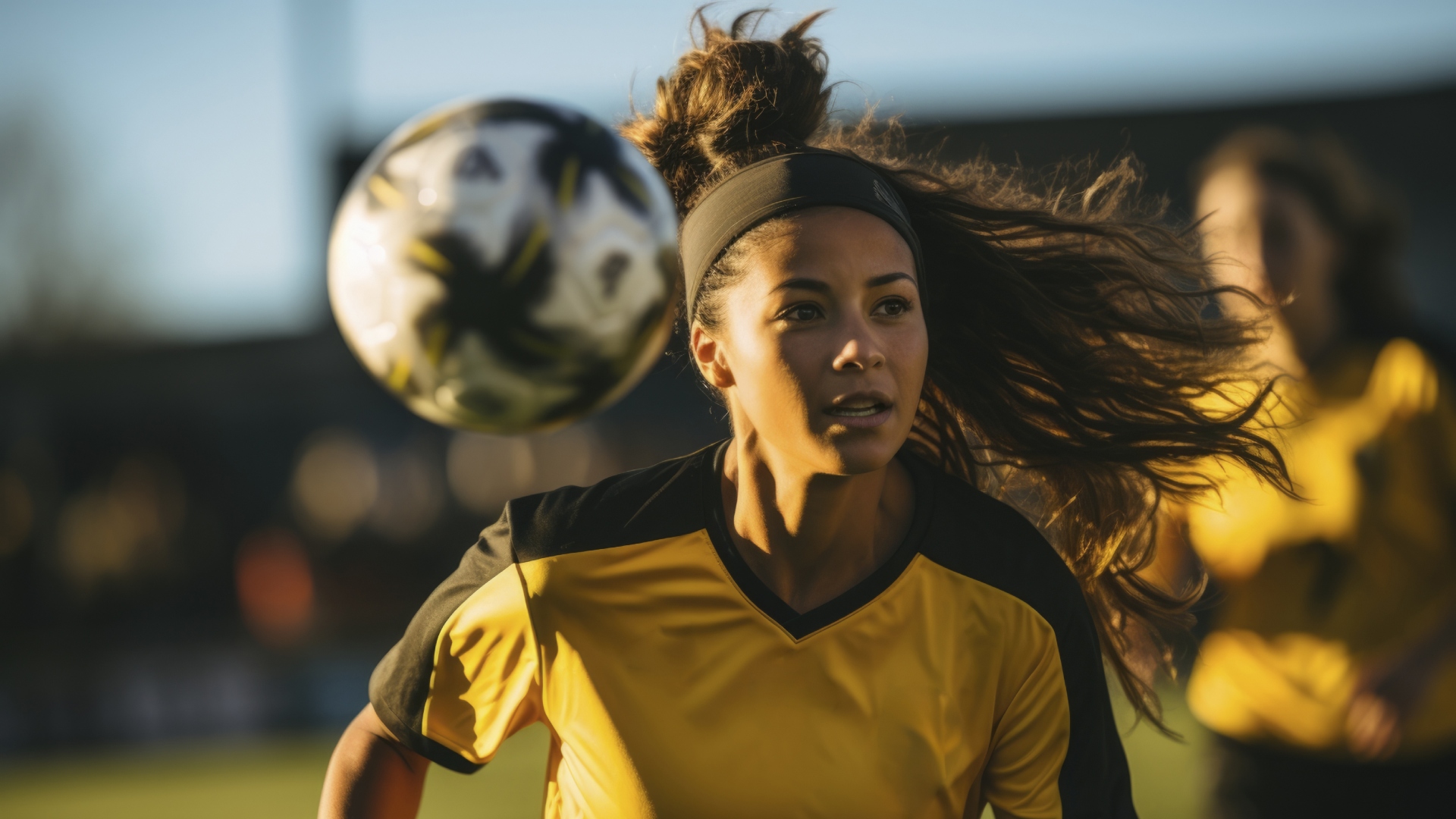
Sport is becoming more inclusive of women, but the battle is far from over. In 2026, some disciplines remain largely "masculine," as if the fields, velodromes, and even locker rooms were designed primarily for men. And while women are gradually gaining ground, they still have to contend with deeply ingrained codes, habits, and perceptions.
Only one in three licenses is for women
The figures allow us to measure the extent of the imbalance. According to an overview published by INSEE and INJEP in April 2024, based on licenses issued in 2022 by summer Olympic federations, women and girls represent only about a third of licensees.
The situation is, however, evolving in the right direction: between 2017 and 2022, the number of female sports licenses increased by 5%, while the number of male licenses decreased by 2%. This is real progress, but it needs to be qualified. While the proportion of women is increasing in part because male participation is declining, there is still a long way to go to achieve true gender parity. And above all, this average masks very significant disparities between different sports.
Football, rugby, cycling: still very "masculine" sports
Football, rugby, cycling, and shooting are among the sports where female participation remains particularly low. These sports have long been built around a "masculine" model, both in their practice and in their representation.
This is obviously not a question of physical ability or natural aptitude. For decades, these sports were conceived, organized, and publicized primarily for men. Men's competitions received far greater exposure, equipment was often designed primarily for them, and "masculine" figures dominated the media landscape. Under these circumstances, it's difficult to convince young girls that a rugby pitch or a racing bike belongs to them as much as to their male classmates.
Even when women are in the majority, the imbalance also exists.
The phenomenon works both ways. In some federations, women represent more than 80% of registered members, particularly in dance, equestrian sports, and gymnastics. This might seem like good news. However, this concentration also reveals something: girls are often steered very early on toward a limited number of disciplines considered more "feminine." The problem, therefore, is not that women don't like sports. It's that they don't have the same freedom to choose which ones to practice.
The weight of stereotypes begins very early
This gender distribution doesn't emerge by chance in adulthood. It's established from childhood, sometimes even before girls are truly aware of the barriers surrounding them. Before the age of 14, the choice of a sport is already largely made. The models presented by family, school, clubs, the media, and social networks all contribute to defining what seems "normal" for a girl or a boy.
A boy who wants to play rugby is rarely questioned about his choice. A girl who wants to join a rugby team may still face comments about her appearance, her strength, or her supposed fragility. And this is precisely how stereotypes are perpetuated: through subtle messages, reflexes, and representations that eventually come to seem natural.
Women are gaining ground, but they have a long way to go.
Fortunately, things are changing. Women's football and rugby are experiencing significant growth, thanks in particular to considerably increased media coverage during major competitions. Combat sports are also gaining new participants. These developments are essential. Seeing strong, fast, and competitive women in the public eye helps to broaden the representation of women's bodies.
Because a woman's body doesn't have to be small, thin, slender, or discreet to be legitimate. It can be muscular, tall, strong, powerful, flexible, or simply as it is. All bodies deserve to move, perform, and be represented. However, these disciplines sometimes start from such low levels that their progress is not yet enough to rebalance the whole.
The problem is not women's motivation
We still hear far too often that women are "less interested" in certain sports. This explanation is appealing because it's simple, but it overlooks everything that goes into the experience itself. For someone to participate in a sport, they need to be able to envision themselves doing it, find an accessible club, suitable schedules, appropriate facilities, and an environment where they feel welcome.
Adapted changing rooms, equitably allocated time slots, a greater representation of female coaches, visible female trainers, and regular media coverage: these elements can truly make a difference. It shouldn't be up to women to prove they belong. The sporting environment must enable everyone to find their place.
Make room, really
Sport is not immune to the mechanisms that still largely permeate our society. Many spaces have historically been built by and for men, while women have had to gradually win the right to be visible, legitimate, and heard within them.
Sport is a particularly striking example: some activities remain associated with masculinity, some body types are valued more than others, and women still sometimes have to overcome greater barriers to access the same spaces. The good news is that an organization is never immutable. Mentalities evolve, role models diversify, and younger generations can help break down these categories.
Because a girl should be able to choose football, rugby, boxing, cycling, or any other sport without having to wonder if she's "cut out" for it. And because a sports field should be a space where every body can exist, progress, and find its place, without having to ask permission.