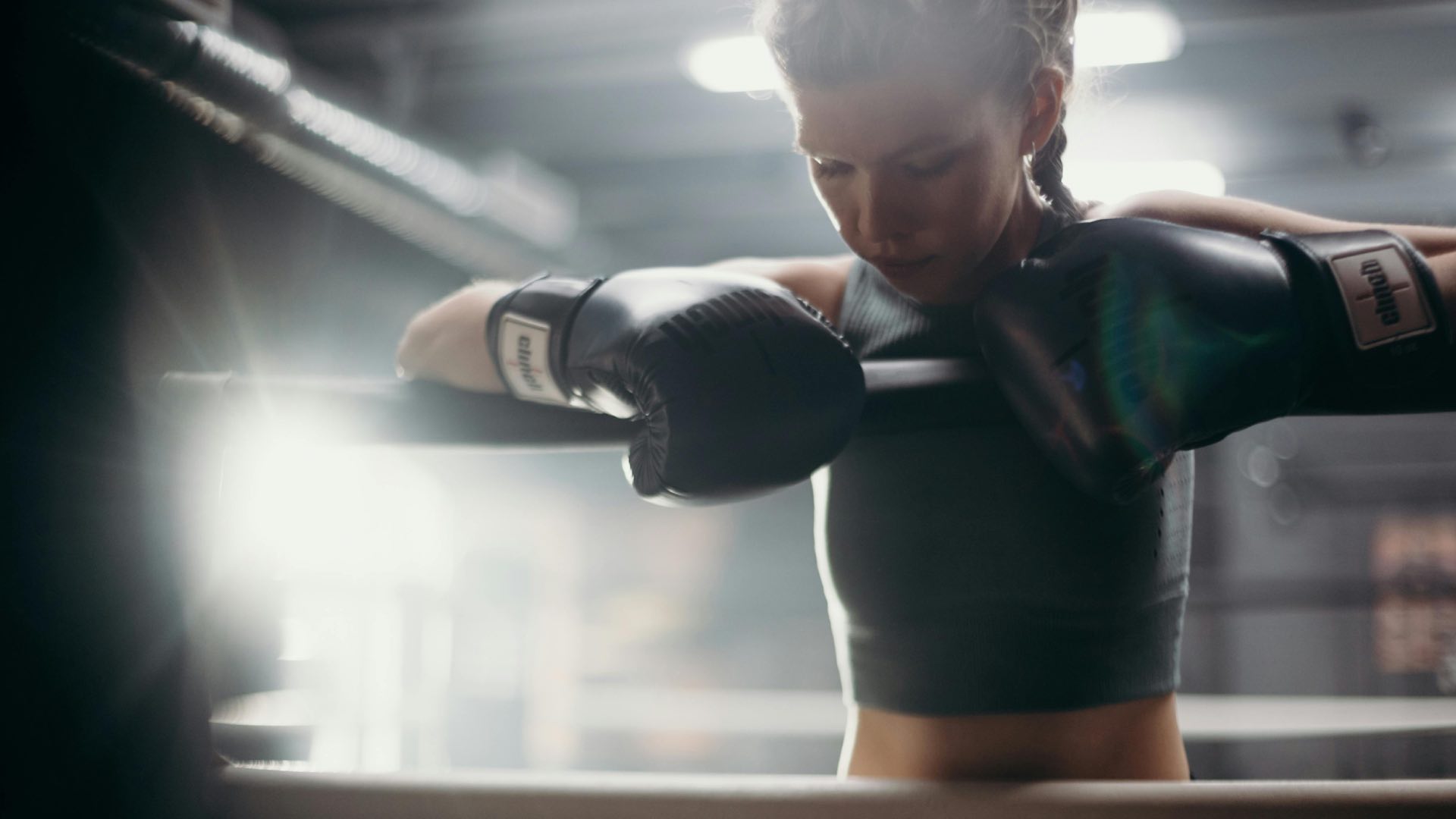
Long labeled "masculine", combat sports are changing their image. Tatami mats, rings and cages are seeing an increasing number of women coming to seek much more than just training.
A progression that no longer goes unnoticed.
The figures speak for themselves. In France, the French Judo Federation now has nearly 40% female members, a proportion that is steadily increasing. The same trend is seen in the French Boxing Federation, where the proportion of female participants is rising, driven by growing media coverage and an expanded network of clubs.
Internationally, the women's Ultimate Fighting Championship competitions have played a significant role in popularizing women's MMA. High-level fights, broadcast widely, have changed perceptions and opened up new possibilities. This movement is therefore not a mere anecdote: it represents a lasting transformation of the sporting landscape.
@haleyywheelerr nothing has built my self esteem like this sport🫀 #fightlikeagirl🥊♀️ #fitgirls #girlswhobox #confidence #therapy ♬ original sound - Whethan
A powerful lever for empowerment
Beyond the statistics, it's the motivations that are striking. Many practitioners mention increased confidence and a strengthened sense of autonomy. A study published in the Journal of Sports Sciences also highlights that regular martial arts practice is associated with improved self-esteem and a greater sense of personal efficacy in women.
Learning to strike, dodge, and throw is not simply about technical skills. It's a way to rediscover your body as a powerful ally. Posture changes, grounding strengthens, and movement becomes more confident. Many speak of a new energy, an inner strength that transcends the dojo or gym.
Your body is no longer judged by its appearance: it is celebrated for its abilities, its coordination, its resilience, its strategy. A profoundly body-positive approach, centered on what you can achieve.
Reclaiming one's body, far from stereotypes
Combat sports engage the entire body: explosiveness, endurance, reflexes, tactical intelligence. This demanding nature creates a more functional connection to movement. You don't train to conform to an ideal, but to progress, to push your limits, to feel.
Sociologist Christine Mennesson has shown, in her work on women's boxing, that these disciplines offer a space to redefine norms of femininity and question gender stereotypes. In the ring or on the tatami, power and grace are not opposed: they coexist. Mixed-gender training is common in many clubs, and workouts are adapted to skill level, not gender. This cultural shift opens up a space for expression where everyone can find their place.
The mirror effect of female champions
Media visibility plays a key role. Athletes like Ronda Rousey in MMA or Clarisse Agbegnenou in judo have made a lasting impression. Their journeys demonstrate that women's performance in combat sports is not exceptional: it is legitimate, spectacular, and respected.
The Olympic Games also reinforced this dynamic, offering increased visibility to women's events. Seeing women on the podium creates a powerful sense of identification. You imagine yourself there, you tell yourself that you too can walk through the door of a club.
Self-defense and sense of security
Some practitioners also mention learning useful techniques in case of an attack. While a combat sport does not replace specific self-defense training, it develops reflexes, better stress management, and a more refined sense of distance.
Research published in the journal Violence Against Women indicates that programs combining physical activity and self-defense techniques can strengthen feelings of security and reduce fear of assault. Feeling empowered to act, even symbolically, profoundly changes one's self-perception.
The rise of combat sports among women is part of a broader trend: the questioning of gender norms in sport. Hitting a bag, learning a combination, stepping onto a tatami: these actions are no longer reserved for a single gender. They are becoming means of expression, arenas of freedom. More than a trend, it is a collective affirmation: power, technique, and determination belong to all those who choose to embody them.