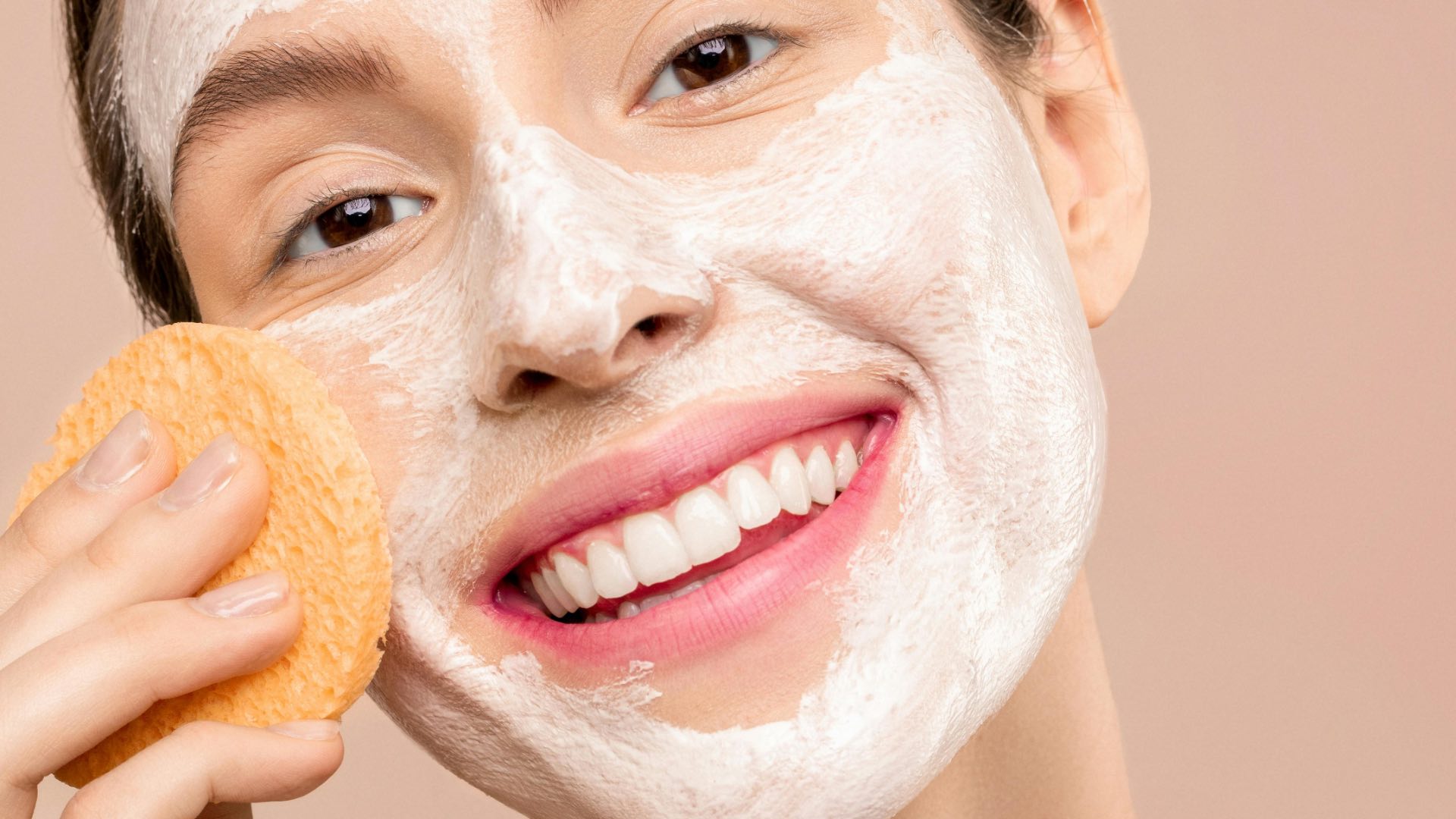
You have your favorite gel, your dedicated towel, your well-honed routine. Yet, some subtle signs indicate that your routine is weakening your skin instead of pampering it. Before blaming your serum or cream, let's go back to basics: cleansing, the discreet but essential pillar of radiance.
Your skin feels tight right after rinsing
If your skin feels tight, almost "too clean" after washing, it's not a sign of effectiveness. A feeling of tightness often indicates an alteration of the hydrolipidic film , that thin natural barrier made up of water and lipids that protects your epidermis.
A cleanser that's too harsh, water that's too hot, or an excessive amount of product can disrupt this protective barrier. As a result, your skin loses moisture more easily and becomes more sensitive to external aggressors. The goal isn't to strip the skin, but to cleanse gently. A mild formula, suited to your skin type, and rinsing with lukewarm water make all the difference. Your skin doesn't need to feel raw to be clean.
Redness appears with each wash
Does your face always turn red after cleansing? This isn't insignificant. Repeated redness can indicate mechanical or chemical irritation. Rubbing vigorously with a washcloth, massaging too hard, or drying by rubbing with a towel can weaken your skin barrier. Facial skin is delicate, even when it seems strong. Gentle movements with your fingertips, followed by gently patting dry with a clean towel, are perfectly sufficient.
If redness persists despite gentle cleansing, the cleanser's formula may need to be reviewed. Some foaming agents or fragrances are not suitable for all skin types. And that's normal: every skin is different.
You feel an urgent need to hydrate to "relieve" the discomfort.
Applying a cream after cleansing is an excellent habit. However, if you experience intense discomfort until you apply a moisturizer—tingling, a slight burning sensation, immediate dryness—this may indicate that your cleansing method is too harsh.
A suitable product shouldn't cause significant discomfort. Simplifying your routine can sometimes help: a gentle, fragrance-free cleanser followed by a basic moisturizer often allows the skin to gradually regain its natural balance. Your skin doesn't need to be "put to the test" to be beautiful. It deserves gentleness.
Your spots persist despite a complete routine
You use a targeted serum, a suitable cream, maybe even an anti-acne treatment… and yet, pimples and blackheads keep coming back? Cleansing could be the culprit. Insufficient cleansing can leave behind residues of makeup, sunscreen, oxidized sebum, or pollution, which clog pores.
In the evening, especially if you are wearing makeup or water-resistant sunscreen, a gentle double cleansing may be appropriate: a product that dissolves oils, followed by a light cleanser to remove residue.
Let's remember one essential thing: having pimples is neither shameful nor a failure. Acne has multiple causes – hormonal, genetic, stress-related, or environmental. Skin with pimples is still living skin, worthy of care and respect.
You feel like a film is still stuck to your skin
Conversely, if you experience an oily residue or if the product is not rinsed off properly, the cleanser may not be suitable for your skin type. Some rich textures are perfect for dry skin but can feel heavy on combination or oily skin.
Be careful not to go to the other extreme. Trying to eliminate all traces of sebum can stimulate its production. Your skin isn't your enemy: sebum is part of its natural balance.
Listen to your skin, not the trends
Proper cleansing relies on a few simple principles: choose a product suited to your skin type, use a small amount, massage gently for about thirty seconds, rinse with lukewarm water, and dry without rubbing. Two cleansings a day are generally sufficient.
Above all, remember that every skin is unique. What works for an influencer or your friend won't necessarily be ideal for you. Viral routines and skincare trends can be inspiring, but they don't replace carefully listening to your own skin's signals.
In short, your skin communicates with you through tightness, redness, shine, or blemishes. The key isn't to follow strict rules, but to build a routine that respects your skin's natural balance. By adjusting a few habits and listening to your skin, you can transform this daily step into a true ally for a comfortable and radiant complexion.