In cinema, have aging women become rarer than talking animals? That is, word for word, what a new British study demonstrates with unequivocal conclusions, and which speaks volumes about the place that the industry continues to give to women after 60.
Five out of a hundred films: the statistical revelation
Conducted by the anti-ageism campaign Age Without Limits and the Centre for Ageing Better, in partnership with the University of West London Film School, the study examined the 100 highest-grossing films released in the UK in 2023, 2024 and 2025.
The verdict: only five of these productions starred a woman over 60. Meanwhile, twenty films featured a talking animal at the heart of the plot, and six starred an actor named Chris (Chris Pratt, Chris Hemsworth, Chris Pine, or Christian Friedel), as reported by Variety . In other words, in current blockbusters, you're four times more likely to see an anthropomorphic animal character in the lead role than a woman over 60.
Three years, one hundred successes, an undeniable conclusion
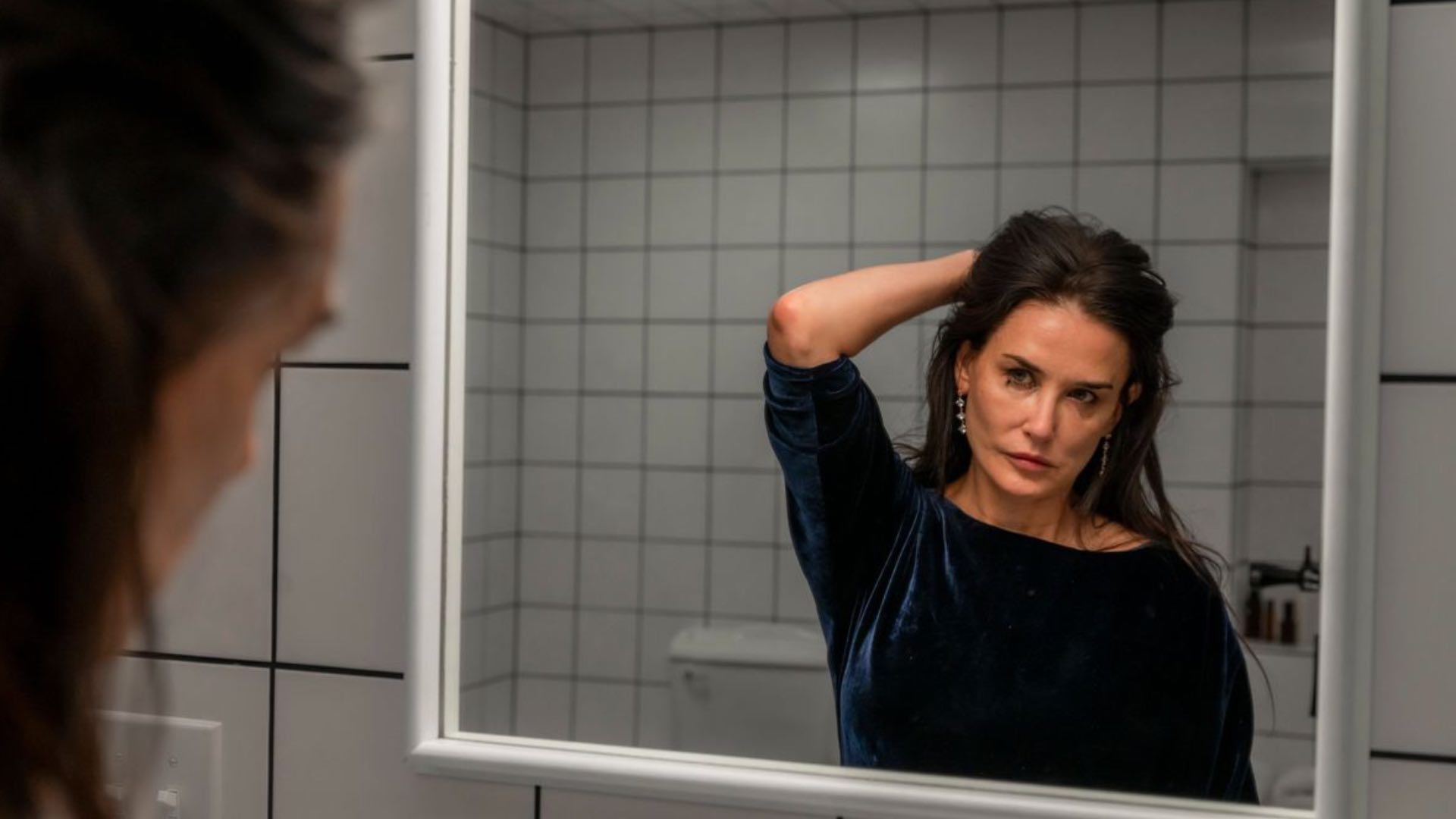
The exceptions are rare but notable: Jennifer Saunders in Allelujah, Nia Vardalos in My Big Fat Greek Wedding 3, Diane Keaton in Book Club: The Next Chapter, Demi Moore, multi-award winner (Golden Globe, SAG Award, Critics' Choice Award, but snubbed at the 2025 Oscars against Mikey Madison for The Substance), and Jamie Lee Curtis in Freakier Friday. Just five actresses to represent half the population.
And this phenomenon is not new. Back in 2023, the "Cast Aside" study , conducted by the same Centre for Ageing Better on nearly 50 popular films released since 2010, showed that women aged 65 and over were more than three times less represented than men of the same age. This imbalance is therefore not a recent phenomenon: it is part of a structural, long-standing trend, fully embraced by the industry.
When they exist, these are caricatured and silent roles.
But the problem doesn't stop with the leading actors. When they do appear on screen, older women are overwhelmingly relegated to secondary roles. The study describes them , bluntly, as "passive, pathetic, ridiculed for not acting their age, and often extraneous to the main plot."
In terms of dialogue, the observation is just as striking: female characters over 50 speak 14% less than their male counterparts of the same age. Lacking visual presence, they are also deprived of speech. This two-pronged marginalization transforms the screen into a narrow mirror, where only a few faces—young, female or male, but certainly not too old in the case of women—are given a voice.
An industry that "fires" actresses as young as 40
This exclusion is no secret: actresses themselves have been denouncing it for years. "There's a consensus in the industry that, once you're an actress, around 40, you're finished," Nicole Kidman already summarized . Geena Davis, founder of the Geena Davis Institute on Gender in Media, concurred in an interview with CBS News : "It's very different for actresses over 50 than for actors of the same age."
The comparison is stark. While aging men continue to be cast as heroes, lovers, or mentors, often opposite significantly younger partners, women are relegated to the sidelines. As if aging as a woman remains, in the cinematic unconscious, an aesthetic flaw to be concealed.
"Where are our stories?": The actresses' revolt
Faced with these figures, several voices are being raised within the industry. Leading the charge is Emma Thompson, 67, an Oscar winner and outspoken supporter of the campaign. "Women make up half the population, and we're getting older. So where are our stories?" the British actress asks in her statement.
And she continued, in a text that circulated widely: “The older we get, the more interesting we become. I want to see more films centered on mature women: we are captivating, relatable, and it’s time we were put at the heart of the story. Older women don’t need permission to exist on screen. They already exist in the world; it’s up to cinema to catch up.”
This manifesto implicitly echoes those of other figures in the film industry, starting with Demi Moore, whose striking role in Coralie Fargeat's The Substance denounced precisely the discarding of actresses after a certain age. A voice long silenced, which finally seems to be finding its voice.
A demanding public, a blind economy
The most paradoxical aspect of this erasure is that it runs counter to public expectations. According to a parallel survey of 4,000 people, one in three respondents believes there aren't enough films starring women over 60, a figure that rises to 39% among women. One in six even says they would be more inclined to go to the cinema if an older woman were the lead.
The disparity is all the more striking given that in the UK, nearly one in five moviegoers is over 55. "The representation of older actresses in leading roles is so disproportionate to the older cinema audience that this lack is, frankly, insulting," says Dr. Carole Easton, director of the Centre for Ageing Better. Insulting, then—and economically absurd.
Beyond cinema, a signal sent to the whole of society
The essential question remains: what does this invisibility reveal, beyond the realm of cinema? “By failing to accurately represent older people, and particularly older women, the film industry actively contributes to the marginalization of seniors in society,” warns Harriet Bailiss, co-leader of the campaign. “It’s no wonder so many women say they feel invisible as they age, when they never see themselves reflected on screen.”
Because cinema doesn't just depict the world: it shapes it. With each film that chooses to place a 25-year-old heroine alongside a 60-year-old hero, an entire collective imagination is reenacted, teaching us, scene after scene, that women are valued primarily for their youth and that for them, growing old is tantamount to fading away. This fiction ultimately produces very real effects, in the workplace, in social life, and even in the self-esteem that aging women have.
At a time when diversity is finally taking center stage, ageism—particularly when it targets women—remains a blind spot in the film industry. By pointing out that a talking animal is now more likely than a 60-year-old woman to land a starring role, this study poses a simple yet urgent question: how much longer will cinema pretend not to see half its audience? Actresses have already begun to raise their voices. It remains to be seen whether the industry is finally ready to listen.