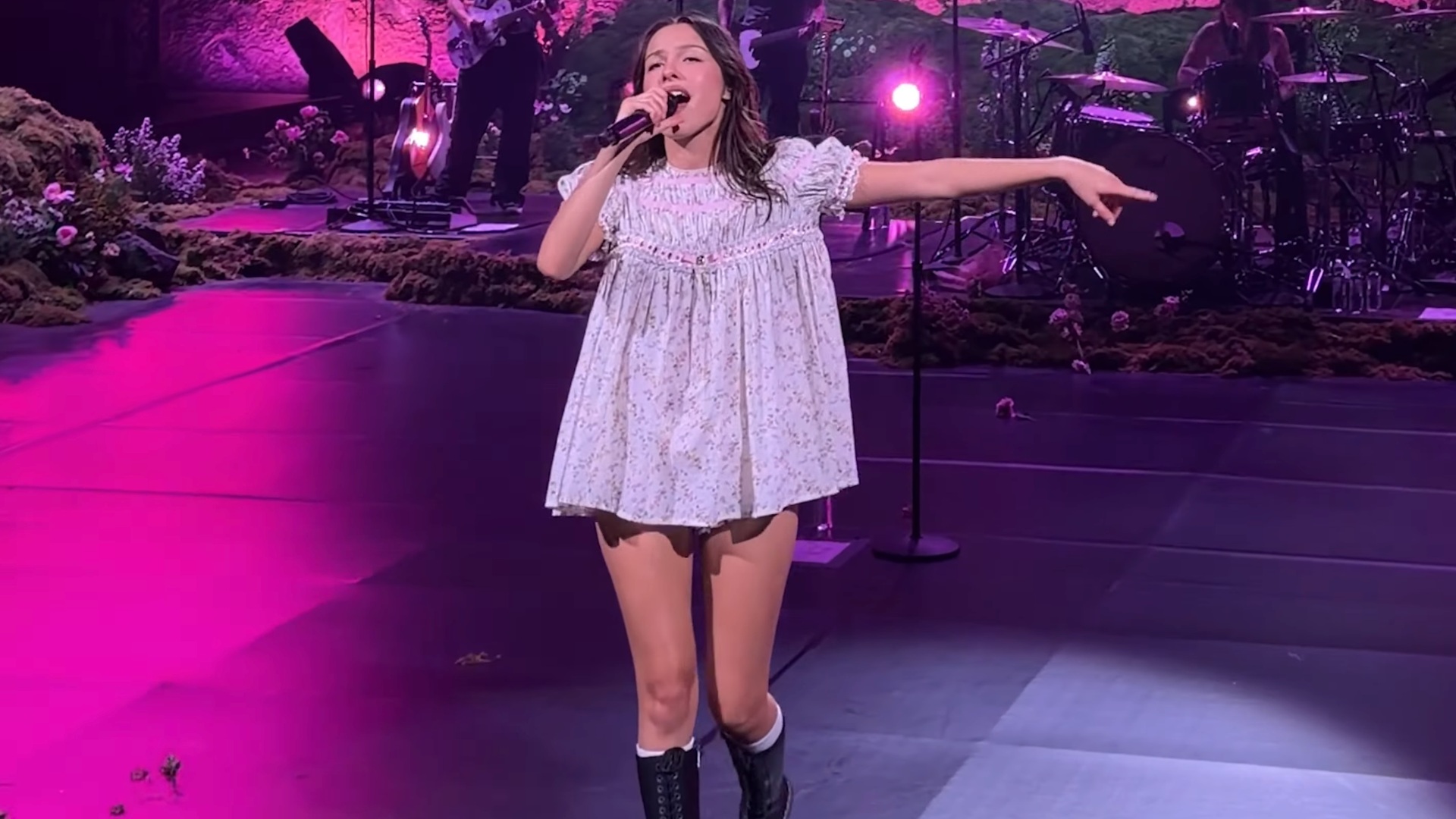
Commenting on singers' outfits instead of applauding their vocal performance and appreciating them for their artistry has almost become a rite of passage. Pop-rock icon Olivia Rodrigo was no exception to this public judgment. Her babydoll dress, paired with badass shoes, was dissected down to the last detail by a horde of anonymous commenters. This outfit, intended only as a style statement, nearly became a national issue.
Olivia Rodrigo's babydoll dress, a magnet for criticism
Olivia Rodrigo's name keeps popping up in the news. The American singer, known for her eclectic musical style and highly personal take on pop-rock, is making headlines not for her undeniable talent, but for her latest, seemingly innocuous, stage look. Her outfit, intended as a backdrop, a secondary element in her performance, has become a viral topic of discussion.
At the Spotify Billions Club event, which recognizes artists who have surpassed one billion streams on the platform, the singer of "Bad Idea Right" stayed true to form and once again expressed her unique identity through fashion. She appeared at the microphone in a babydoll dress covered in small flowers and adorned with lace. To add a touch of edge to this demure piece, paired with bloomer shorts, she donned a pair of bold boots and added visible white socks underneath. This ensemble, a blend of retro country style and 2000s rock aesthetic, quickly went viral.
Online, in a kind of collective immunity, internet users regularly appoint themselves fashion critics and don't hesitate to deliberate on the clothing choices of celebrities as if they had a say in the matter. Deemed "too short ," "indecent," or even downright "infantilizing," this seemingly innocent dress has been transformed into the ultimate offense, an affront to modesty, an object of satanic intent. "Can Olivia Rodrigo dress like a normal pop star and stop trying to look like a baby?" suggests one internet user on X (formerly Twitter).
View this post on Instagram
What internet users are criticizing about this dress with its "innocent style"
Internet users didn't just point out an "old-fashioned" design or a "fashion faux pas." They went further in their online diatribe, accusing the artist of "acting like a little girl" and "sexualizing" a child's outfit. As if the babydoll dress were a giant version of the pieces sewn onto the fragile skin of porcelain dolls or belonged solely to the wardrobe of toddlers. According to these hasty judgments, fashion has a threshold of tolerance, a line that shouldn't be crossed. While children's bikinis, kid-friendly makeup, and mini-shorts for little girls are met with general indifference, Olivia Rodrigo's babydoll dress has sparked an irrational controversy.
What internet users are comparing to a "girlish outfit" actually has a story to tell. It's neither provocation nor a fit of madness to attract attention. This piece makes sense within the artistic direction of her latest album, "You Seem Pretty Sad for a Girl So in Love," where Olivia Rodrigo blends riot grrrl aesthetics with vintage coquettishness.
“I want everything to be playful and relaxed,” the singer told British Vogue regarding her dress code. Unfortunately, internet users took this look very seriously and hurled criticism at it like rotten tomatoes in a public square. They are likely unaware of the dress's origins, which have graced many silhouettes, including those of the iconic Jane Birkin. A militant response to the conservative fashions of the time, the babydoll dress was also used as a disruptive emblem by rock figures, including Courtney Love.
An outfit that needs no apology or justification
Ultimately, the debate surrounding this dress goes far beyond a simple question of fashion taste. It primarily reflects this strange collective obsession with scrutinizing the appearance of women in the public eye, as if every inch of fabric warranted expert analysis and necessarily carried a hidden message. For male artists, a "daring" outfit is often praised as an aesthetic choice. For a female singer, it quickly becomes a source of suspicion, moralizing, or accusations of ulterior motives.
Olivia Rodrigo did nothing more than what all great artists do: tell a story through a silhouette and wear what reflects it. Her babydoll dress was simply an identity marker, a visual reference, not a perverse parody of childhood. It was simply part of an artistic continuity, faithful to the universe she has been building since her beginnings, somewhere between bruised romanticism, Y2K nostalgia, and rock irreverence.
While the collective imagination often conjures up images of rock stars wearing leather jackets, ripped jeans, and slogan t-shirts, this isn't a hard and fast rule. Olivia Rodrigo proves that gentleness and fury can coexist, and that's precisely what makes her character so compelling. Fashion should remain a space of freedom, not a tool of oppression or a pretext for punishment.