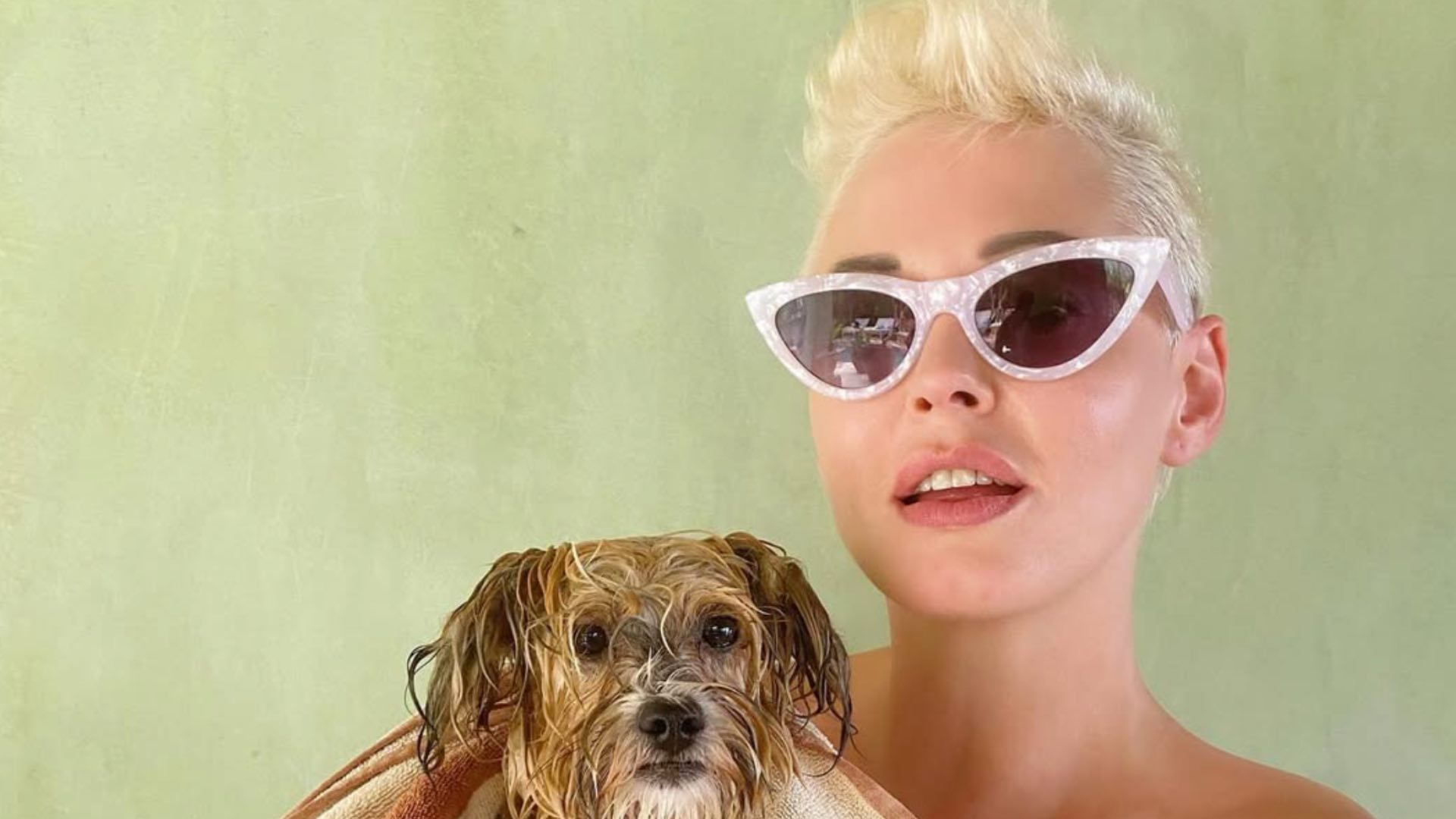
Beyond the nostalgia for Saturday nights spent watching "Charmed," Rose McGowan's story highlights the harsh realities imposed on actresses. In a recent podcast, the actress who played Paige revealed how her body was scrutinized like a mere "product" at each reshoot.
A cult witch under close surveillance
In the 2000s, Rose McGowan joined "Charmed" to play Paige Matthews, the stepsister who succeeded Prue in the Halliwell trio. Behind the series' global success, the actress now reveals a far less magical reality: the constant monitoring of her weight at the beginning of each season.
She explains that the producers "circled" her upon her return to the set, as if visually assessing whether her figure still met the imposed criteria. This ritual, presented as commonplace, illustrates the extent to which the actresses' bodies were—and often still are—a means of control rather than a secondary element of their work.
View this post on Instagram
"They were inspecting their product": unashamed fatphobia
In her testimony, Rose McGowan describes this behavior as a way of "inspecting their product," a phrase that terribly reveals the dehumanization at work. Women's bodies are no longer those of persons, but objects to be validated or corrected.
She emphasizes that all of this seemed "completely normal" at the time. This normalization of fatphobia—making weight monitoring a routine part of production—reflects a culture where thinness is demanded, under threat of implicit or explicit punishment. The message sent to actresses is clear: their worth also depends on their bodies conforming to an imposed ideal.
Pressure on women's bodies in Hollywood
Rose McGowan's case is part of a larger system where actresses are constantly judged on their appearance: weight gain, wrinkles, pregnancies, or simple bodily changes become topics of professional discussion. This constant pressure fuels eating disorders, psychological distress, and obsessive self-monitoring.
By recalling these practices, the former star of "Charmed" highlights a structural sexism: where men can age and fluctuate physically without their careers being immediately threatened, women are still expected to remain frozen in a perfect and eternally young version of themselves.
From victim of the system to activist voice
Rose McGowan is no stranger to activism. A leading figure in the #MeToo movement, she recounted in her autobiography, "Brave," the assault she says she suffered at the hands of Harvey Weinstein, long before the scandal broke. Her testimony helped to empower other women to speak out and to shake the impunity of an all-powerful producer.
By denouncing fatphobia and the obsession with weight on film sets today, she continues along the same lines: exposing the mechanisms of domination, whether they manifest as sexual violence or the control of the body. Her words remind us that it's not just a matter of "inappropriate comments," but of a comprehensive system that reduces actresses to their appearance and makes their careers contingent on physical conformity.
A testimony that resonates far beyond Charmed
Rose McGowan's story has resonated so strongly because it gives voice to an experience shared by many women, both inside and outside of Hollywood: feeling constantly evaluated, judged, and measured by their weight. By exposing these practices, the actress invites us to rethink the standards imposed by the industry and to reject the notion that fatphobia is a "normal cost" of the profession.
Behind the nostalgia for cult TV series lies another story, one of control, remarks, and silent pressure. Today, Rose McGowan chooses to break her silence – and her testimony acts as a powerful incantation against a system that, for too long, has conflated women with products.