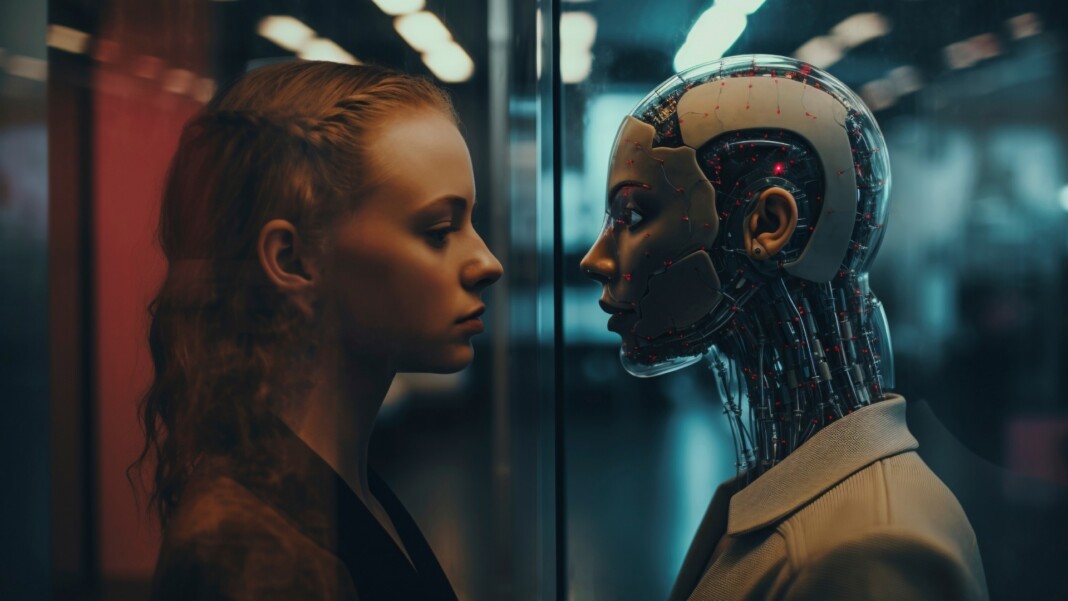
While candidates use AI to refine their resumes, gather presentation tips, or perfect an engaging email, companies are also turning to these digital tools to sift through applications and choose their next recruit. AI is taking over HR jobs, but it sometimes lacks objectivity and, above all, sensitivity.
A recruitment 2.0 approach that is increasingly appealing to companies
AI has become ubiquitous in our daily lives and sometimes dramatically increases our chances of landing a job . Perhaps you've already used chatGPT as part of your job search and saved yourself some mental effort by requesting a few services. Whether it's rewriting an email, simplifying the writing of a cover letter, or practicing for tricky questions, AI is your personal coach, your all-purpose robot.
If you were to write even a single paragraph on your own, you'd be completely lost. Well, you should know that business leaders also take advantage of this obedient and efficient workforce to recruit new talent. Due to staff shortages or time constraints, employers delegate this significant task to mindless robots. And they don't just ask them to rank resumes by relevance, but to take on the role of an HR professional.


Imagine, you've gone through the various stages of the interview and you arrive at that crucial moment: the virtual exchange via screen. You open the link sent by email and there, the face that appears before you is nothing but a collection of pixels, a woman made of algorithms, not flesh and blood. You find yourself interacting with a robot in the same way you would with a real person. This futuristic scenario is becoming a reality. The French startup HR Engine, for example, boasts of saving recruiters "two days of work" with its corporate AI system. A time-saver, certainly, but a significant loss of human connection.
From CV screening to interviews, AI almost has the final say
This AI, which scans your CV and scrutinizes every line with intent, practically gives you a professional diagnosis. It's not just a troubleshooting tool; it's the conductor of the recruitment process. It handles everything from the initial contact to the practical exercises. And it's like a real-life episode of "Black Mirror."
This machine, which doesn't understand intuition, creates a psychological profile of each candidate. It's responsible for evaluating applications based on several criteria. The owners of these robots try to reassure people, stating that the AI relies solely on skills. They've been programmed to recruit not based on looks or gender, but on a qualified individual. They are therefore supposed to be neutral. This is quite useful for preventing favoritism and decisions based on appearance.
The AI behind recruitment, which is problematic
These AIs, domesticated by large corporations, hold your future in their hands. Which is rather frightening when you see the scandals that result. Data exploitation, photo trafficking, stereotypical analysis—AI opens the door to all kinds of abuses and inequalities.
Instead of fighting against the silent injustices of the professional world, AI can also normalize them. "To choose, AI uses the data that has been fed to it, so if there have always been men in these positions, it will think that they are more competent and favour male profiles," worries Marie Content, a social law lawyer at BG2V in the columns of the media Les Echos .
In a 2020 study, Apec (Association for the Employment of Managers) called for a thoughtful and moderate use of AI. "Artificial intelligence should only be a complementary tool to sometimes perform the most tedious tasks, but it can in no way be considered infallible," the study stated. This demonstrates that AI has its limitations in recruitment.


AI, completely unaffected by your sensitivity, eloquence, or love of words, chooses your baggage rather than your very being. In other words: don't expect to be the "favorite." Why not imagine a world where you also have a virtual clone capable of extolling your virtues on camera?