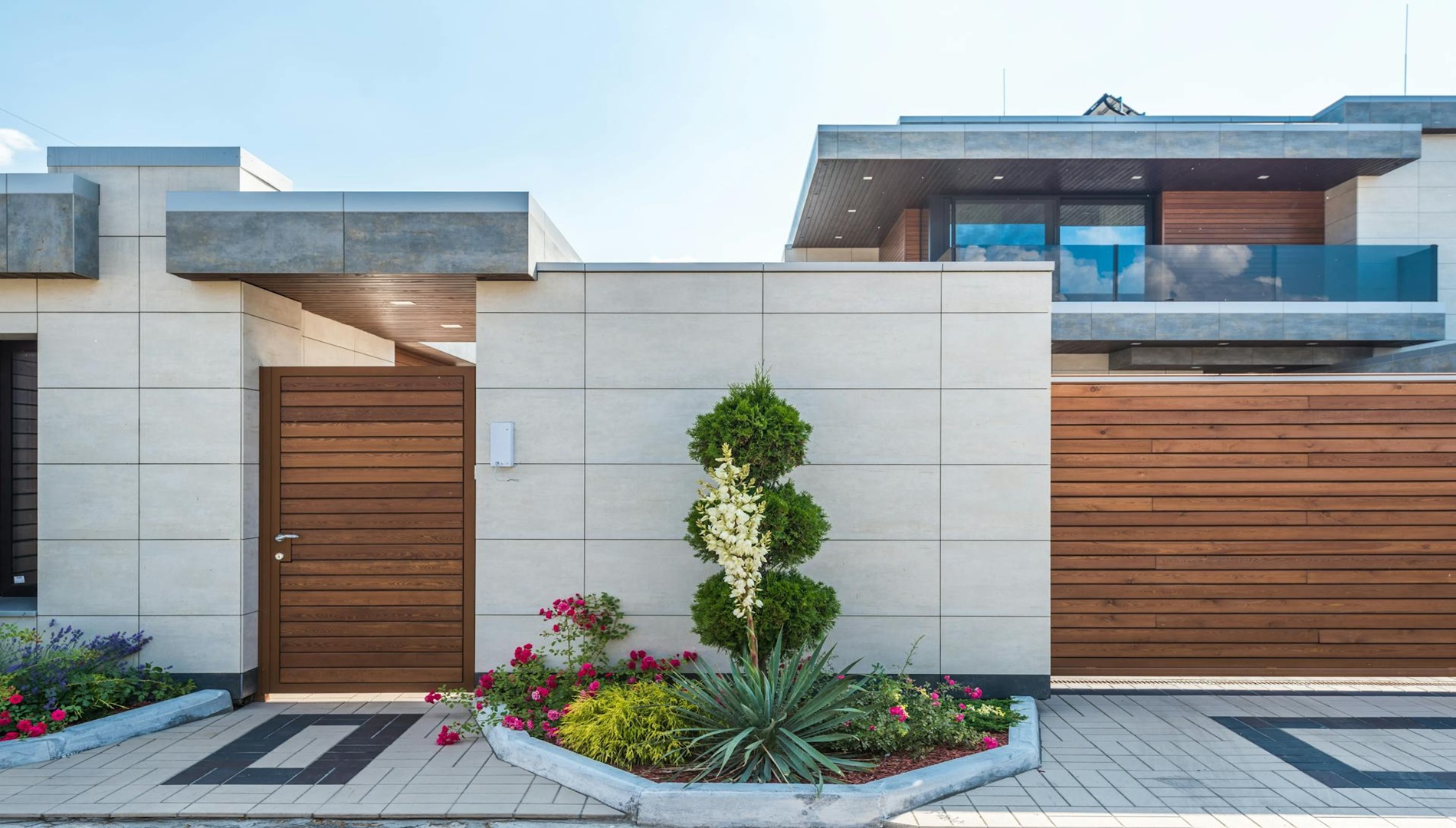
The facade of a house tells a story even before you cross the threshold. It sets the tone, establishes an atmosphere, and reflects a personality.
Taking care of the exterior decoration of one's facade is not a luxury reserved for large properties: it is an accessible gesture, full of meaning, which radically transforms the appearance of a dwelling.
According to a study published by the Real Estate Observatory in 2023, a well-maintained and attractively presented facade can increase the perceived value of a property by 5 to 15%.
This figure illustrates how the aesthetics of the facade go beyond mere vanity to become a true investment.
Here we offer you a complete overview of the best ideas and inspirations for beautifying the exterior walls of your home , whether it's a light renovation or a deep transformation.
Understanding the basics of a beautiful exterior facade
Before choosing a color or coating, we need to go back to basics.
A successful facade relies on a balance between form, material, and color. The building's architecture imposes its constraints: a half-timbered house cannot be decorated like a 1970s bungalow.
The orientation of the dwelling also plays a role. A south-facing facade receives a lot of direct sunlight. Light colors will shine more brightly on such a surface, sometimes too intensely.
Conversely, a north-facing exposure requires brighter shades to avoid a sad and austere effect.
The neighborhood and the local urban planning regulations (PLU) also come into play. In some French municipalities, facade colors are regulated.
Consulting the town hall before any facade renovation project avoids costly setbacks.
We recommend starting with a thorough assessment of the walls' condition: cracks, dampness, moss. A sound surface is essential for the durability of anything placed on it. Starting with a solid foundation ensures that your decorations will last.
Facade cladding: materials and textures that make all the difference
The choice of cladding determines the visual identity of the house. Each material brings a specific texture, character, and durability. We review the most popular options today.
Traditional plaster remains a reliable choice. Available in smooth, scraped, or troweled finishes, it suits all architectural styles. Lime plasters have seen a resurgence in popularity in recent years, particularly for their breathability and natural appearance.
Wood cladding is appealing for its warm and organic feel. It can be installed horizontally or vertically, stained or left natural. Treated wood or composite wood cladding offers good weather resistance while giving the facade a unique character.
Stone, whether natural or reconstituted, lends a noble and timeless appearance. Stone cladding is suitable for both country houses and contemporary buildings, depending on how it is used and combined with other materials.
Architectural concrete and composite panels are becoming increasingly popular in modern projects. Their clean, industrial look appeals to fans of minimalist architecture. These materials allow for a great deal of creative freedom in playing with contrasts of color and surface.
Facade colours: be bold, use it sparingly, harmonize it
Color is the most accessible and transformative tool for exterior decoration. However , choosing the right shade for your facade requires thought and a methodical approach. We don't choose a color for an interior room in the same way we choose one for a wall exposed to the elements.
Neutral tones — off-white, beige, pearl grey — remain the most widespread in France.
They blend easily into their surroundings and stand the test of time without becoming tiresome. Pure white is not recommended for facades as it ages poorly and dirt appears quickly.
Bold colors are making a comeback: terracotta, sage green, slate blue, and ochre yellow. These shades, drawn from the vocabulary of nature, are part of the biophilic trend that has permeated interior design since the mid-2010s. Combined with natural wood shutters , they create a soothing visual harmony.
We often advise playing on the contrasts between the main color of the facade and that of the window frames, shutters or doors.
A band of a different color around the openings creates an architectural effect without heavy construction work.
For those who are undecided, online simulation tools allow you to virtually test a color on a photo of your house. Brands like Tollens and Zolpan offer these configurators on their websites. It's a simple way to visualize the result before committing.
Plants on the facade: a living and evolving decoration
Greening exterior facades is one of the most exciting trends of recent years. It combines aesthetics, ecology and well-being in a single approach.
Climbing plants are the best allies for a building facade. Wisteria, honeysuckle, clematis, and climbing roses adorn the walls with color and fragrance throughout the seasons. Their evolution over time transforms the facade into a living painting, never the same from one year to the next.
Ivy, often criticized for its invasive nature, remains an effective solution for quickly covering an unsightly area. We recommend choosing variegated varieties, which are more decorative, and pruning it regularly to protect walls and joints.
Vertical green walls represent a more sophisticated option. Composed of modules planted with perennials, aromatic herbs or grasses, they create a spectacular effect.
French botanist Patrick Blanc popularized this concept worldwide in the 1990s, with remarkable achievements on Parisian buildings.
Even without complex infrastructure, a few hanging plants, planters attached to windowsills or a wooden trellis with climbing plants provide an effective and economical touch of greenery.
The important thing is to choose species adapted to the local climate and exposure.
Outdoor lighting: enhancing the facade after sunset
We often neglect the nighttime aspect of a facade. Yet, well-designed exterior lighting radically transforms the appearance of your house after dark.
Recessed floor spotlights, directed upwards, create a grazing effect that highlights the textures and reliefs of a stone wall or a worked plaster.
This technique, borrowed from museum lighting, gives a strong architectural character to ordinary surfaces.
Outdoor wall lights play both a decorative and functional role. They mark entrances, secure walkways and contribute to the overall ambiance of the property .
The choice of model must match the architectural style: a classic style lantern on a Haussmannian facade, a minimalist spotlight on a contemporary house.
String lights , long confined to the end-of-year festivities, are now being installed as permanent decorations on some facades.
Tucked into a trellis, running along a pergola or wrapped around a tree, they create a soft and warm atmosphere.
Solar lighting is constantly improving in quality. Solar bollards and self-contained spotlights allow you to illuminate your facade without wiring and without increasing your electricity bill. A practical solution for minor renovations.
Shutters, doors and windows: the details that make all the difference
On a facade, openings are like frames in a painting. Their treatment is as influential as the main color. Shutters, front doors, and window frames deserve special attention.
Painted wooden shutters remain a staple of French charm. A contrasting shade with the facade—petrol blue on white plaster, burgundy on an ochre facade—is enough to create an elegant and cohesive effect.
Repainting your shutters is one of the most cost-effective interventions in terms of visual impact.
The entrance door is the focal point of the facade. It draws the visitors' gaze and gives a decisive first impression.
For the past few years, we've observed a trend towards colorful front doors: mustard yellow, bright red, bottle green. These bold choices often work very well on simple facades.
Window frames made of stone or brick provide an architectural presence.
When they do not exist structurally, painted strips or applied moldings can simulate them with a very convincing effect.
Wooden, metal, or fiber-reinforced concrete screens offer another way to work with the exterior envelope. Installed as partial cladding in front of the facade, they create plays of shadow, light, and depth.
This architectural approach can be found in contemporary projects as well as in renovations of 1960s houses.
Ornaments, frescoes and decorative elements on the facade
Decorative wall coverings applied directly to exterior walls offer almost unlimited possibilities for expression. Solutions exist for all tastes and budgets.
House numbers, too often overlooked, can become true decorative objects. Models in brushed brass, hand-painted ceramic, or enameled cast iron transform a practical detail into a refined aesthetic accent.
Murals painted on building facades are experiencing a significant boom in urban areas. Cities like Lyon, Bordeaux, and Nantes boast magnificent examples of institutionalized street art covering entire buildings.
On a smaller scale, a stenciled design on a fence wall is enough to personalize an exterior.
Enamel plaques , wall ceramics, or exterior mosaics bring a handcrafted and personal dimension to a facade. These elements tell a story, bear witness to a journey or a passion.
They distinguish one house from its neighbors without overpowering their architecture.
Wooden or metal trellises, fixed directly to the walls, create sturdy decorative structures. They can support climbing plants or simply serve a purely aesthetic purpose.
Their geometric or organic design interacts with the architecture and enriches the flat surface of a wall.
Some homeowners commission ceramic artists to create custom panels integrated into the facade. This more expensive approach produces unique and lasting results that remain stylish for decades.
Inspiration by architectural style
Each type of house calls for a different decorative approach. Drawing inspiration from the original style of a house for its exterior decoration generally produces the most cohesive and satisfying results.
For a Provençal-style house, we will focus on colored plaster in warm tones, wooden shutters painted in blue or dark green and Mediterranean vegetation: lavender, rosemary, olive tree.
The whole thing immediately evokes the South without exaggerating.
A Norman half-timbered house lends itself to showcasing the wooden structures.
Repainting the exposed beams in black or dark brown, contrasting with white plaster between the sections, planting hydrangeas or rose bushes at the base of the facade: the recipe is classic but always effective.
The minimalist contemporary house adopts a limited palette: white, grey, black, light wood. Clean lines, large blocks of colour and the absence of superfluous ornamentation define its aesthetic.
Architectural lighting and precise landscaping play a predominant role here.
For houses from the 1970s or 1980s, which are often less architecturally striking, a facade renovation can completely transform the appearance of the property.
Facade renovation with a change of color, addition of wooden cladding on part of the facade, replacement of hinged shutters with sliding shutters: these interventions radically transform the silhouette of the building.
Budget and planning: organizing your exterior facade renovation
Renovating and decorating the exterior facade of your house requires careful planning. Costs vary considerably depending on the scope of the work, the surface area to be treated, and the materials chosen.
A simple facade renovation with the application of facade paint costs on average between 30 and 80 euros per square meter, labor included, according to data from the Leroy Merlin Pro network published in 2024.
For a standard-sized house with a 120 m² facade, the bill can therefore range between 3,600 and 9,600 euros.
Installing wood cladding or stone facing falls into a higher price range, between 80 and 200 euros per square meter. These materials require careful installation and specific fixings.
Hiring a professional is still recommended to guarantee the watertightness and durability of the installation.
We recommend scheduling facade work in spring or early autumn. Moderate temperatures and the absence of excessive heat or frost allow for proper application and optimal drying of plasters and paints.
Respecting the climatic conditions recommended by the manufacturers significantly extends the lifespan of the coatings.
Financial assistance is available for certain exterior insulation work associated with facade renovation. MaPrimeRénov', grants from the French National Housing Agency (Anah), or Energy Savings Certificates (CEE) can reduce the cost.
Checking with France Rénov' before starting a project helps to avoid missing out on available funding.
Current and future trends in facade decoration
The world of exterior design is evolving rapidly. Certain trends are shaping homeowners' choices today and foreshadowing what facades will look like tomorrow.
Biophilia—this deep-seated desire to reconnect built spaces with nature—strongly influences the choice of finishes and colors. Earth tones, raw materials, and green spaces all reflect this trend.
Integrating living elements into the facade is no longer a whim but a fundamental trend.
Photocatalytic paints, capable of breaking down air pollutants under the action of light, represent an interesting innovation. They help keep facades clean for longer while also contributing, albeit modestly, to local pollution control.
These products have been available since the late 2010s and are becoming more accessible.
Extensive personalization also characterizes recent projects. Each facade becomes a unique expression of its inhabitants.
Handwritten numbers, personalized plaques, quotes engraved in the plaster: all these are ways of inhabiting one's exterior as one once inhabited one's interior.
Recycled and bio-based materials—hemp, compressed straw, expanded cork—are gradually becoming the norm in cladding and exterior insulation. Their thermal and acoustic qualities are accompanied by a reduced carbon footprint.
Choosing these solutions combines facade beautification with environmental commitment.
Taking action: where to start to transform your facade
We know that starting an exterior decorating project can seem daunting. The key is a gradual and methodical approach. There's no need to change everything at once.
Start by observing your facade at different times of day and in different weather conditions. Identify what bothers you, what you like, and what deserves to be highlighted.
This careful observation often reveals that a few targeted interventions are enough to change the whole thing.
Next, create a mood board: gather photos of building facades that inspire you on platforms like Pinterest or Houzz. Look for commonalities between these images to identify your style.
This visual approach helps to clarify desires and to communicate more effectively with craftsmen.
Obtain several quotes and ask for references. A good facade renovation contractor or an experienced building painter will be able to advise you on the technical feasibility of each option and the constraints related to your type of construction.
Finally, don't hesitate to start with small projects: repainting the shutters, installing outdoor lighting, planting a few climbing plants at the base of the facade. These simple actions often produce immediate and encouraging results.
Transforming your exterior facade is a project that deserves to be approached with enthusiasm, at a pace that suits each individual, without being overwhelmed by the apparent scale of the task.