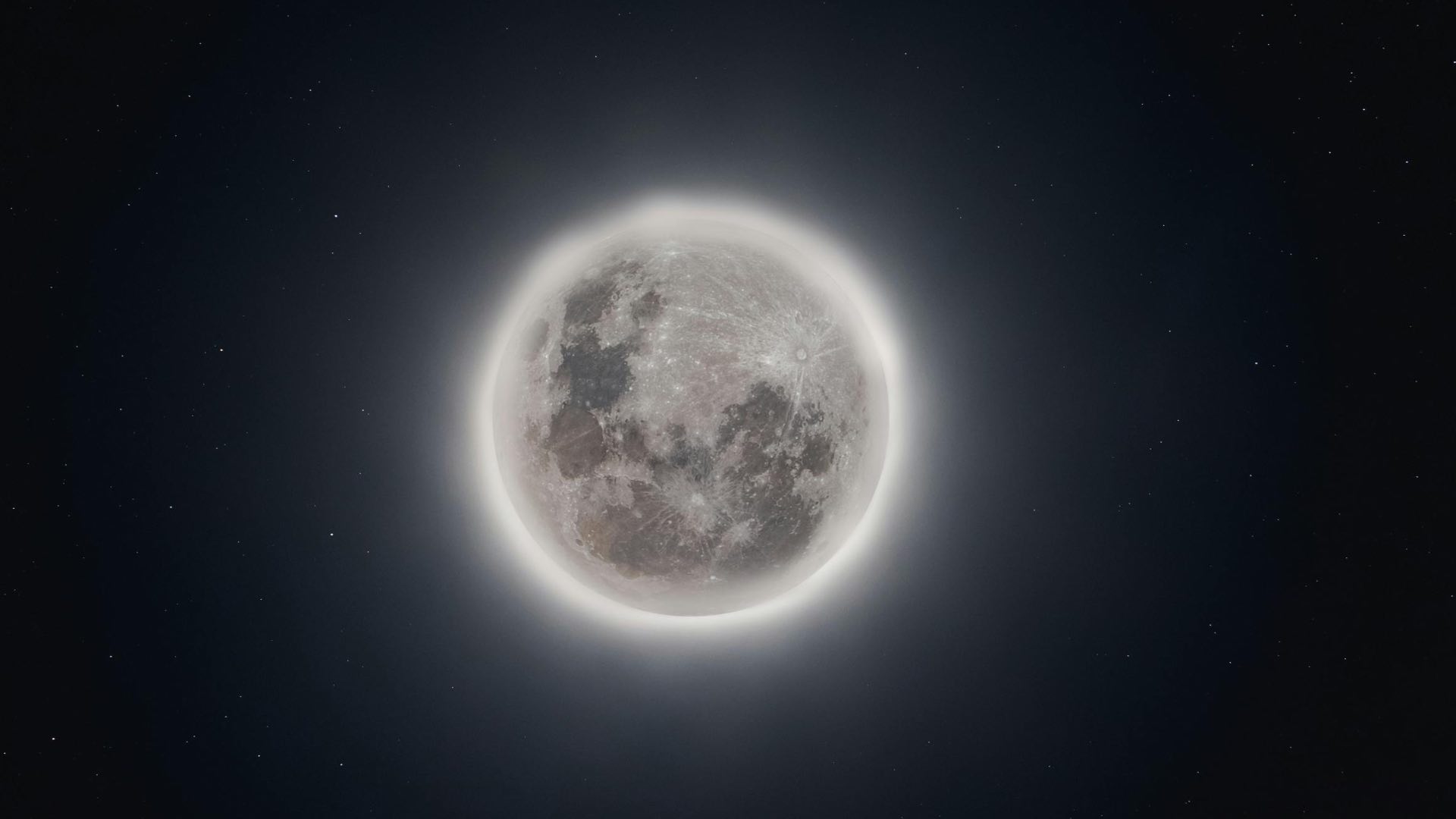
What if a part of your collective history left Earth to settle on the Moon? In 2027, a capsule could reach our natural satellite with an ambitious mission: to preserve a lasting record of humanity. A blend of technological prowess, cosmic dream, and societal debate, the project intrigues as much as it fascinates.
A lunar capsule approved by NASA
Dubbed "Sanctuary on the Moon", this international project was officially presented on March 21, 2024 in Paris. Its objective: to land a time capsule on the Moon as part of a mission from NASA's CLPS (Commercial Lunar Payload Services) program, integrated into the Artemis initiative.
The idea originated with French engineer Benoît Faiveley, who led a multidisciplinary team of scientists, artists, engineers, and historians. The project has the support of UNESCO and is under the patronage of the President of the French Republic. The ambition is clear: to send, by 2027, archives capable of withstanding the extreme conditions of the lunar surface. This is not simply a symbolic gesture. The entire system has been designed to meet the technical requirements of a space mission. The capsule will be part of a mission overseen by NASA, giving the initiative a strong institutional dimension.
View this post on Instagram
Why choose the Moon as a "cosmic vault"?
Unlike Earth, the Moon is not subject to atmospheric erosion, tectonic activity, or climatic phenomena. In other words, anything deposited there can potentially remain intact for millions of years. At approximately 384,400 kilometers from Earth, the Moon thus becomes a natural sanctuary, almost a cosmic-scale vault. At a time when your digital data depends on changing formats and rapidly obsolete technologies, the idea is to create an archive independent of current electronic media.
Twenty-four sapphire discs to tell the story of humanity
The core of the project consists of 24 industrial sapphire discs, each approximately 10 centimeters in diameter and 1 millimeter thick. This material was chosen for its exceptional resistance to temperature variations and radiation. The information is laser-engraved onto these discs in the form of analog micropixels.
The goal is ambitious: to allow reading with the naked eye or a simple magnifying glass, without complex technology. Each disc can contain several billion pixels, incorporating thousands of pages in the form of images, diagrams, or explanatory plates. The engraving is being carried out with the collaboration of French scientific institutions, including the French Alternative Energies and Atomic Energy Commission (CEA). The entire assembly will be placed in a certified container designed to withstand the stresses of lunar transport and deployment.
What can we pass on from ourselves?
"Sanctuary on the Moon" revolves around a profound question: what do you want to pass on about your civilization over millions of years? The content is structured around three themes: who we are, what we know, and what we do. It incorporates elements related to mathematics, natural sciences, paleontology, art history, and major cultural achievements.
The project also includes the archiving of male and female human genomes, sequenced in Canada by the Michael Smith Genome Sciences Centre (BC Cancer). The profiles, called "genomenauts," were selected through a procedure described as anonymous and scientifically rigorous. UNESCO supports the project's heritage dimension, notably through the integration of content relating to World Heritage sites and key texts on bioethics and human rights.
Between fascination and controversy on social media
As is often the case with space projects, the announcement has not been met with universal approval. On social media, some voices are denouncing what they perceive as a new form of space pollution. These critics argue that humanity has already sufficiently saturated Earth without exporting its footprints elsewhere.
Others, on the contrary, express awe at what technology now makes possible. Many speak of a "crazy" evolution of human capabilities and applaud the audacity of a project that dares to think long-term, far beyond political or economic cycles. Between ecological concern and scientific admiration, the debate reflects a broader question: how to reconcile exploration, responsibility, and collective memory?
Ultimately, beyond the technical feat, "Sanctuary on the Moon" questions our relationship to transmission. In a world where everything is updated, replaced, and downloaded, choosing permanent engraving and lunar stability is almost a philosophical gesture. Archiving human history on the Moon means accepting that we must consider our existence on a cosmic scale.