In official photos, the ones that adorn the front page of our passport or identity card, we don't exactly look our best. But lately, the "clean girls" of the internet have been improvising flattering photoshoots behind the black curtain of the photo booth, displaying a face that runs counter to this image of a tired, sullen "fugitive." A new trend is underway...
The ID photo, excessively romanticized
Generally, it's a photo we keep carefully hidden away, out of sight. Shame washes over us when we hand it to the officers or the police. It has to be said, it's not exactly a flattering photo. In this formal portrait where smiling is forbidden, we practically look like criminals. All that's missing is the prison number and the striped uniform to complete the illusion of a prisoner on the run.
Dark circles under our eyes, a drawn face, a tired expression—this photo that adorns our identity documents has a knack for creating insecurities in even the most confident people in the world. Every time, the flash takes us by surprise and captures a face we barely recognize on glossy paper. Yet, it's this very face that defines our identity.
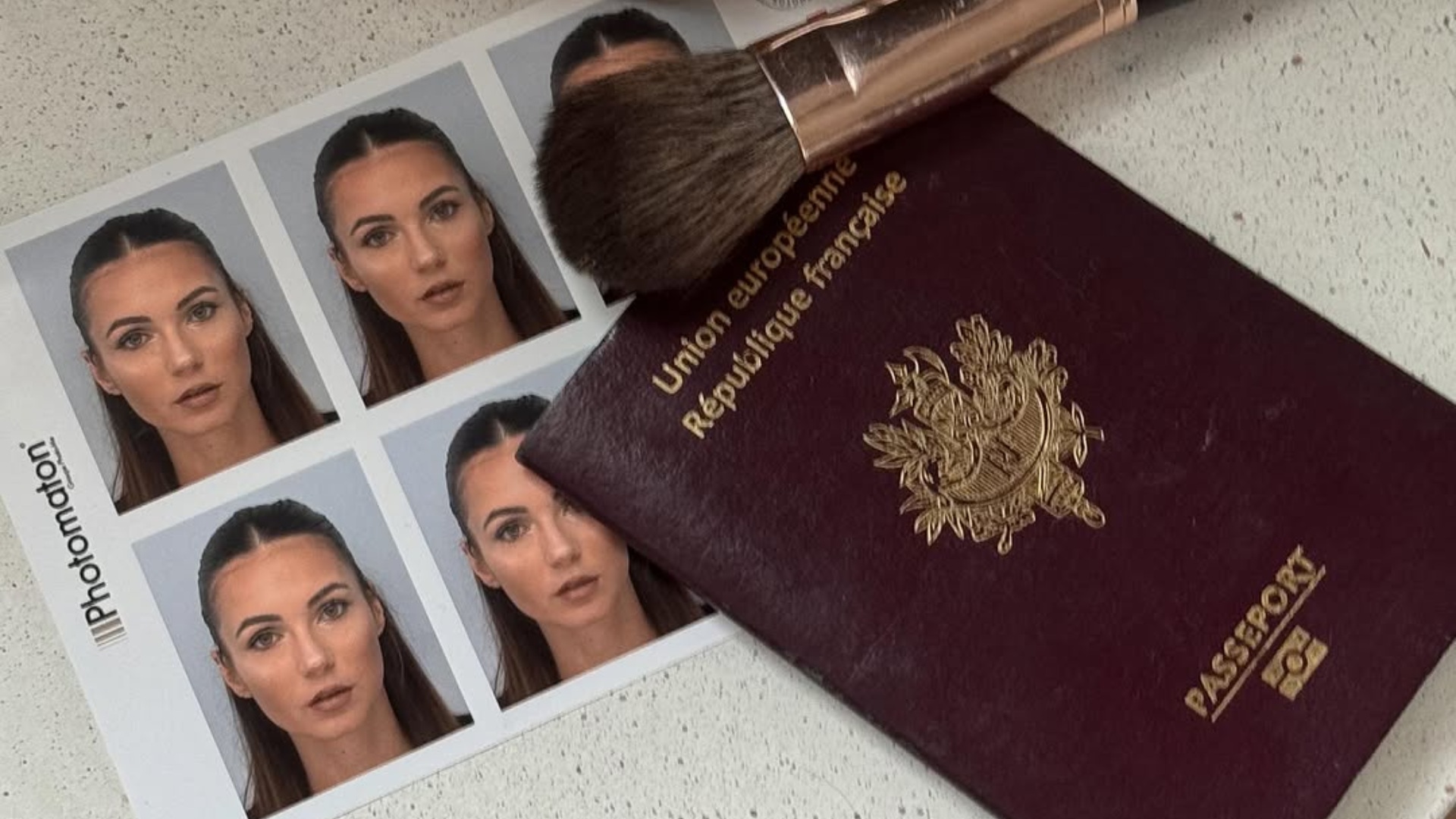
Lately, these photos—photos we wouldn't even show under threat and that would never have landed on our Facebook wall—are proudly displayed on social media. Many are undertaking the unthinkable: making ID photos aesthetically pleasing and desirable. They're succeeding where we've tirelessly failed, despite a perfectly executed full-face shot.
While we tried to defy state standards by striving for maximum photogenic appeal, the printer never cooperated. And for the Kardashian clan, who glamorize even the most ordinary moments, a single attempt is all it takes to blur the lines between a compliant photo and a dating profile picture. These photos, which were never meant to leave our wallets, are now magnets for compliments and bait for likes. Beyond granting a certain social power, they reveal symptomatic dictates. Even in the most serious moments, we must perform and "sell ourselves in the best possible light."
View this post on Instagram
View this post on Instagram
Celebrities, the instigators of this movement
It all started with Kylie Jenner , the same one who popularized the wasp waist, nude lips, and high cheekbones. In 2020, a photo of her driver's license suddenly appeared on her feed, amidst professionally produced shots and meticulously staged photoshoots. This portrait against a neutral background revealed a carefully made-up woman with impeccably styled hair. With her flawless porcelain complexion, intense gaze, rosy cheeks, and subtly painted, full lips , it gave the illusion of a photoshopped face. Yet, it was simply a reflection of the authentic Kylie, always true to herself.
This photo, with its significant legal weight, was no longer a source of mockery but an object of desire, a marker of success. Then, girls flocked to photo booths, posing for the camera and following contrasting makeup tutorials to emerge from this blinding experience satisfied. Now, there are even instruction manuals for "unleashing your potential" on official documents. Outfit, makeup, posture, attitude… all advice is fair game to get an "Instagrammable" photo. These self-centered snapshots no longer simply adhere to the instructions written in red; they follow "imaginary" aesthetic rules.
So, in addition to standing up straight, keeping your face clear, keeping your hair in the frame, and maintaining a straight face, you also have to demonstrate charisma simply for the sake of ego? Because no, this isn't a pickup technique to fulfill the fantasy of wearing a uniform.
The emergence of a new collective complex
Our passport photo, the one we take out of obligation and not for pleasure, is anything but flattering. One eye is bigger than the other, we have visible blemishes, oily shine, and our hair is a mess, all thanks to the pressure of the photo booth. In short, we look more like a depressed gangster than an adored supermodel.
With only three attempts within a set time limit and harsh lighting, disappointment is anticipated even before the final print. For some, ID photos are tangible proof of our "glow-up": they bear witness to our physical evolution and serve as a visual timeline. For others, they are merely a reminder of the dictates already in place. Ultimately, it's yet another injunction: that of remaining "presentable" even in extreme conditions.
The ID photo has thus become a veritable beauty contest. This photo, meant to represent us in our raw state, has ended up being "distorted." Yet, it rarely sees the light of day. And it's not the disinterested, mustachioed police officer who's going to judge us.