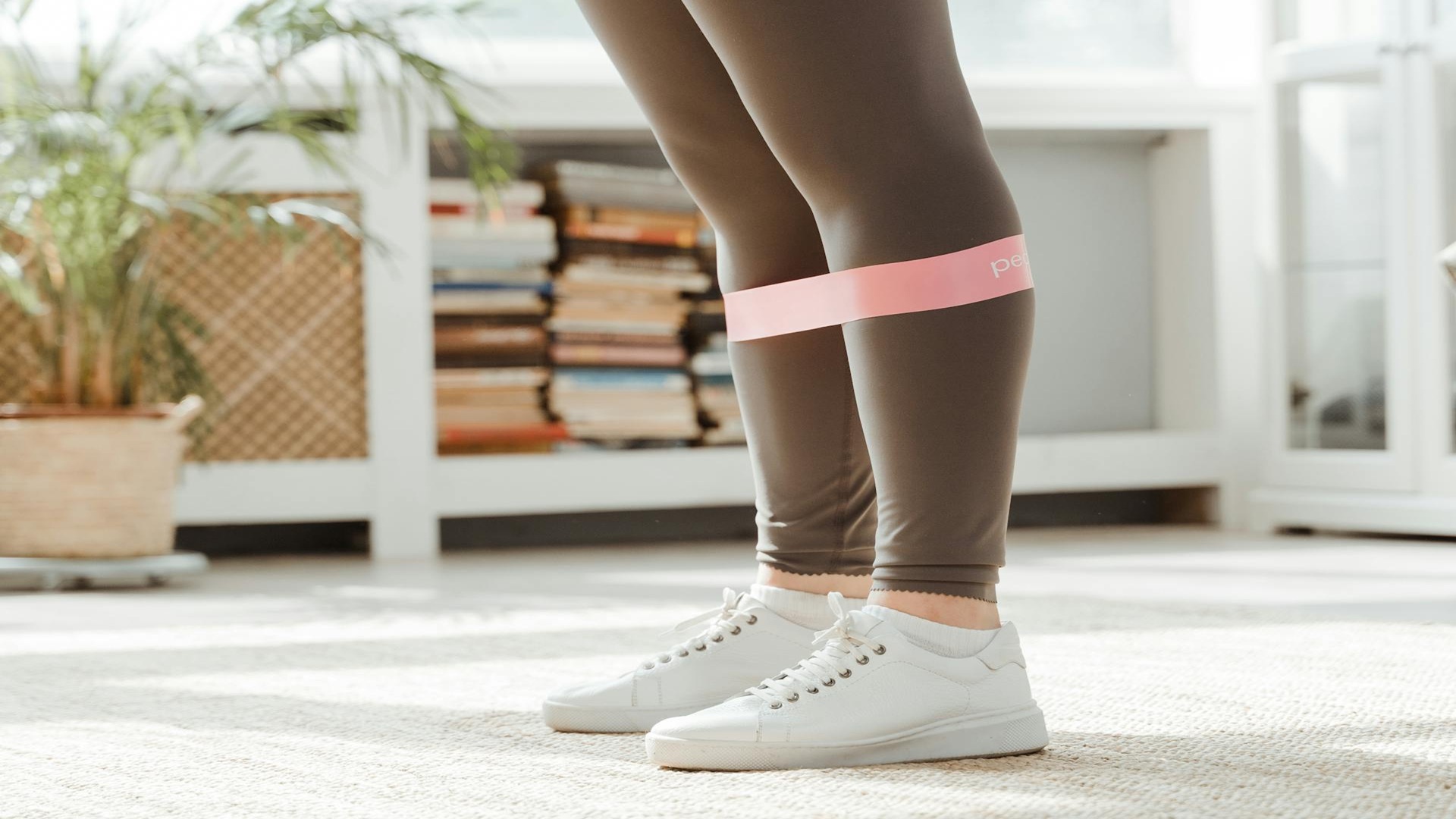
Strengthening your legs at home is not a passing trend. It's a concrete, accessible, and remarkably effective way to improve your posture, strength, and endurance .
A gym membership costs at least 30 euros per month : that much money saved to invest in a few simple accessories or simply to train with your own body weight .
This guide details everything you need to know to structure a solid, progressive and women-friendly leg workout , without leaving your living room.
Why strengthening your legs at home is essential for women
Women naturally produce less testosterone than men, which slows down muscle growth. Their fat tissue tends to be concentrated more in the hips and thighs, while their overall muscle mass remains on average lower than that of men.
These physiological differences make lower body muscle strengthening particularly strategic.
Regularly working your legs improves joint stability , better supports body weight, and significantly reduces lower back pain as well as knee pain.
The release of endorphins during each session also contributes to mental well-being: an often underestimated benefit. Training at home allows you to adapt to all schedules and budgets, with little or no equipment, without compromising on quality.
The best leg exercises at home, from beginner to advanced level
Basic exercises for beginners
Squats remain the king of leg exercises . Feet should be shoulder-width apart, toes slightly turned outwards. The buttocks should lower at least to knee height.
You inhale as you lower yourself, you exhale as you raise yourself, and your legs never fully extend during the ascent. Quadriceps, glutes, and hamstrings are engaged simultaneously.
Bulgarian split squats are suitable for all fitness levels. With your back facing a support, the top of your foot rests on it, and your front knee forms approximately 90 degrees. This movement deeply targets the quadriceps, glutes, hamstrings, and calves.
Calf raises , with feet hip-width apart, work the gastrocnemius, soleus and posterior tibial: three muscles often forgotten in a classic training protocol.
Advanced exercises to help you progress
Jump squats add a cardio and explosive dimension. The glute bridge on one leg , lying on your back with one leg extended towards the ceiling, intensely works the gluteus maximus, hamstrings, quadriceps and lower back muscles.
Step-ups on a chair or bench, facing a support at knee level, recruit the glutes, quadriceps and stabilizer muscles.
For advanced users, hip thrusts , Nordic hamstring curls, pistol squats and one-legged deadlifts are demanding strength training exercises that should be introduced gradually.
Each targets specific areas: glutes and hamstrings for hip thrusts, glutes and quadriceps for pistol squats.
One-week home leg workout program: how to organize your sessions
7-day session planning
Here is a structured weekly program, designed to optimize progress while respecting recovery phases:
| Day | Exercises | Series / Repetitions |
| Day 1 | Bulgarian split squats, standing calf raises, step-ups | 3 sets × 10-12 / 15-20 / 10-12 per leg |
| Day 2 | Active rest or moderate cardio | : |
| Day 3 | Glute bridges, Bulgarian split squats, step-ups | 3 sets × 15-20 / 10-12 / 10-12 per leg |
| Day 4 | Active rest | : |
| Day 5 | Jump squats, Bulgarian split squats, standing calf raises | 3 sets × 12-15 / 10-12 / 15-20 |
| Weekend | Active rest or moderate cardio | : |
Allowing 24 to 48 hours of recovery between sessions targeting the same muscle groups is essential to avoid muscle fatigue and injuries.
Warm-up and stretching are essential.
Before each session, a proper warm-up is essential: 30 seconds of running in place, 30 seconds of jumping jacks, then 10 repetitions of classic squats. Simple, quick, and effective.
At the end of the session, stretching accelerates recovery: grab the foot and bring the heel towards the buttock for 15 seconds per leg for the quadriceps, curl the back to extend the legs towards the ground for the hamstrings, and press the heel to the ground facing a wall for the calves.
How to progress effectively and avoid common mistakes
The keys to sustainable progress
Progress is not just about adding weight. Increasing repetitions, reducing rest time between sets, introducing more complex exercise variations : weighted squat, jump squat, unilateral squat; jump or weighted lunge; glute bridge with dumbbell on the pelvis: are among the essential levers.
Elastic bands , dumbbells and weighted vests allow you to enrich your training protocol without a heavy investment.
Concrete indicators of progress include increased load, measured thigh circumference, improved flexibility and range of motion, and reduced body fat percentage.
Regular monitoring motivates and guides adjustments.
Mistakes to avoid for safe training
Using excessively heavy weights too early remains the most common mistake. Neglecting warm-ups, ignoring stabilizing muscles such as the lower back, glutes, and psoas, or falling into overtraining weakens the joints and hinders results.
Beginners start with 2 sessions per week , slow down if they experience painful muscle soreness, and above all, do not feel guilty if a session is missed.
Specifics of leg muscle training in women: anatomy and muscle targeting
Leg muscle groups you should know
The lower body engages four main groups: quadriceps, hamstrings, glutes, and calves. The inner thighs, often neglected, comprise five distinct muscles: the gracilis, pectineus, adductor longus, adductor brevis, and adductor magnus .
Hormonal factors explain the female tendency to store more fat in these areas, hence the importance of targeting these areas precisely.
Targeted exercises for priority areas for women
Sumo squats, hip thrusts , one-legged glute bridges, lateral lunges, and kickbacks are a remarkably effective selection for working the glutes, adductors, and calves.
Varying leg exercises ensures harmonious development of the lower body: without muscular imbalance, without compensation, and with better overall stability.
- Sumo squats : target the adductors, quadriceps, and glutes
- Hip thrusts : intensely work the gluteus maximus and hamstrings
- Single-leg glute bridges : amplify the unilateral work of the gluteal muscles
- Lateral lunges : recruit adductors, quadriceps and calves
- Kickbacks : isolate the gluteus maximus for a targeted muscle contraction
Nutrition and recovery: the often-neglected pillars of leg muscle building
What you need to eat to support muscle effort
A suitable diet directly influences the quality of progress. Lean proteins, such as chicken, fish, and legumes, support muscle rebuilding.
Complex carbohydrates from whole grains, vegetables, and fruits provide the necessary energy. Healthy fats from avocados, nuts, and vegetable oils complete a balanced diet.
Some particularly beneficial foods include spinach, quinoa, berries, salmon, sweet potatoes, Greek yogurt, broccoli, and eggs. A balanced pre-workout meal should be eaten 2 to 3 hours before your session.
A snack rich in protein and carbohydrates within 30 minutes of exercise maximizes muscle recovery.
Optimize your recovery for toned legs
Sleep remains the primary driver of muscle growth: often the most underestimated. Proper hydration throughout the day supports performance and reduces inflammation.
Applying ice for 15 to 20 minutes to a painful area effectively reduces inflammation.
Wearing compression clothing promotes blood circulation and accelerates recovery between sessions.
For those who want structured support, the Domicil'Gym platform offers home-based coaches located throughout France.
Individualized monitoring can make all the difference in regularity and execution technique: two key factors for sustainable progress without injury.